
India faces threat of 25% US tariff as Trump makes fresh trade deal push

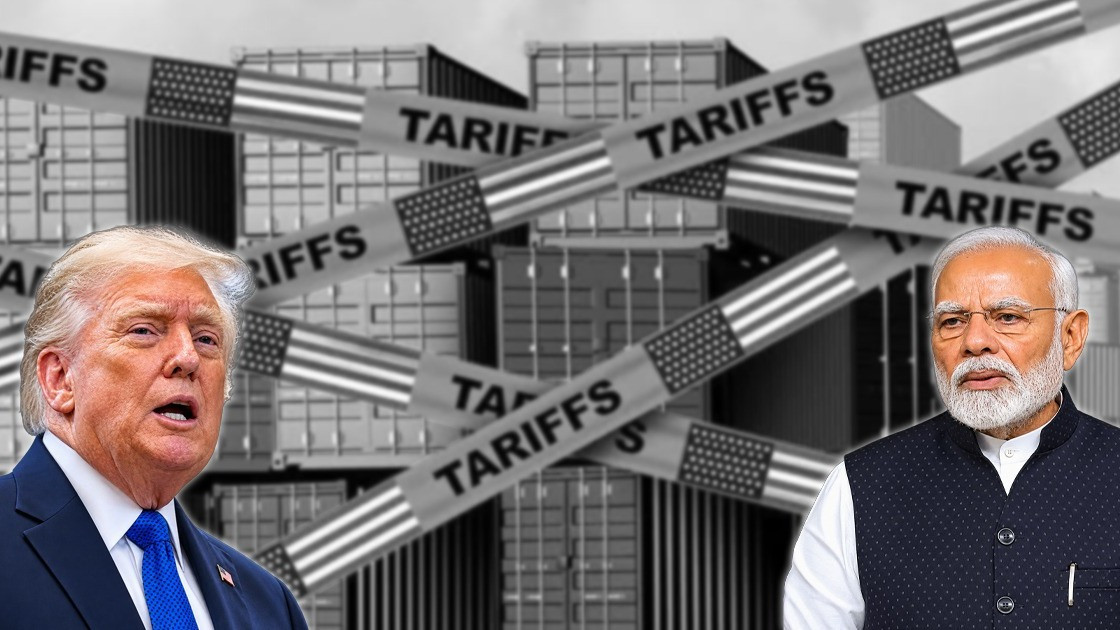
The government says no sector in the country has any additional manufacturing capacity.
After the US raised tariff rates, the Indian government has now put its position before the public. The government says there is no excess manufacturing capacity in any sector in the country that would allow production beyond what the market needs. According to a statement issued by the Ministry of Commerce last night, it is examining the US Trade Representative’s (USTR) notice and its potential impact on the economy. The US has proposed imposing import duties on 14 economies, including India, although these are to come into effect in the new year.

The Indian government wants trade-related complaints to be resolved through the ongoing trade agreement negotiations between the two countries. It argues that, in the event of a dispute, the matter should be resolved within the framework agreed upon by both countries for bilateral talks, rather than through unilateral decisions. This decision underscores the hegemonic practices of the American empire amid changing geopolitical circumstances, but the Indian government cannot say this on the global stage.
To understand this dispute, it is necessary to understand the argument about manufacturing capacity. The US side says that, because of government support, companies in some countries are producing more than they would under normal market conditions. According to it, this leads to cheap goods reaching global markets and harms US companies. The allegation is not merely that goods are being produced and sold in excess of domestic needs, but that government support is distorting competition.
In its report, the USTR has mentioned schemes such as ‘Make in India’, the Production Linked Incentive (PLI) scheme, which provides incentives for increasing production, and Atmanirbhar Bharat. It alleges that financial assistance provided by the government and shortcomings in labour laws give Indian companies an unfair advantage. The US claims this harms its production, exports and employment. However, these are the US administration’s findings, not a final ruling by an international court.
India’s response is that it is necessary for countries of the Global South to frame manufacturing policies in proportion to domestic demand. According to the Indian position recorded in the US notice, expansion in sectors such as solar energy and steel is being undertaken with market demand and the country’s needs in mind. India has said that schemes such as PLI aim to promote industry and technology in the country and reduce dependence on some foreign imports.
The difference between the two countries is clear. The US considers the schemes that India says are necessary for development and self-reliance harmful to its industries. The debate should be about why an independent and sovereign nation should depend on US approval to frame policies concerning its domestic affairs.
The US has proposed imposing tariffs of up to 25 per cent on goods from India, with some exemptions. The notice also says that some existing duties may be revised and could be reduced if an agreement is reached. It would therefore be incorrect to say that a new 25 per cent tariff has been imposed immediately on all Indian goods. Written comments and objections have been invited on the proposal until January 5, 2027. The final impact will depend on which goods are subject to what rates and which are exempted.
The claims made by both sides in this dispute must be examined against the data. An increase in exports alone does not prove that a country is producing more than it needs. Similarly, describing a scheme as linked to self-reliance cannot be grounds for avoiding scrutiny under labour laws. It will be important to examine how much of factory capacity is being used, the level of domestic demand, and how government support affects costs and prices.
If the new duties come into effect, Indian exporters could face greater difficulties. US buyers may ask them to lower prices or buy goods from another country. They may also pass on some of the increased costs to their customers. The impact, therefore, will not be limited to Indian companies or US customers alone. For small businesses, shrinking margins and uncertainty over new orders could pose a major challenge.
The Indian government should provide the business community with clear information about the potential impact on their operations. It is also important to ensure, as part of a trade agreement, that Indian goods are not placed at a disadvantage compared with those from other countries. Expanding access to other markets and strengthening domestic demand will also be necessary. The government should seek to reduce trade tensions and protect the needs of Indian industry, employment and development.