
PDA will defeat NDA, says INDIA bloc’s Akhilesh Yadav

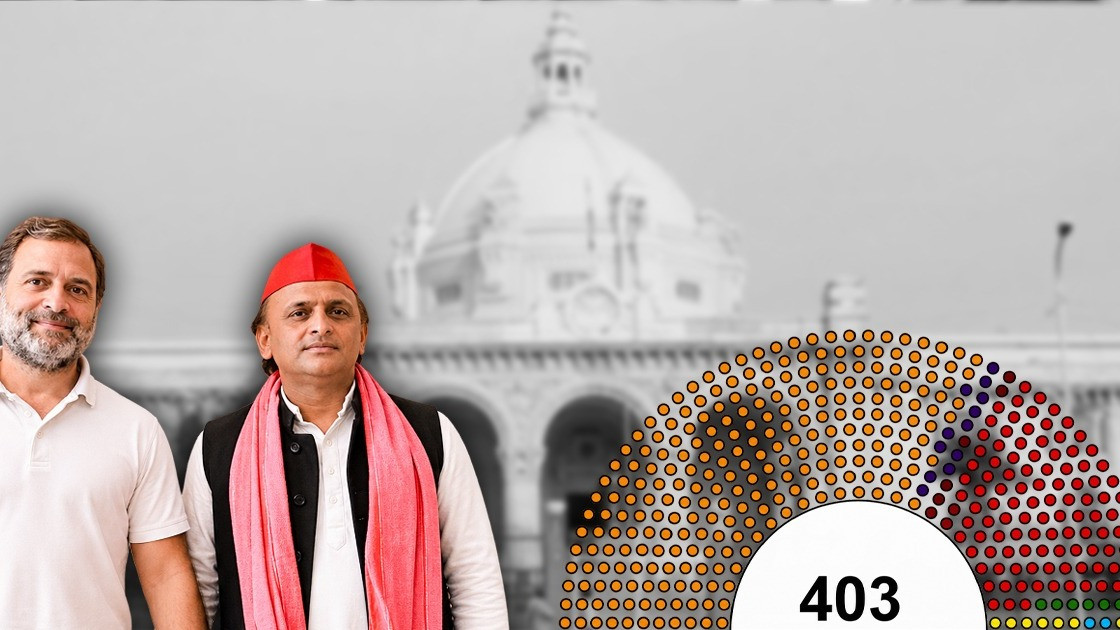
Ground surveys are beginning to show that everyone affected by the current government’s policies is part of the PDA
Before the Uttar Pradesh Assembly election, talks between the Samajwadi Party and the Congress over seat-sharing appear to have moved to the next stage. SP leader Akhilesh Yadav described the alliance as a coming together of secular people and said it would lay the foundation for defeating communal forces in the State.
On November 24, Akhilesh Yadav wrote, “The beginning has been made with the first 26 winnable seats; talks will move forward further, with mutual understanding and wisdom.” The message suggested that the 26 seats under discussion for the Congress were not the final limit. According to The New Indian Express, the second round of talks in Delhi, which lasted about three and a half hours, ended without an agreement. However, both sides expressed hope of reaching a consensus. The SP chief said that, just as the INDIA alliance had performed exceptionally well in the Lok Sabha election, the PDA would also win the State election. According to him, ground surveys were beginning to show that everyone affected by the incumbent government’s policies was part of the PDA, and that the BJP government would not last much longer.
Emphasising that the Assembly election was a joint fight, Akhilesh Yadav asked the Congress to send a list of additional potential seats. He proposed that the two parties jointly assess each seat and each candidate’s chances of winning. He said candidates should be presented as INDIA alliance candidates and, ideally, as ‘PDA candidates’, rather than as candidates of the SP or Congress. His emphasis was that the agreement should be judged not only by the number of seats allotted to a party, but by the alliance’s prospects of winning.
The party named Umar Ali Khan from Behat, Ashu Malik from Saharanpur, Nahid Hasan from Kairana, Mehboob Ali from Amroha and Jyoti Lodhi from Lalitpur as candidates. The Congress was also eyeing Behat and Saharanpur. To prevent a dispute over seat-sharing, the SP chief said decisions needed to be made in keeping with the circumstances and equations. If someone did not get the seat they wanted, they should not be disappointed and should continue working to ensure the alliance’s victory.
Congress MP Imran Masood reacted sharply to the move. He asked why candidates were being announced unilaterally while alliance talks were under way. He also taunted the SP, saying it might as well announce candidates for all 403 seats. Imran Masood’s displeasure is also linked to local competition in western Uttar Pradesh. Akhilesh Yadav had said the two parties should contest the election together in such a way that their preparations appeared equivalent to 806 seats.
Reports on the latest talks said the Congress had a list of about 130 seats, while the SP had proposed 26. Congress State president Aradhana Misra said she was unaware of the offer of 26 seats. Ram Gopal Yadav, meanwhile, said the matter would be discussed afresh. This makes clear that demands reported in the media, initial proposals and the final agreement are separate stages.
The PDA occupies a central place in Akhilesh’s strategy. Through this political formula, which brings together backward, Dalit and minority groups, he aims to build broad social support. In his post, he praised the Congress’s support in the 2024 Lok Sabha election and symbolically described the joint preparations of the two organisations as ‘equivalent to 806 seats’. This meant adding the strength of the two parties in the 403-member Assembly. But a shared social base will help only if workers actively campaign for their ally’s candidates too.
This is where the question of candidate selection becomes important. The previous election result is a useful basis, but it cannot be the only criterion. Local acceptability, organisation, social representation and an assessment of the changing political climate are also necessary. The Congress wants adequate political space to rebuild, while the SP will want to avoid giving up its strong seats. Both need a process in which neither ally feels that its role is limited to accepting the other side’s decisions.
The BJP is seeking to portray this tussle as a sign of the Opposition’s weakness. Deputy Chief Minister Keshav Prasad Maurya took a dig at the efforts of the two parties and claimed they would not bring about a change of government. BJP MLA Rajeshwar Singh also pointed to a contradiction between Akhilesh’s appeal for consensus and the announcement of candidates. However, voters will decide the alliance’s actual electoral strength.
The SP and Congress now need to establish a credible process for talks alongside their public messaging. They need a joint assessment of contentious seats, coordination in announcing candidates and a way to address workers’ discontent. A common programme on employment, inflation, education and social justice should also be presented. Akhilesh’s message of prioritising victory will be effective only if the Congress sees itself as having a respectable role in it and both parties can turn their agreement into cooperation at the booth level.