
Development or temple-mosque politics: Yogi and Akhilesh trade barbs ahead of UP polls

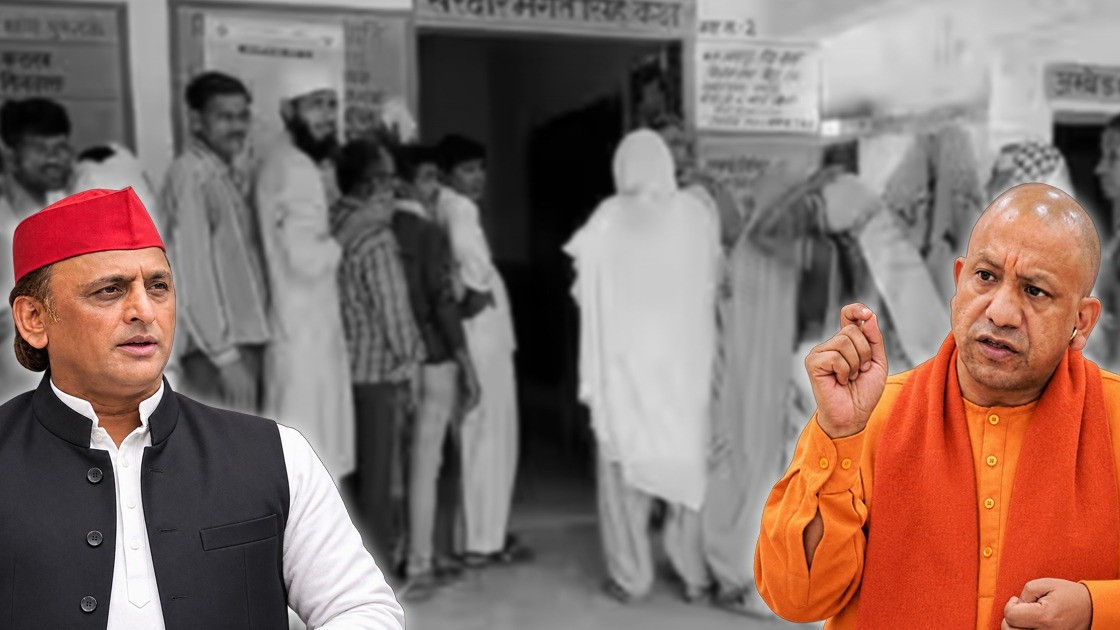
The expression ‘Ram naam satya’ is not the first time it has featured in Yogi Adityanath’s political rhetoric.
Before the Uttar Pradesh Assembly elections, the political contest between the BJP and the Samajwadi Party has reached a point where religious symbols and sharp jibes are being used. Chief Minister Yogi Adityanath has said, “Radhe-Radhe is just the beginning; for the SP, it is now time for Ram Naam Satya.” He made the remark in a television interview on Wednesday, November 25. Whether it is the cases being repeatedly filed against Samajwadi Party leader Azam Khan or the Gomti Riverfront case from the tenure of the previous Akhilesh Yadav government, the State government appears to be on the offensive on both fronts, in words and deeds.
The backdrop to the statement is Akhilesh Yadav’s jibe at the BJP slogan, ‘Radhe-Radhe, make the lotus bloom’. According to a report by The Indian Express, Akhilesh Yadav said last week that ‘Radhe-Radhe’ is also said when bidding farewell, and that the BJP would be sent off in the coming election. In response, Yogi Adityanath described Mathura’s ‘Radhe-Radhe’, Ayodhya’s ‘Jai Shri Ram’ and Kashi’s ‘Har-Har Mahadev’ as greetings linked to faith, and associated ‘Ram Naam Satya’ with the Samajwadi Party’s final journey.
The social meaning of a religious greeting and the political use of an election slogan are different things. Restricting an expression to support for or opposition to a single party narrows its wider cultural presence. Similarly, predicting a party’s electoral defeat is a normal part of democratic competition, but expressing it through a metaphor associated with death sends a more aggressive message. However, the Chief Minister was targeting the SP’s electoral prospects in this context; given Uttar Pradesh’s politics, it would be premature to draw conclusions.
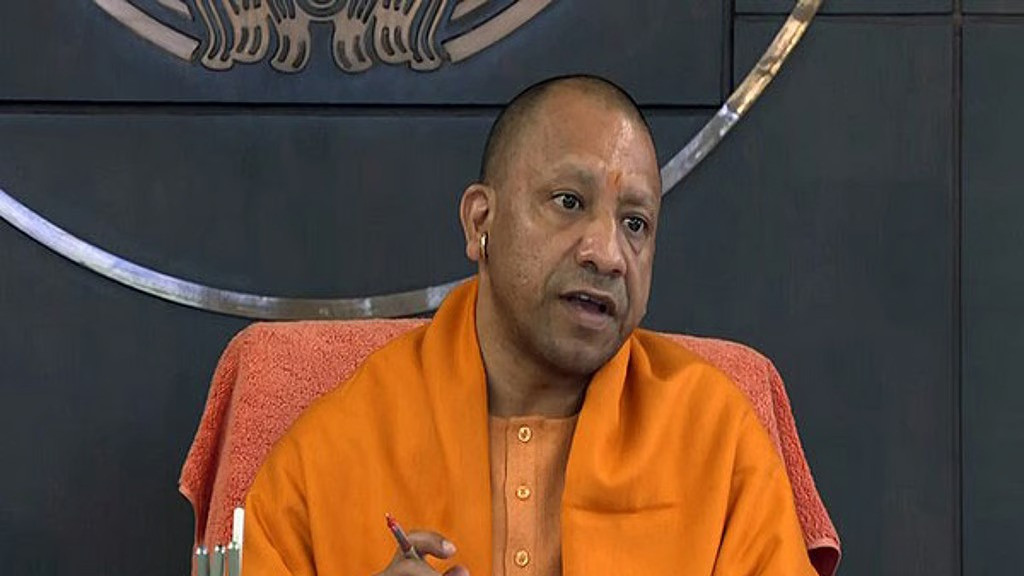
Yogi Adityanath also questioned Akhilesh Yadav’s proposed visit to Ayodhya. He said those who ride two boats sink, and that the SP leadership should apologise to Ram devotees. The Chief Minister had also targeted the Opposition on this issue during Deepotsav in early November. Amid these verbal attacks, every citizen of the State will be waiting to see when public issues are raised.
In the interview, the Chief Minister also targeted the SP’s PDA formula. Calling it the ‘Parivar Development Authority’, he alleged that the party’s politics revolves around its family. Akhilesh, on the other hand, has presented PDA as a broad social coalition of backward, Dalit and minority groups. At a Dalit mahapanchayat in Agra and while speaking to journalists recently, Akhilesh Yadav said the secular ideology of PDA would end the politics of the NDA.
Yogi Adityanath also took a dig at the SP-Congress seat-sharing talks, declaring the alliance a failure even before the election. He was referring to the SP announcing five candidates while talks were under way. However, the absence of a final agreement between the two parties does not mean the alliance has ended. Congress and SP leaders have said that talks are continuing and expressed hope of reaching an agreement. The situation will become clearer as the election approaches.
Akhilesh Yadav’s recent message, by contrast, focused on maintaining the partnership. He appealed to the Congress to consider the winning equation rather than the number of seats, and to select candidates by consensus. The challenge for both parties is to ensure cooperation among their voters and workers. The BJP will want to portray the disagreement visible in these talks as a weakness of the Opposition. But the real strength of any alliance will be determined by candidate selection, local organisation and the public’s priorities.
Ram Naam Satya is not a phrase Yogi Adityanath has used in his political language for the first time. At an election rally in Aligarh in April 2024, he used it in reference to criminals who posed a threat to the safety of women and traders. That statement concerned law and order, while the latest remark is about an Opposition party’s electoral future. It is important to keep the two contexts separate. It is also important to consider how such language affects the line between a tough approach to governance and political opposition.
In the same interview, the Chief Minister presented investment, employment, infrastructure and law and order as achievements of his government. These claims should be assessed against independent data and citizens’ experiences. Religious symbols may have a place in election debates, but accountability on employment, education, health, inflation and security is equally necessary. The language of both the Opposition and the ruling party should preserve the democratic legitimacy of political opponents, even amid sharp criticism. Ultimately, it is voters, not slogans, who will decide which party is sent off and which returns.