
US raises tariffs again: What options does India have?

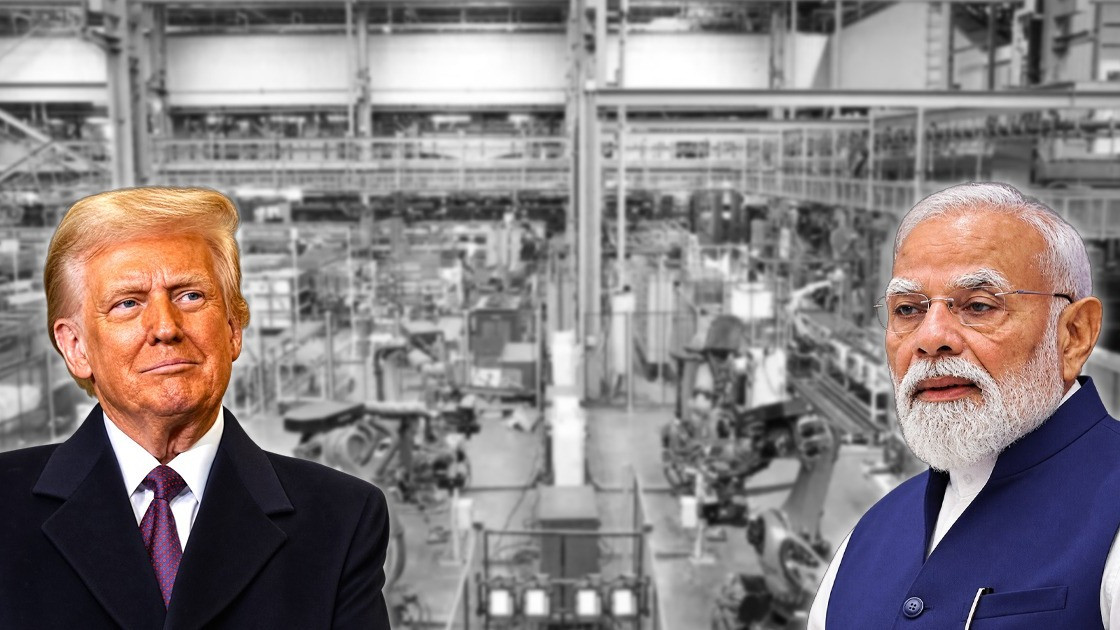
Excess production sends cheaper goods to global markets and weakens the competitive position of US companies.
There is once again a possibility of higher tariffs in trade ties between India and the US. The Donald Trump administration is preparing to impose new import duties on several trading partners, including India, based on an investigation into industrial subsidies and alleged excess production capacity. However, reports available as of November 25 have not confirmed the final rates for India, the products that will be affected or the date on which the duties will take effect. Amid rising inflation and employment concerns, the possible increase could also adversely affect the pockets of Indian citizens.

The developments began on March 11, 2026, when the Office of the US Trade Representative (USTR) launched an investigation into the industrial policies of 16 economies, including India, China, the European Union, Japan and South Korea. The US alleges that excess production resulting from government support sends cheap goods into global markets and weakens the competitiveness of American companies. This is the position of the US administration. The situation becomes clearer when viewed in the context of American commercial interests and the basic principles of market economics.
The investigation is being conducted under Section 301 of the US Trade Act of 1974. This provision allows action against foreign policies alleged to be unfair or discriminatory and to affect US trade. The USTR’s initial notice also set out a process for consultations with the governments concerned, written submissions and hearings. The legal basis for the new action is industrial capacity and trade practices. Like all previous tariff decisions, this is a policy decision within a capitalist system.
According to a report by The Wall Street Journal, US Trade Representative Jamieson Greer may release the findings of the investigation soon, although the timeline could change. Reports have also suggested that countries such as India and Vietnam could face higher duties than the European Union or Japan. But it would not be appropriate to treat any specific percentage for India as final at this stage. The actual position will become clear once the official proposal and its product-wise details are made public.
India has raised objections to the investigation. According to The Financial Express, in its response submitted in April, the Ministry of Commerce said the investigation was based on broad economic indicators but did not identify any specific Indian policy or action that could be described as unfair or discriminatory and as placing a burden on US trade. This objection matters: an increase in exports or the existence of production capacity is a different question from whether trade rules have been violated.
It is also necessary to distinguish the new concern from the existing tariff regime. According to a July release by the Government of India, India was placed in the lower tariff category of 10 per cent in a separate US case under Section 301 relating to forced labour. The investigation into excess industrial capacity is now proceeding on a separate basis. Whether the potential new duties will be added to existing tariffs, replace them or exempt some products cannot be determined without the final directions.
For India, the concern is not only the volume of exports but also its position relative to competitors. If another country faces a lower duty on the same product, US buyers may consider increasing purchases from there. If Indian exporters try to protect their business by cutting prices, their profits may fall. These are possible economic effects; the actual impact will depend on the products, rates, demand and the alternatives available to buyers.
The company importing goods pays the tariff at the US border. But the economic burden may be shared among several parties. The US importer may charge the customer a higher price, cut its own profits or ask the Indian supplier for cheaper goods. It would therefore be incomplete to say that only India pays the duty or that it affects only US consumers. For small exporters, shrinking profits could be accompanied by uncertainty over payments and new orders.
The developments could put pressure on bilateral trade negotiations. According to The Financial Express, India wants clarity on the US tariff regime to finalise an interim trade agreement. New Delhi is also concerned that Indian products should not be placed at a disadvantage against their main competitors after any agreement is reached. An announcement of an agreement alone will therefore not be enough; product-wise market access and tariff terms will be decisive.
For now, India will have to prepare on two fronts. First, it must put forward facts and legal arguments in the investigation to strengthen the case for its industries. Second, it must work with exporters to assess affected products and alternative markets. Any assistance should aim to protect employment and competitiveness. Until the final US announcement is made, the government should avoid presenting estimated rates as facts and keep traders and citizens informed of the situation. In this dispute, the test of diplomatic ties will be tangible trade outcomes and the protection of India’s economic interests. Amid a changing global order, how much further tariffs will rise in the coming days will be a worrying but interesting question.