
Trump's new tariff plan may hit Indian pharma industry

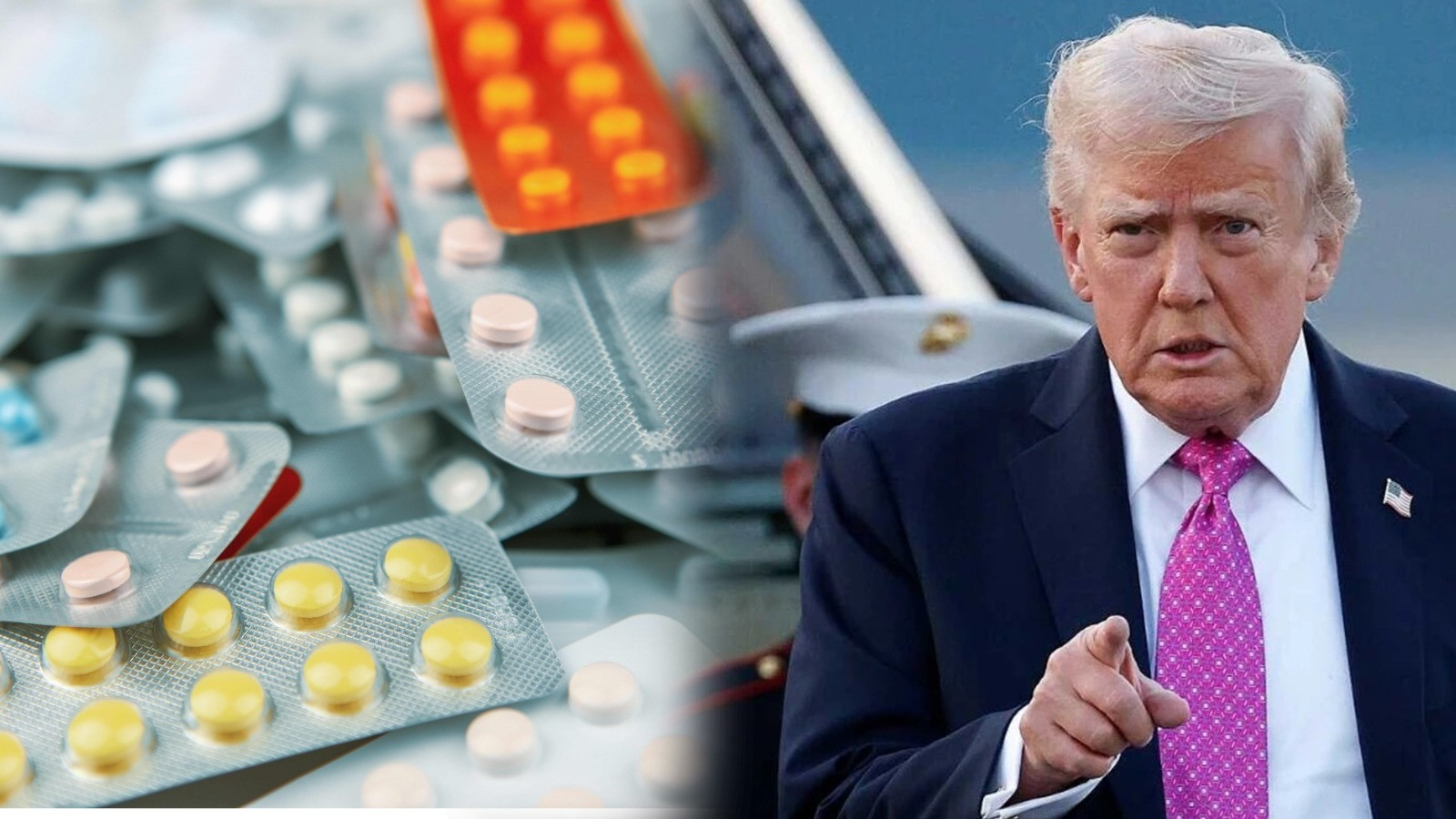
US President Donald Trump announces heavy tariffs on imported generic drugs, impacting India's pharma exports.
U.S. President Donald Trump has announced the imposition of heavy tariffs on generic drugs imported from abroad. He stated that the aim of this decision is to re-establish drug manufacturing in the U.S. and reduce dependency on foreign supply. Trump clarified that companies that do not set up manufacturing plants and necessary infrastructure in the U.S. within the stipulated timeframe may face economic penalties. All eyes are on India, as it is the largest supplier of generic drugs to the U.S.
Trump specified that
from 1 August 2026, tariffs on generic drugs will remain at 0% for the next two years. After that, a 100% tariff will be imposed for one year, followed by a 200% tariff.
Trump described this as a strategy to bring back generic drug manufacturing to the U.S. According to Trump, this policy is being introduced to strengthen American drug security and domestic production. However, he also clarified that there will be no changes in the existing system for patented, branded, and new drugs. This move is primarily focused on generic drugs.
According to PTI, India is referred to as the "pharmacy of the world." A report by the Global Trade Research Initiative (GTRI) indicates that in 2025, India exported $9.7 billion (approximately ₹93,500 crore) worth of drugs to the U.S. This accounted for about 38 percent of India's total pharmaceutical exports of $25.8 billion. Indian companies' drugs are extensively used in the U.S. for treating high blood pressure, diabetes, cancer, infectious diseases, and various mental health conditions.
Trump's announcement also had an immediate impact on the Indian stock market. On Wednesday, the Nifty Pharma Index fell by about 2 percent in early trading, while Reuters reported a decline of 1.6 percent. Investors are assessing the implementation of the tariffs and their actual impact. Shares of major exporting companies like Sun Pharma, Cipla, Dr. Reddy's Laboratories, Lupin, and Aurobindo Pharma recorded a decline of 2 to 2.5 percent. Along with pharma shares, the broader market also remained under pressure.
According to Reuters, the Nifty 50 fell by 0.41 percent and the BSE Sensex by 0.5 percent. The market was also affected by rising geopolitical tensions in the Middle East and increasing crude oil prices.
However, experts do not consider this decision to be a major setback for Indian pharmaceutical companies. Brokerage firms suggest that the business model of Indian pharma companies can largely shield them from this shock. Many Indian companies sell drugs in the U.S. through their subsidiary companies. In such cases, the tariff is likely to be imposed not on the final retail price, but on the lower transfer price at which the drug enters the U.S.