
Charges on UPI payments over ₹2,000 may soon apply

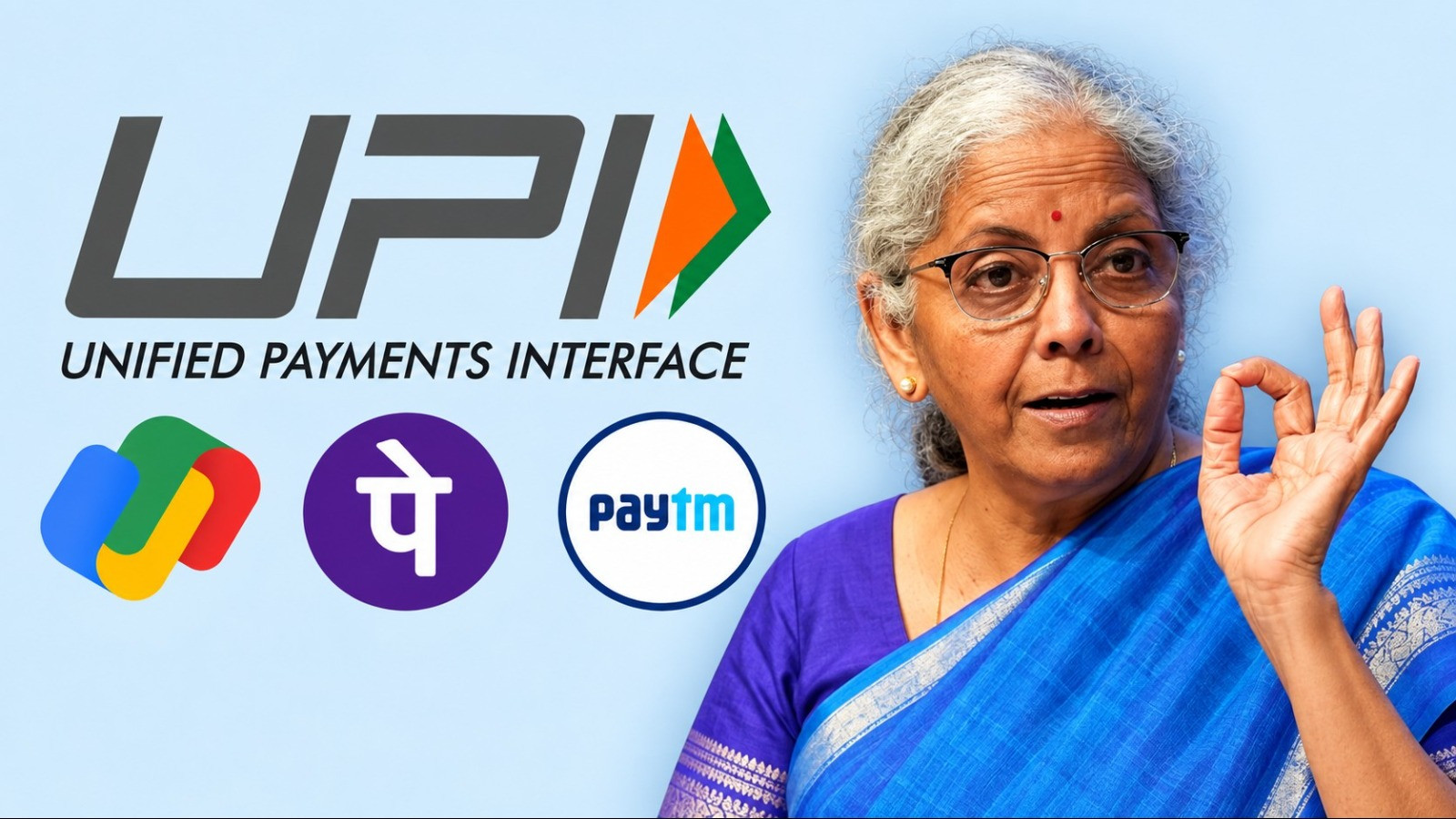
The way is now clear for imposing charges on UPI payments exceeding ₹2,000.
The way to impose a charge on UPI payments exceeding ₹2000 has now been cleared. The government issued a notification on Monday night stating that there will be no charge on UPI payments up to ₹2000. The previous rule was that no charge would be levied on any UPI payment. However, after the government's new notification, the likelihood has increased that charges will apply to UPI payments exceeding ₹2000.
The decision on how much charge to impose on payments exceeding ₹2000 is to be made by NPCI (National Payment Corporation of India). This rate is estimated to be between 0.3% to 0.5%. This means that if someone buys goods worth ₹5000, the shopkeeper will have to pay ₹15 to ₹25. This charge is not to be borne by the customer. When people transact with each other, they will not incur any charge, regardless of the amount.
This means that for an online payment of ₹5000, an extra ₹15 to ₹25 will be charged, which will have to be paid by the shopkeeper, not the customer. Now, which shopkeeper will pay ₹25 out of pocket? They will directly ask the customer for cash and will not accept UPI. Thus, ultimately, the loss is to the customer.
The central government has prohibited any charges on UPI transactions up to ₹2000 and payments made through RuPay network debit cards. However, this decision leaves open the possibility of imposing charges on merchant payments exceeding this amount in the future. The Ministry of Finance has issued a notification including UPI transactions up to ₹2000 and payments made through RuPay debit cards in the list of electronic payment methods that cannot be charged directly or indirectly.
According to the notification,
no bank or payment system provider can charge any direct or indirect fees from individuals making or receiving payments through these methods. This decision came after the Parliament passed the ‘Taxation and Other Laws (Amendment) Bill, 2026’ in August 2026. This law granted the government the authority to determine which electronic payment methods would continue to receive legal protection from charges.
After this amendment, concerns were raised that UPI transactions would not remain free in the future. However, Finance Minister Nirmala Sitharaman stated that,
“This amendment only gives the government the authority to make necessary provisions, and consumers will not have to pay any charges on UPI payments. The government also stated that if the Merchant Discount Rate, or MDR, is implemented, it will only apply to certain selected merchant transactions exceeding a specified limit. MDR is the fee charged by banks or payment service providers to merchants for processing digital payments.”
This new notification does not mean that every UPI payment exceeding ₹2000 will immediately incur a charge. The notification only establishes that UPI transactions up to ₹2000 will be protected from charges. For merchant transactions exceeding this amount, the government will need to issue separate policies or rules to implement MDR.
The government has already clarified that if MDR is implemented, it will have to be paid by merchants, not customers. The government also stated that UPI payments made from one person to another will remain free. The implementation of MDR on some merchant transactions exceeding certain amounts could provide banks and payment service providers with a new source of revenue. Meanwhile, small-value digital payments will remain free for the average consumer.
The UPI transactions operated by the National Payments Corporation of India are the largest retail fast-payment system in the world. This information was provided in a report by the International Monetary Fund in 2025.
In August, there were 24.51 billion transactions through UPI, amounting to a total value of ₹29.82 lakh crore. Google Pay and PhonePe, owned by Walmart, accounted for about three-quarters of the total UPI transactions for the month. Under the new rules, payments made through RuPay network debit cards will also remain free of charge.
It is worth noting that a month ago, Reserve Bank of India (RBI) Governor Sanjay Malhotra stated that,
“It would be premature to conclude whether a Merchant Discount Rate (MDR) will be applied to Unified Payments Interface (UPI) transactions or not. After the proposed amendments to the payment laws from the government, the debate regarding the future of free digital payment systems in the country has intensified once again. After the Monetary Policy Committee (MPC) meeting, Malhotra stated that discussions are still ongoing regarding the Payment and Settlement Systems (Amendment) Bill, 2027. The RBI's current focus is not on determining how the costs of this system will be borne in the future, but rather on strengthening the country's digital payment infrastructure.”
After the monetary policy announcement, the governor stated in a conversation with the media,
“Someone will have to bear the cost. We all want this public infrastructure to remain robust and become more efficient. We are working in that direction. For now, that is our priority.”