
India may pay a heavy price for ties with the US: Chief Economic Advisor

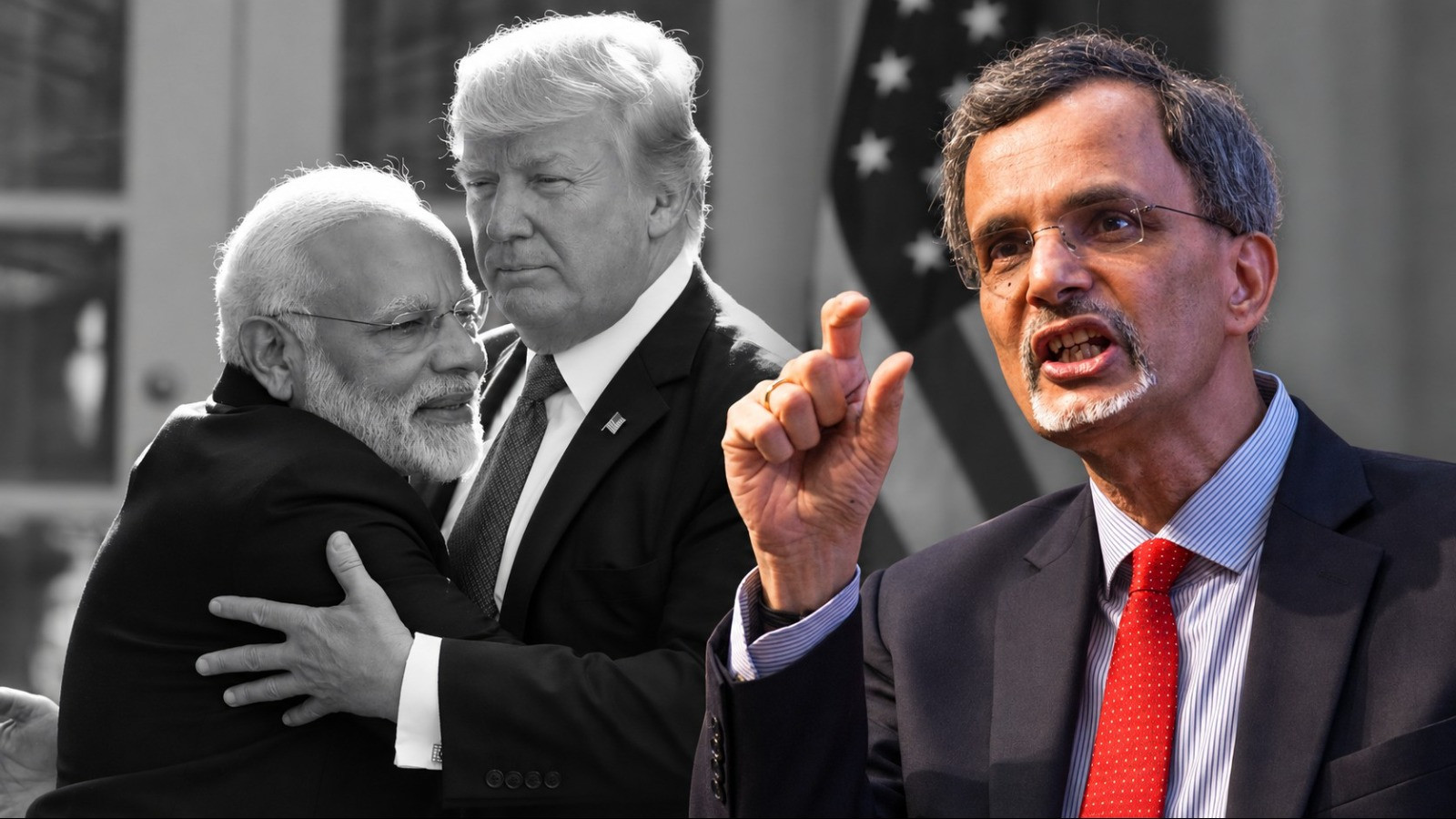
The Chief Economic Advisor stated that the country should have enough oil reserves to meet needs for six to nine months.
Chief Economic Advisor (CEA) V. Anantha Nageswaran said on Friday that the uncertain relationship with the United States, global energy prices, and India's weak presence in the field of artificial intelligence (AI) are challenges facing the economy in the near future.
According to a report by Economic Times , this is possibly the first time that an Indian government official has publicly considered the souring of relations with the U.S. as an economic challenge.
Nageswaran's comments came a day after Commerce and Industry Minister Piyush Goyal stated that work on a trade agreement with the U.S. is nearly complete. According to Goyal, the agreement will be implemented when the U.S. provides Indian exporters with a fair advantage over their competitors.
CEA Nageswaran said that
the U.S. Graham Act, tariffs, and other trade restrictions should be viewed as “continuous pressure” being exerted on countries to choose one of the competing geopolitical blocs. He warned that India’s strategy of maintaining a balance between different blocs could come at a “significant cost.”
Addressing the 13th PAFI annual conference in New Delhi, Nageswaran said that the world is likely moving towards a situation where there will be two or three competing blocs, with two major blocs. He stated,
“The picture emerging from the conference suggests that the U.S. itself is not involved in any confrontation. But the truth may be that two or three competing blocs are forming in the world, with two major blocs.”
Nageswaran further stated,
“Whether it is the Graham Act or trade restrictions, all these measures should be seen as continuous pressure being exerted on countries to choose one bloc.”
Under the Graham Act, which has become law in the U.S., the President is authorized to impose tariffs of up to 100 percent on countries that continue to purchase oil and gas from Russia. However, according to Nageswaran, choosing one side is not an option for India. He said that
“Given India’s size and geographical position, it cannot afford to take the risk of choosing one side. Therefore, the path for it is to maintain a balance.”
He also warned that this strategy will come at a cost. Nageswaran stated,
“India’s geographical position, its size, and its aspiration to play a significant role among global powers mean that the cost of maintaining balance will be quite high. Both public and private sectors will need to factor this into their decisions.”
According to a report by Money Control, India and the U.S. announced in February that they had finalized the framework for the first phase of a bilateral trade agreement. However, discussions have progressed due to changes in U.S. tariff policy. The U.S. law related to imposing a 100 percent tariff on major countries purchasing energy from Russia is also seen as a new challenge for this agreement, which includes India.
It is noteworthy that Piyush Goyal will participate in the G20 trade ministers' meeting in Milwaukee, U.S., from September 30 to October 1. During this time, a bilateral meeting with U.S. Trade Representative Jamison Greer is also proposed, where discussions on the progress of the trade agreement are expected.
According to a report by CNBC , CEA Nageswaran stated that,
“The phase of global disinflation has ended. Supply-related shocks are rapidly affecting the global economy, and the risk of disruption in oil supply is real.” He noted that Brent crude oil prices were around $105 per barrel, while the monthly average was approximately $114 per barrel. The challenge is not only the price of oil but also its availability.
He stated that,
“The interrelationship between trade and technology is increasing. At times, trade has also been used as a tool for exerting pressure, while there is pressure on countries to choose one of the two competing blocs.”
To address this situation, Nageswaran emphasized the need to increase India's strategic petroleum reserves. He said that,
“Given the risk of supply disruptions, the country should have reserves sufficient to meet needs for six to nine months.” He cited Japan as an example, which, according to him, has a two-year strategic reserve of petroleum products. He also mentioned that both the government and private sectors need to incorporate the cost of hedging against price risks into their planning.
According to Nageswaran, India faces extraordinary challenges on its path to becoming a developed economy. A stable growth rate of around seven percent, low inflation, fiscal discipline, investor protection, and continuity in tax policies will be essential to attract investment.
He noted that the rising costs associated with interest rates worldwide could impact international capital flows.
“Uncertain relations with the U.S. could also affect foreign portfolio investment, making it difficult to raise capital.” Nageswaran emphasized the necessity of investment in the manufacturing sector, although he acknowledged that both the government and private sector will need to rethink their operations for this.