
UPI payments over ₹2000 to incur 0.4% charge

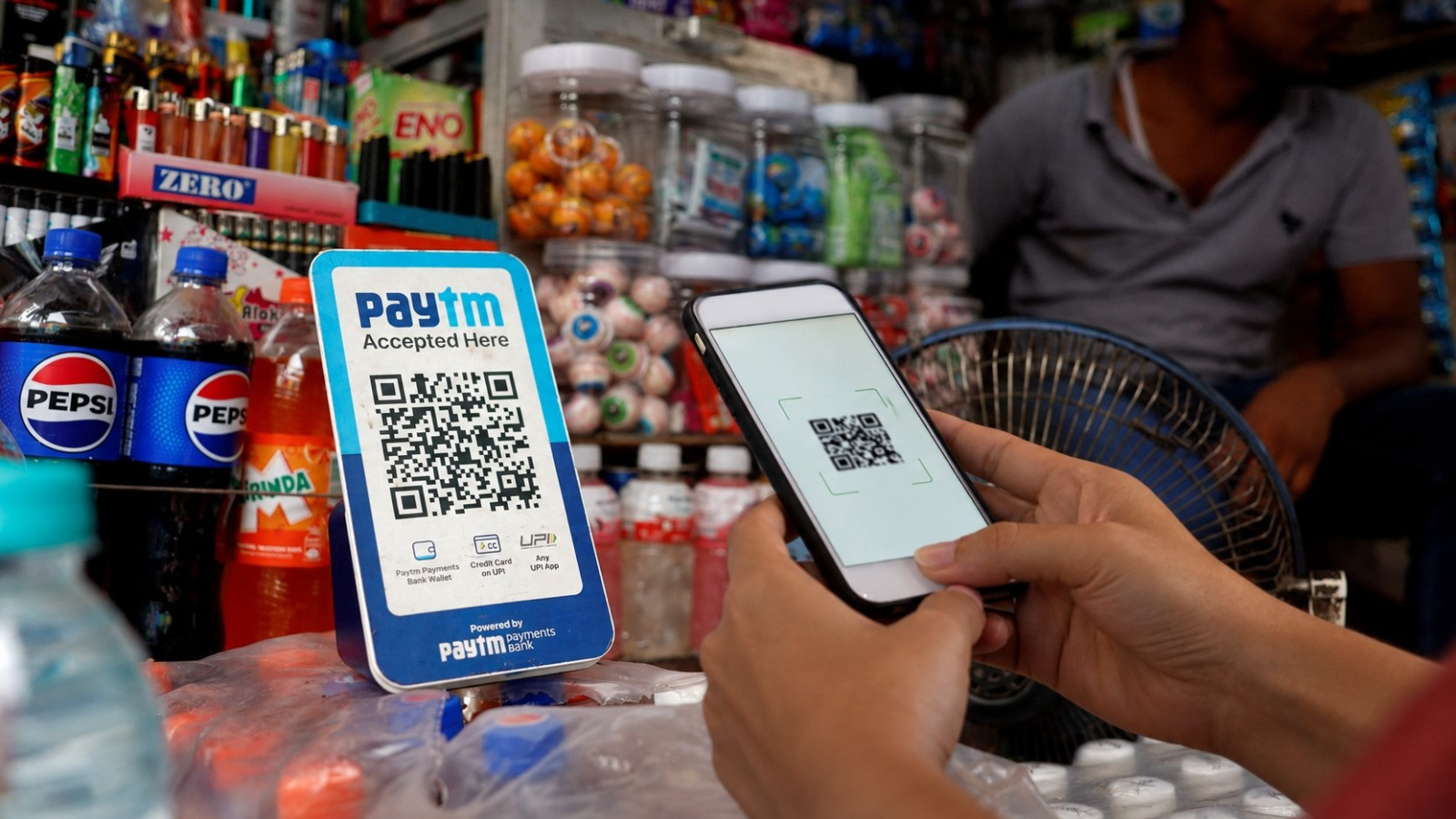
A 0.4% MDR will apply on payments exceeding ₹2,000.
The Modi government’s decision to impose a 0.4 percent Merchant Discount Rate (MDR) on UPI payments exceeding ₹2,000 has faced strong opposition from some experts in the Fintech sector.
BharatPe’s former CEO Ashneer Grover criticized the government’s decision on ‘X’.
Ashneer Grover said,
“If the government had not waived ₹22,000 crore for Subhash Chandra, UPI could have remained free in India for the next 20 years with a government subsidy of ₹8,000 crore.” Grover was referring to the loans and loan settlement scheme related to businessman and ZEE TV owner Subhash Chandra.
He further stated that,
The organization managing UPI, NPCI, has around ₹6,119 crore in cash on its balance sheet. Additionally, NPCI has earned approximately ₹1,900 crore in profit before tax.
According to Grover,
NPCI can run UPI for an indefinite period on the strength of its cash and profits. There is no need for financial assistance from the government. He also claimed that the government had collected around ₹1,000 crore in tax from NPCI last year.
It is noteworthy that the government has implemented a new framework for large digital merchant payments. Under this, a maximum fee of ₹300 will be charged for payments of ₹75,000 or more.
In support of his argument, Grover shared some economic data. He said,
If anyone searches for five minutes in India, the truth will come out. The Reserve Bank of India has transferred ₹2.87 lakh crore to the government. Listed banks have earned ₹4.11 lakh crore in profit, while NPCI has reported a pre-tax profit of ₹1,888 crore.
Citing these figures, he questioned,
“Who is actually suffering because of UPI, and how much subsidy is the government providing for this system?”
Grover also mentioned the costs associated with running ATMs and cash management. According to him,
About ₹30,500 crore is spent on ATMs and cash logistics in the country. He suggested that these costs could be reduced by decreasing the number of ATMs and promoting UPI.
He warned that,
Imposing any kind of fee on UPI would essentially be like tax collection. UPI is a technological achievement of India that has been appreciated worldwide, but it could now be weakened for tax collection.
It is important to note that the central government issued a notification on Tuesday, September 15, regarding the new Merchant Discount Rate (MDR) framework for UPI transactions. The Modi government cleverly stated that no fee would be charged on money sent to individuals, regardless of the amount. However, a catch was added that a 0.4 percent MDR would be levied on payments exceeding ₹2,000 made to merchants and other businesses. The new rules will come into effect from October 15.
The government states that,
The MDR is a fee associated with the payment system for merchants and will not be charged to customers. Person-to-person (P2P) transactions will remain completely free. No fee will be charged to the sender or receiver when sending money to family, friends, or any other person via UPI.
Payments of up to ₹2,000 made to merchants via UPI will also remain free. However, for payments exceeding ₹2,000, the merchant will have to pay a 0.4 percent MDR.
If a payment made to a merchant via UPI exceeds ₹75,000, the maximum limit for MDR will be ₹300 per transaction.
No 0.4 percent MDR will be charged on payments for essential services such as railways, telecom, insurance, petrol-diesel, electricity, water, piped gas, education, and agricultural materials. For these, a fixed fee of ₹5 per transaction has been set.
A 0.02 percent MDR will be applicable on payments related to mutual funds, stock markets, stock brokers, and securities. Here too, the maximum fee will be ₹300 per transaction.
If payments for monthly electricity-water bills, OTT subscriptions, and regular investments are made through UPI AutoPay or UPI Mandate, no MDR will be charged.
The government states that merchants should not pass on the cost of MDR to customers. Banks have been advised to ensure that merchants do not charge customers any additional fees. UPI app companies have also been explicitly prohibited from imposing any platform fees or hidden charges.
NPCI has stated that the MDR applicable on UPI is significantly lower than the charges for credit cards. Therefore, shopkeepers have no strong economic reason to raise the prices of goods and services. Customers should pay the fixed price for items.
UPI will not charge MDR from small shopkeepers, street vendors, and other small traders who receive up to ₹1 lakh every month through their personal bank accounts via QR code. They are categorized under P2PM, meaning Person-to-Person-Merchant. They will not need to change their QR code or re-register.
If a small trader's account receives more than ₹1 lakh every month for three consecutive months, they will be classified as a regular trader, i.e., in the P2M category. After that, an MDR of 0.4 percent will apply on payments exceeding ₹2,000.
UPI facilitates billions of transactions every month. NPCI has stated that the amount collected from MDR will be used to strengthen the payment system, develop new technologies, enhance cybersecurity, and improve customer services. According to the government, the new MDR rules will affect only about four percent of merchant transactions. Approximately 96 percent of transactions will not be affected, as they are either below ₹2,000 or fall under the discounts provided to small traders.
Typically, payments made via credit cards incur an MDR of 1.5 to 2.5 percent, while the MDR for debit cards can be a maximum of 0.90 percent. In comparison, UPI will charge only 0.4 percent MDR on merchant payments exceeding ₹2,000. The maximum limit for high-value payments will be ₹300.