
Former finance secretary questions GDP growth rate of just 2.6%

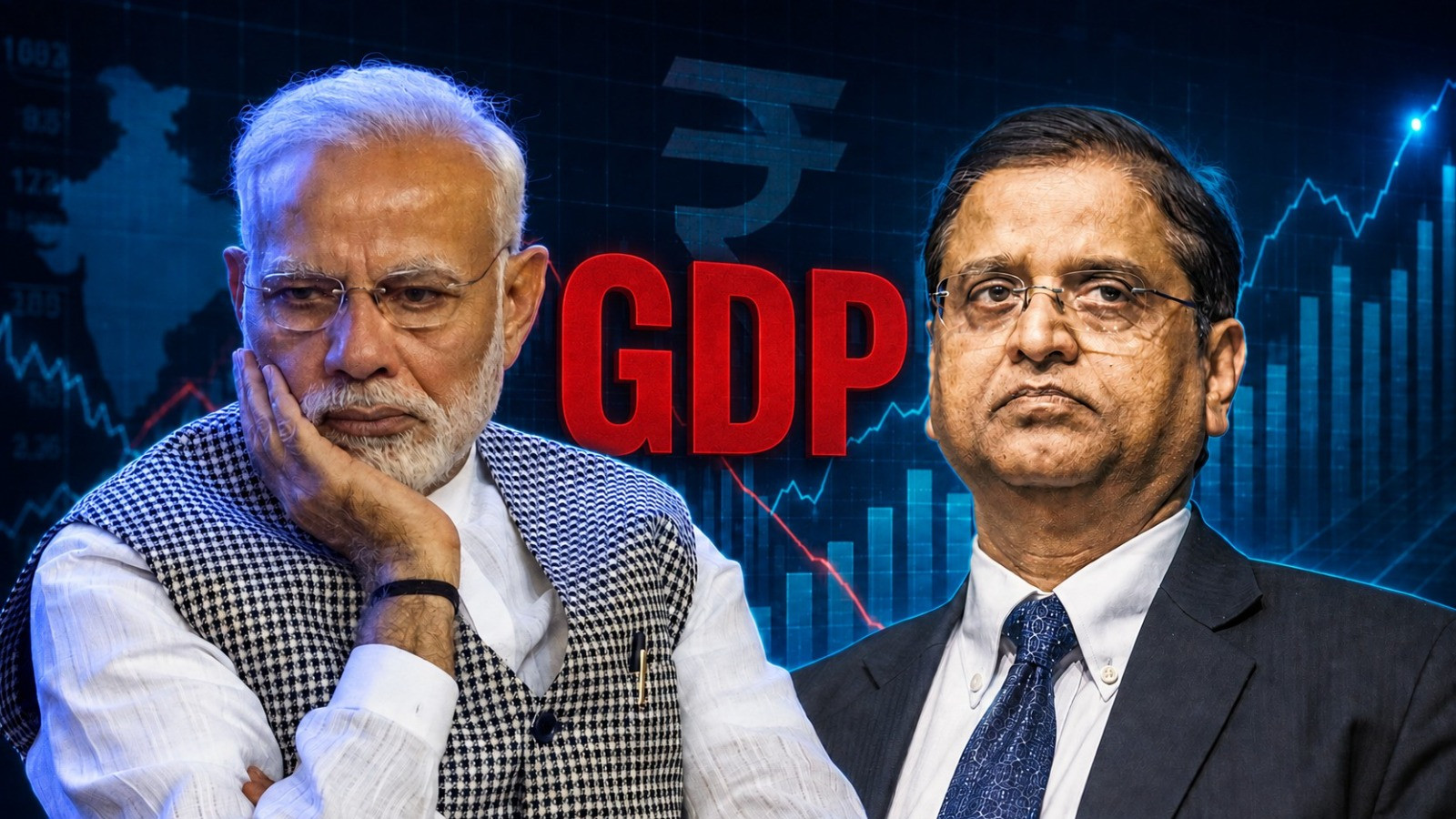
Former finance secretary Subhash Chandra Garg claims the actual quarterly GDP growth is 2.6%.
Former Finance Secretary Subhash Chandra Garg claimed that the actual quarterly GDP growth is not 7.8 percent, but around 2.6 percent. According to Garg,
the GDP for the first quarter of last year was officially reported at ₹86 lakh crore at current prices. However, the figures released this year have reduced that base to ₹80 lakh crore. This means a reduction of about ₹6 lakh crore.
He argued that if this year's growth is calculated based on last year's original and unadjusted base, the picture looks entirely different. Garg said,

If you had not revised last year's GDP, the growth at current prices would only be 2.6 percent.
Subhash Chandra Garg presented this figure during an interview with anchor Gauri Dwivedi on NDTV channel. The conversation turned into an uncomfortable debate about the credibility of the data released by the government rather than a general Q&A. During the interview, he reiterated this claim twice, each time using these two figures as the basis for his argument. The former Finance Secretary also clarified that,
both the original and revised figures were released by the government. According to him, the figures from the manufacturing sector and the recorded “negative growth” in consumption undermine the government's claims of a rapidly advancing economy.
On Tuesday, Prime Minister Narendra Modi shared a video on social media from Uzbekistan, calling these figures proof of the country's “collective strength.” He also targeted those making pessimistic predictions about the economy. Modi urged people to avoid vacationing abroad and hosting weddings, as well as to refrain from buying gold. According to the Government of India, the economy grew at a rate of 7.8 percent in the April-June quarter of the fiscal year 2026-27. This growth was significantly higher than the Reserve Bank of India's relatively cautious estimate of 7 percent.
On the other hand, the Congress party raised questions about these claims, highlighting the weak growth in the agricultural sector, sluggishness in the manufacturing sector, the state of job creation, and the rising debt issue.
Amid these conflicting claims, the NDTV anchor asked Garg, “Surely you are not suggesting that the figures are revised downwards to make them look better?” However, Garg did not back down from his claim. He stated that he was making this statement “with full responsibility.” The anchor then reminded him that government data has “a certain sanctity and credibility.” By the end of the interview, the focus of the questions shifted from the verification of the data to the credibility of the anchor himself. The anchor told Garg that he was “negating every figure being shown on the screen.”
Finally, the anchor asked Garg what suggestions he would give to the government to maintain the growth shown in the first quarter. In response, Garg said,
The government should first “acknowledge the real state of the Indian economy, that there is no real growth happening. After that, instead of adjusting the figures in some way, it should take the right corrective steps.”
He concluded by reiterating, “It is essential to first acknowledge that a problem indeed exists.”
After the debate on this issue intensified on social media and in political circles, the Ministry of Statistics and Programme Implementation (MoSPI) responded to the raised questions in six points on Wednesday. The ministry stated that its methodology is correct and that the figures released on Monday are also accurate. According to the MoSPI figures released on Monday,
India's GDP grew at a rate of 7.8 percent in the April-June quarter. This was significantly higher than most economists' expectations and also more than the Reserve Bank of India's estimate of 7 percent.
Revisions were also made to the old figures, including increasing the growth for the January-March quarter from 7.8 percent to 8.6 percent. According to the ministry, these revisions were made due to the use of new output producer price index (PPI), updated series of the industrial production index (IIP), and this year's released banking services price index.
However, some economists, former bureaucrats, and politicians have raised questions about these figures. Some economists disagreed with the “deflator” used to convert the gross value added at current prices in the manufacturing sector to constant prices, i.e., real GVA.
Meanwhile, former Finance Secretary Subhash Chandra Garg criticized the figures, stating that the nominal GDP growth in the April-June quarter should be 2.6 percent and “in reality, it is close to zero.”