
India-US trade deal now very difficult: Nirmala Sitharaman

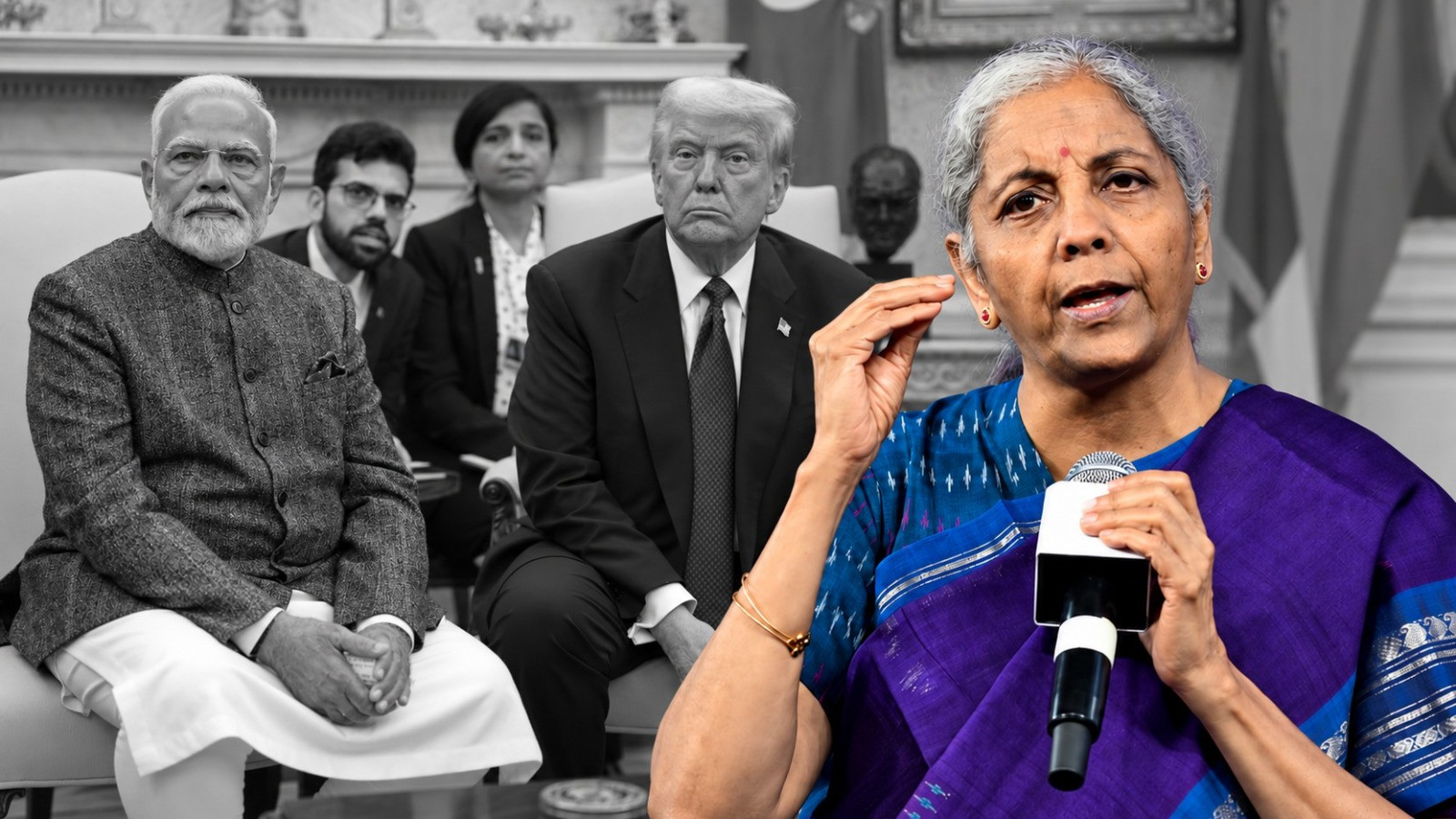
US Trade Representative Jamieson Greer also stated that an immediate trade agreement with India is unlikely.
The scope for progress in the long-standing trade agreement negotiations between India and the United States now appears limited. On Monday, Union Finance Minister Nirmala Sitharaman stated that the discussions between the two countries have reached a point where it may be difficult for either side to offer further concessions. However, she also clarified that talks regarding the agreement are still ongoing.
At an event held in New Delhi, Sitharaman said that,
“The negotiations on the India-U.S. trade agreement have reached a stalemate where no clear path forward is visible. Her statement indicates that both sides will need to explore the limited remaining possibilities for concessions and agreements to move in the direction of a deal.”
The Finance Minister made these comments during the Munich Leaders Meeting held in the national capital.
According to news agency ANI, the Finance Minister stated that,
“If both countries have room to take a few more steps, they will do so. Perhaps if some room remains, both sides will utilize it.”
This comment has further heightened the uncertainty regarding the swift completion of the trade agreement. Two points emerge from the Finance Minister's statement. First, both countries have engaged in detailed discussions regarding the agreement. Second, despite this, consensus on some issues remains pending. Thus, her statement cannot be viewed as an announcement of the end of negotiations, but rather as an indication of the difficulties arising in making further progress.
Earlier, U.S. Trade Representative Jamieson Greer had also stated that an immediate trade agreement with India is unlikely. He made this comment after meeting Indian Commerce and Industry Minister Piyush Goyal in the U.S. last week. Greer and Sitharaman's statements clearly indicate that despite ongoing discussions, the hope for a swift finalization of the agreement remains weak for now.
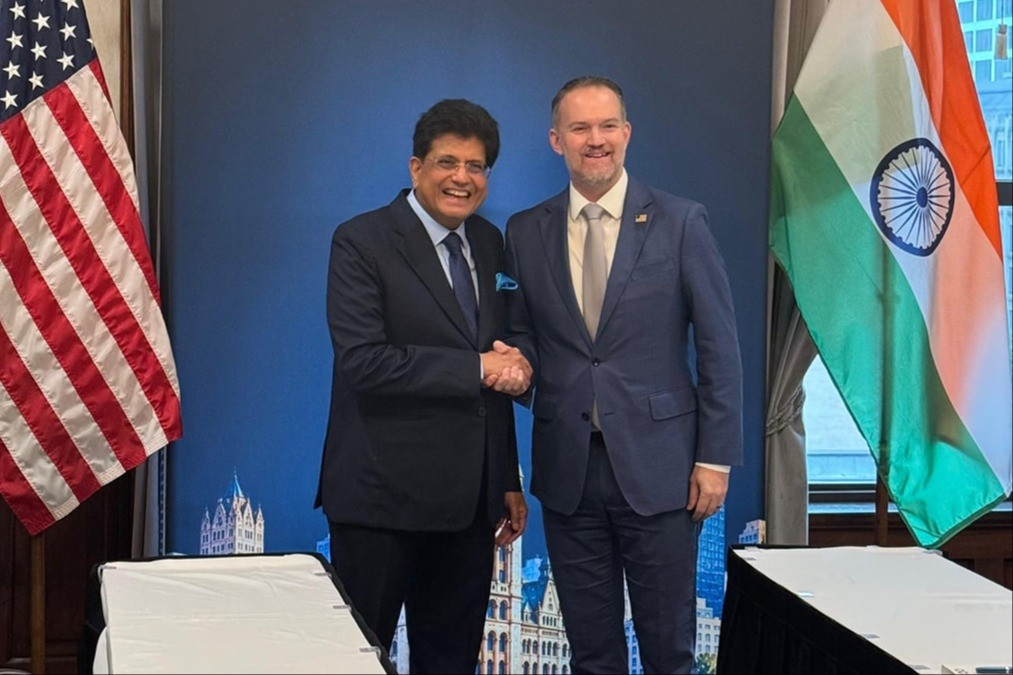
The trade imbalance between the two countries remains a significant issue in the discussions. According to Sitharaman,
“The U.S. wants to reduce its trade deficit with India. Previously, efforts were made to address trade imbalances through negotiations, opening markets, and providing greater access to each other's products. Now, the use of tariffs has also increased as a pressure tactic in trade policy.”
India and the U.S. had announced a framework for an Interim Trade Agreement (Interim Trade Agreement) in February 2026. Both countries also mentioned that they would continue discussions on the Bilateral Trade Agreement or BTA. This framework included issues such as reducing tariffs, addressing non-tariff barriers, increasing market access, and strengthening supply chains. Discussions continued at the end of September and the beginning of October. Commerce and Industry Minister Piyush Goyal visited the U.S. from September 29 to October 5 and discussed advancing the interim trade deal with U.S. officials.
Sitharaman also raised questions about the increasing use of tariffs. She stated that tariffs have been a means of negotiation within the existing trade framework, but their use has become more aggressive now. Citing India's growing trade deficit with China, she questioned whether every trade imbalance could be resolved in this manner through tariffs.
The Finance Minister cited the India-EU Trade Agreement as an example, stating that,
“India is keeping in mind the interests of its sensitive sectors during negotiations. According to the European Commission, India and the EU completed negotiations for a Free Trade Agreement on January 27, 2026. In September, the European Commission sought approval from the EU Council to sign and implement this agreement.”
Sitharaman said that,
“In the current global trade environment, India's goal is to enter into agreements that not only enhance market opportunities but also protect the interests of domestic and sensitive sectors. Negotiations regarding the India-U.S. deal are ongoing, but the Finance Minister's recent statement indicates that reaching consensus on the next major concession will not be easy for both countries.”
Earlier, Commerce and Industry Minister Piyush Goyal had stated that India would announce the final details of the Bilateral Trade Agreement, or BTA, only when Washington agrees to provide better tariff rates for Indian products compared to competing countries.
Goyal had said,
“As soon as the U.S. is in a position to offer us preferential rates compared to our competitors, we will finalize the BTA and announce its complete details.” His statement indicates that India seeks benefits for its exporters under the agreement that would provide them a better position in the U.S. market compared to competing countries. Therefore, preferential tariff rates remain a crucial condition for finalizing the agreement.
The U.S. has imposed an additional 10 percent tariff on India and several other countries since July 24. Amid changing tariff structures, India seeks better trade terms, while the U.S. emphasizes reducing the trade imbalance. Following Sitharaman's statement, attention now turns to how both sides reach an agreement within the limited remaining scope. Currently, negotiations are ongoing, but no definitive timeline for the announcement of the agreement has emerged.