India joins 130 countries in voting against US sanctions on Cuba
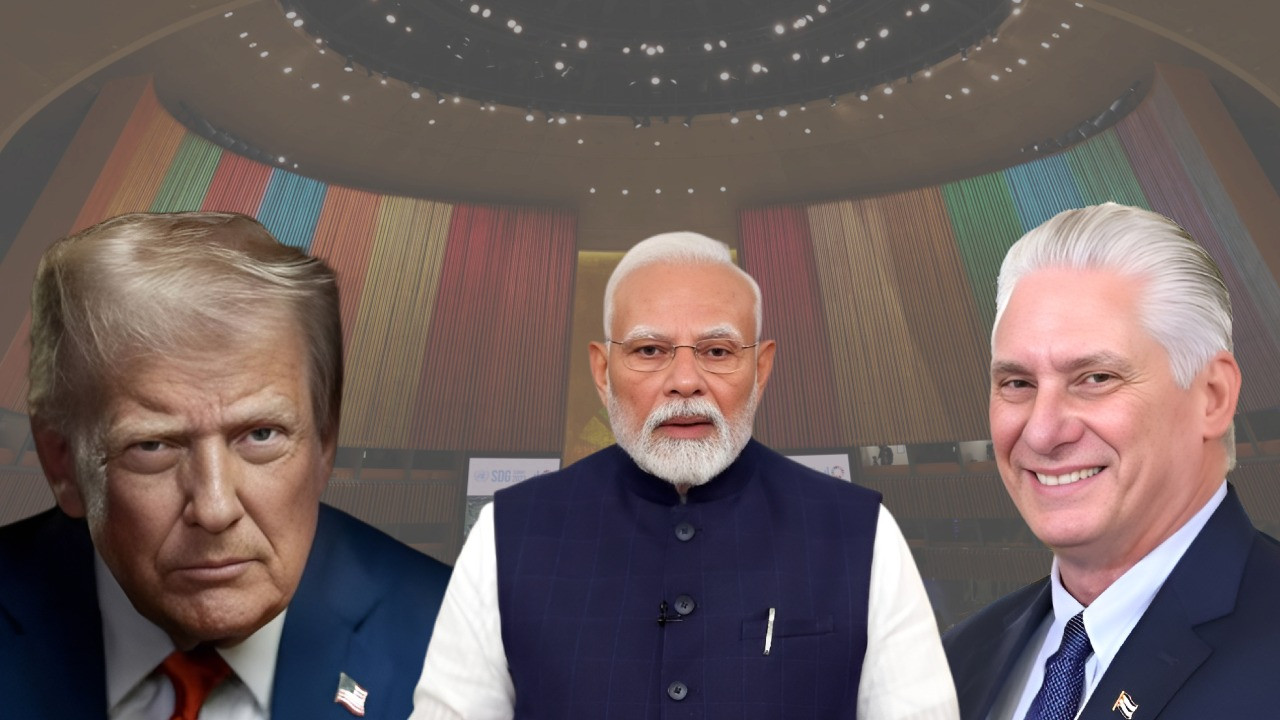
India supported the call to lift US economic, commercial, and financial sanctions. The General Assembly's proposal is non-binding.
The United Nations General Assembly, on October 28, 2026, passed a resolution calling for the lifting of the U.S. economic, commercial, and financial embargo against Cuba with the support of 130 votes. A total of 17 countries voted against the resolution, while 25 countries were absent from the voting. This resolution was adopted during the 81st session of the United Nations General Assembly. However, there was a significant decrease in support for the resolution compared to last year's voting. In 2025, 165 countries voted in favor, while seven countries opposed it and 12 countries were absent from the voting. This year's decrease in support and the increased number of countries opposing and abstaining from voting have once again brought the issue of U.S. sanctions on Cuba to the forefront of international diplomacy.
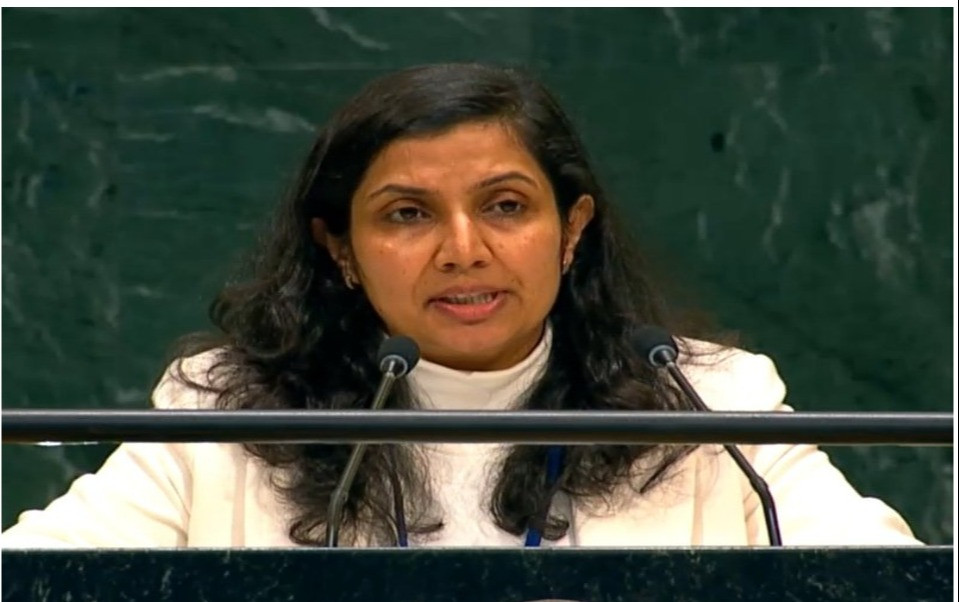
India, while voting in favor of the resolution, raised the question of the impact of unilateral sanctions on international law, national sovereignty, and economic development. India's representative at the United Nations, Soumya Nair, stated that India supports the General Assembly's appeal to refrain from implementing and to withdraw laws and measures that have extraterritorial effects on other countries and adversely affect their sovereignty, progress, and prosperity. She linked this stance to the responsibilities of member states under the UN Charter and international law.

India also emphasized the importance of multilateralism, dialogue, and diplomacy in resolving international disputes. According to the Indian representative, the early lifting of sanctions could provide the people of Cuba with greater participation in international cooperation and opportunities to meet their developmental needs. Thus, India's statement was not limited to Cuba's economic situation but also highlighted the broader principles that underpin the international debate on the legitimacy and effectiveness of unilateral sanctions.
The history of U.S. sanctions on Cuba dates back to the early years of the Cold War. Following the Cuban Revolution in 1959, tensions between the U.S. and Cuba escalated. The nationalization of U.S. properties in Cuba, its growing ties with the Soviet Union, and disputes related to regional security deepened the confrontation between the two countries. In the 1960s, the U.S. expanded trade restrictions and imposed comprehensive trade sanctions in 1962. In subsequent decades, U.S. laws and administrative measures further broadened the scope of these sanctions. Notably, the 1996 Helms-Burton Act strengthened the sanctions regime within U.S. domestic law and affected foreign companies and individuals in certain circumstances. Thus, the issue of Cuba has become not just a matter of bilateral economic relations but also a dispute related to international trade and national jurisdiction.
At the United Nations, India drew attention to the humanitarian impacts of the sanctions by mentioning the difficulties faced by Cuba's healthcare system, food production, and energy supply. According to the Indian statement, there is a shortage of more than 60 percent of essential medicines in Cuba's healthcare system, while food production has decreased by over 50 percent in the last five years. Restrictions on fuel supply have also exacerbated the energy crisis, affecting healthcare services, education, water supply, food distribution, and transportation. These figures were presented by the Indian representative in reference to the UN Secretary-General's report.
However, when analyzing Cuba's economic problems, it is essential to distinguish between the effects of sanctions and domestic economic factors. Sanctions can impact trade, financial transactions, imports, and the availability of essential goods, but understanding the decline in production and economic crisis cannot be attributed to a single factor. Cuba's internal economic policies, production capacity, availability of foreign currency, and energy dependence are also relevant in this context. Therefore, it is necessary to consider broader economic and social conditions when evaluating the humanitarian consequences of sanctions.
Another significant aspect of this year's voting was the shift in the stance of Western countries. Germany and Italy chose to abstain from voting instead of supporting the resolution. U.S. Ambassador Mike Waltz presented this outcome as a diplomatic success for the U.S. According to him, several countries, including major economies like South Korea and Germany, have changed their stance. According to a report by the news agency Reuters, the U.S. made diplomatic efforts to garner support against the resolution before the voting. However, the decision of the countries that abstained from voting cannot automatically be seen as opposition to the resolution. Each country's decision may be influenced by its economic interests, bilateral relations, and foreign policy priorities.
Before the voting, there was a heated debate between the representatives of the U.S. and Cuba in the General Assembly. U.S. Ambassador Mike Waltz accused the Cuban government of repression and corruption, while Cuba's Foreign Minister Bruno Rodriguez Parrilla objected to his statement. The proceedings had to be suspended for some time during the debate. Cuba also alleged that the U.S. pressured some countries to vote against the resolution and threatened visa restrictions and economic sanctions. These allegations should be viewed as claims from the concerned parties; additional evidence is required for independent verification.
The proposal to end U.S. sanctions on Cuba has been regularly presented in the United Nations General Assembly for over three decades. Nevertheless, there exists a significant institutional gap between the General Assembly's resolutions and actual changes in the U.S. sanctions regime. The General Assembly's resolutions express international public opinion and signal the diplomatic stance of member countries, but they do not, in themselves, compel the U.S. to lift the sanctions. The process of lifting U.S. sanctions is also related to U.S. domestic law and the powers of the executive and Congress.
In this context, the 2026 voting brings to light two interrelated trends. First, a majority of member countries, including India, continue to support the demand for the lifting of sanctions. Second, the decrease in support compared to last year indicates a shift in international diplomatic consensus on this issue. Nevertheless, the outcome of the voting does not guarantee a change in U.S. policy. The future of sanctions on Cuba will ultimately depend on the evolving circumstances among U.S. domestic politics, bilateral relations between Havana and Washington, and international pressures.