
Will Netanyahu's 19-year political journey come to an end?
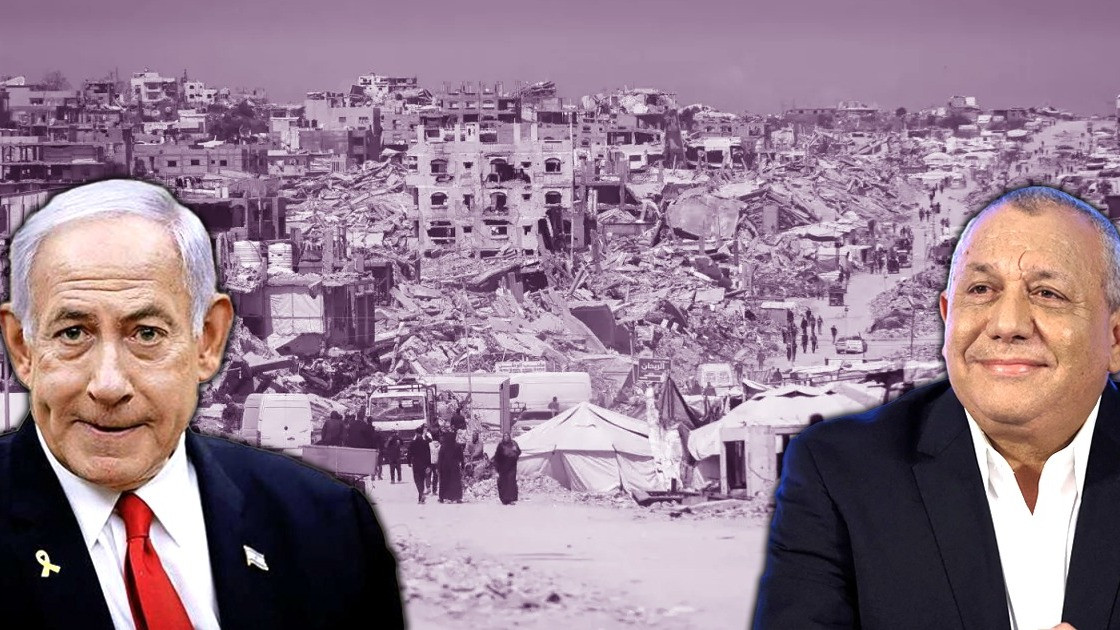
After 19 years at the helm of Israeli power, Netanyahu appears to be in a tough spot this time.
Today, on 27 October 2026, parliamentary elections are being held for the first time since the Hamas attack in Israel on 7 October 2023. Current Israeli Prime Minister Benjamin Netanyahu is facing the challenge of preserving his political power in this election. After being at the top of Israeli power for 19 years, Netanyahu appears to be in a difficult position this time, but he is still considered a key contender for the prime ministerial post. Most surveys conducted before the elections indicate that Netanyahu is far from securing a majority. However, his main rival coalition, led by Gadi Eisenkot, also does not seem to reach the majority mark. Nevertheless, most surveys estimate that it will secure more seats than Netanyahu's coalition. It is being said that Eisenkot is receiving support from both right-wing and centrist voters in this election.
This election is taking place after one of the most tumultuous periods since the establishment of Israel in 1948. The backdrop includes the Hamas attack on 7 October 2023, subsequent Israeli military actions in Gaza, and deep divisions within the country regarding Netanyahu's right-wing government's policies. For many of Netanyahu's opponents, the most important issue in the election is accountability for the security lapses during the attacks on 7 October.

Another significant electoral issue is the recruitment of Haredi community Jews into the military. Military service is mandatory for most Jews in Israel. However, since the country's establishment in 1948, 400 members of the Haredi community have been exempted from military service to continue their studies in religious institutions. The aim of this decision was to preserve the education of religious scholars and Jewish religious traditions. However, over time, the scope of this exemption has expanded and has now become a major controversy in Israeli politics. People from other communities argue that when the country is going through war-like conditions, the responsibility of serving in the military should be shared by all. Meanwhile, Netanyahu receives support from the Haredi community, so he is in favor of maintaining this exemption. In contrast, former army chief and Netanyahu's main opposition leader Gadi Eisenkot wants Haredi community members to also enlist in the military or contribute to civil service.
Netanyahu has also been accused of imposing restrictions on or diminishing the powers of the Supreme Court during his tenure. This has become a major point of contention between the ruling party and the opposition. Therefore, this is also an issue in the current elections. Additionally, Netanyahu has not been able to fully claim control over Hamas in Gaza, and Hezbollah remains active in Lebanon. All these issues could also influence this election.
Amidst all these issues, Netanyahu has appealed to Trump for help. According to an Axios report, Netanyahu has requested Trump to make further statements in support of him before the elections. The report, citing an American source and an Israeli source, stated that Netanyahu spoke to Trump twice in three days and asked him to strengthen his previously given statement of support.
Following this, last Sunday evening, Trump issued another statement on his social media platform Truth Social, appealing to Israeli voters to vote for Netanyahu. Supporting Netanyahu's tough stance against Iran, he described him as a strong prime minister. Trump stated that the United States and Israel need to work together to get the job done. He had previously supported Netanyahu and indicated that his defeat could affect U.S.-Israel relations.
Meanwhile, yesterday, Israeli media reported on tensions between Netanyahu and IDF Chief Eyal Zamir. In fact, opposition leaders have accused Netanyahu of potentially launching attacks on Iran to influence the elections. In this context, yesterday Times of Israel reported, citing Channel 12, that Netanyahu had ordered the IDF chief to attack Iran before the elections, which the army chief refused, stating that he needed a written order as per regulations and discussions with all parties beforehand. Following this news, the opposition continued to attempt to corner Netanyahu.
Now, the eyes of the world are on the election results on 4 November. If Netanyahu loses this election and Gadi Eisenkot becomes Israel's new prime minister, it will be interesting to see how different it will be for Israel and especially the Middle East.
WSJ reported in a report that current Prime Minister Benjamin Netanyahu and the main opposition candidate Gadi Eisenkot have significantly different styles, backgrounds, and views on many key issues. However, on issues that the whole world is watching, such as the future of Gaza, war with Iran, and the question of creating a separate Palestinian state, the differences between the two leaders are not as pronounced.
Netanyahu has held power in Israel at various times over the past 19 years. Eisenkot, who is challenging him, has different views on many issues, but there are significant similarities in their positions regarding Gaza, Iran, and the future of the Palestinian nation.

Md. Tousif
मोहम्मद तौसिफ़ राष्ट्रीय और अंतर्राष्ट्रीय खबरों पर नजर रखते हैं और ‘द क्रेडिबल हिस्ट्री’ में रिसर्चर के रूप में कार्यरत हैं।