
Election Commission to visit Punjab on October 27-28 amid vote theft allegations
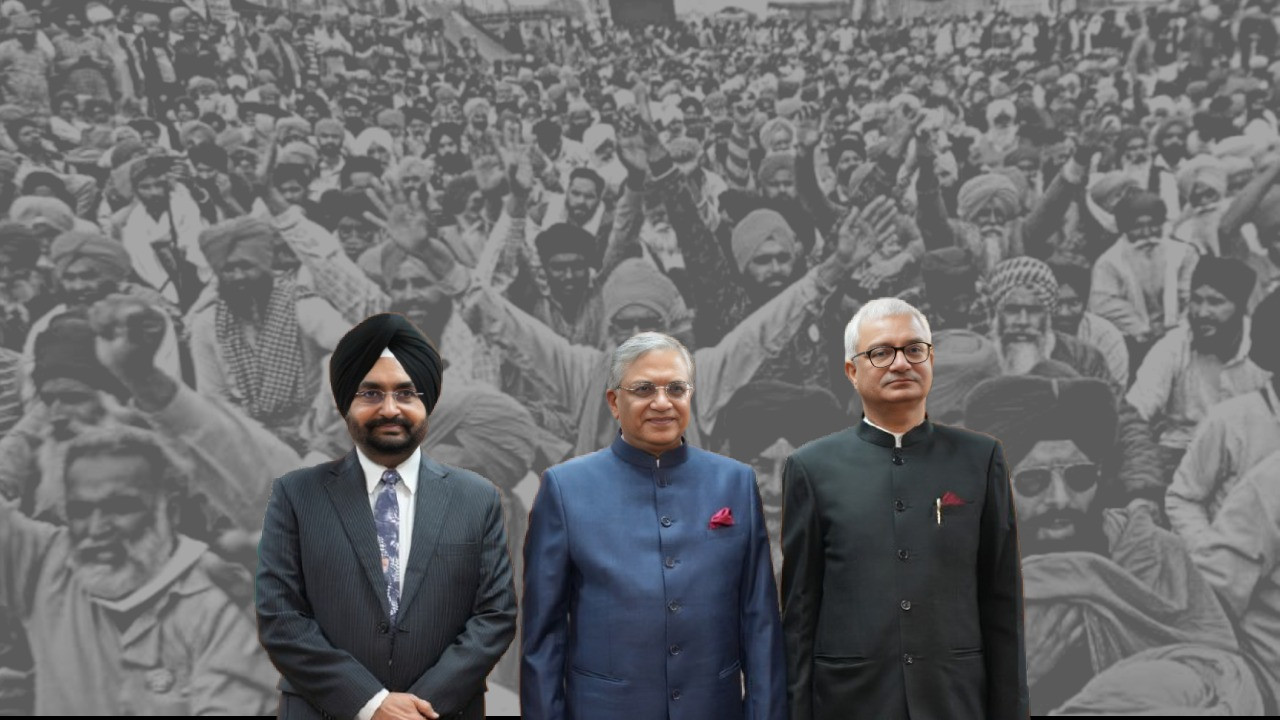
The visit gains significance as Union Home Minister Amit Shah met families affected by drugs in Punjab on October 20.
A team of senior officials from the Election Commission of India will visit Punjab on October 27 and 28 to review preparations for the 2027 Assembly elections. The team will assess security, voter lists, and polling arrangements by interacting with political parties, civil administration, and police officials. The proposed visit of the Election Commission to Punjab on October 27-28, 2026, cannot be considered merely a routine review of electoral preparations. Currently, issues such as the drug crisis, law and order, special revision of voter lists, administrative impartiality, and preparations for the 2027 Assembly elections are interconnected.
In the present circumstances, the significance of this visit cannot be limited to administrative inspection alone. It also presents an opportunity to address the credibility of the electoral process in Punjab, law and order, and the grievances of political parties before the Commission. The process will also examine the objections and suggestions raised by the main opposition parties, including Congress, Shiromani Akali Dal (Badal), Bahujan Samaj Party, Bharatiya Janata Party, and other political groups.
Can elections be held before the scheduled time?
It would not be appropriate to consider this visit as an indication of the election date being announced, but estimates based on the previous 2022 schedule may come up for discussion. Following the Election Commission's visit on December 15-16, 2021, elections were announced on January 8, 2022. The current term of the Punjab Assembly is until March 16, 2027. This visit seems to indicate the plan mentioned by Arvind Kejriwal in Bathinda that he has credible information about early elections in Punjab.
Punjab has 117 Assembly seats. The Commission can determine the phases of the elections by assessing security, administrative capacity, and the availability of electoral materials. Whether voting will take place in one phase or if special arrangements will be needed in certain circumstances, or if the phases of the elections may increase, will depend on the Commission's decision.
What issues may the Commission focus on?
The significance of this visit has increased because on October 20, Union Home Minister Amit Shah visited families affected by drugs in Punjab, and Punjab Chief Minister Bhagwant Mann announced that the investigation into the murder of anti-drug activist Parvinder Singh Jhota would be handed over to the CBI. This has brought the issues of drugs and security to the forefront of political debate in the election-bound state.
After Union Home Minister Amit Shah's meeting with the affected families, the assurance of waiting for justice for three months has been interpreted in various ways in political circles.
The final voter list for Punjab was published on October 12. According to various reports published in newspapers, it contains approximately 2.01 crore voters. The report indicates a net decrease of 13.60 lakh names compared to the preliminary list, although new voters have also been added. The number of polling stations has also been increased to 25,332. This change does not, in itself, indicate the removal of incorrect names, but during the Commission's visit, political parties may demand clear information regarding name deletions, registration of new young voters, and the resolution of claims and objections, although all political parties have already expressed satisfaction with the SIR process conducted in the state. The Aam Aadmi Party will review the government's electoral preparations and law and order record, and the Commission's team will assess the administrative preparations.
Law and order and electoral security
In the context of Punjab, which shares an international border, law and order is the most critical issue. The appointment of a regular police chief (DGP) in the state was made only recently after four and a half years.The BJP will not want to miss the opportunity to raise its issues regarding security, action against drugs, and electoral arrangements before the Commission. The Shiromani Akali Dal and other parties will also seek to register their concerns regarding the voter list, polling stations in rural areas, local grievances, and arrangements for free and fair elections. The Commission can examine how effective the police preparations are in taking action against criminals, identifying sensitive areas, and preventing violence during elections.
Political accusations against the Aam Aadmi Party's Bhagwant Mann government regarding drugs and law and order give additional significance to this review.It becomes extremely necessary for the Commission to review sensitive polling stations, police preparations, the need for central security forces, and control over the illegal use of money, liquor, and narcotics. However, it is essential to differentiate between general law and order issues and specific security concerns that may affect the elections.
Administrative impartiality
A crucial question for political parties will be whether the district administration and police are treating all parties equally. Accountability may be demanded regarding the resolution of complaints, impartiality of officials, electoral expenses, and the use of government resources.This is particularly relevant given the significant uproar over the performance of the Aam Aadmi Party government during the recent municipal elections in the state. The Supreme Court recently ordered re-elections in 50 wards of Punjab's municipal elections after allegations of electoral irregularities and fraud were proven.
Implications of this visit for political parties
The visit of the Election Commission's team of senior officials is part of the general pre-election preparations. The Commission is reviewing the preparations for Assembly elections in five electoral states in 2027. Typically, the Chief Election Commissioner and other election commissioners visit the relevant states before announcing the election schedule. The timing of the visit coinciding with Punjab's Assembly session also inspires various speculations in politics. Therefore, the likelihood of the election schedule being announced shortly after the visit on October 27-28 increases.
This visit is taking place at a time when the BJP is intensifying its attacks on the Aam Aadmi Party government regarding drugs and law and order, while Congress is trying to turn the anti-incumbency atmosphere to its advantage and the Akali Dal is attempting to strengthen its political base. In recent developments, the BJP has made the issue of drugs a major political topic. In response, Chief Minister Bhagwant Mann has raised questions about the BJP's intentions and the role of the Centre. The current Aam Aadmi Party is concerned about the questions being raised regarding its administrative capacity.
Political parties may be compelled to reassess their organizational preparations, candidate selection, alliance-related decisions, and the pace of electoral programs and politics. Traditionally, the BJP and Shiromani Akali Dal have contested elections in alliance, but this time the situation regarding the alliance is not yet clear. The Bharatiya Janata Party has repeatedly stated that it will contest the elections alone across the entire state this time. Congress has resolved its internal conflicts and appointed new state president Paragat Singh to lead the party, focusing on strengthening its chances of victory.
It will also be necessary for the Commission to clarify the situation on some extremely important points. What criteria will be used to identify sensitive polling stations and areas at risk of electoral violence? How will monitoring against cash, alcohol, narcotics, and other inducements be conducted? What timelines and accountability will be established to address the shortcomings identified after the visits? The real significance of this visit will be assessed based on the impartial evaluation conducted by the Commission. In the upcoming elections in Punjab, the true test of credibility will not only be whether the elections are held on time. The test will be whether every eligible voter gets the opportunity to vote, whether every party receives equal political opportunity, and whether the administrative arrangements appear fair and are indeed fair. This visit by the Commission is an opportunity to establish concrete accountability on these questions.
Jagdeep Singh Sindhu
वरिष्ठ पत्रकार और राजनैतिक विवेचक जगदीप सिंह सिंधू राष्ट्रीय हिंदी दैनिक हरिभूमि,पीपल्स समाचार,महाकौशल आदि में वरिष्ठ पदों पर रहे हैं। वह एफ एम रेडियो तरंग 104 के पूर्व स्टेशन हेड तथा पूर्व राज्यपाल सत्यपाल मलिक के राजनीतिक सलाहकार रहे हैं।