
From Multan's soil to Delhi's dust: Daryaganj via Bazaar Fatte Khan
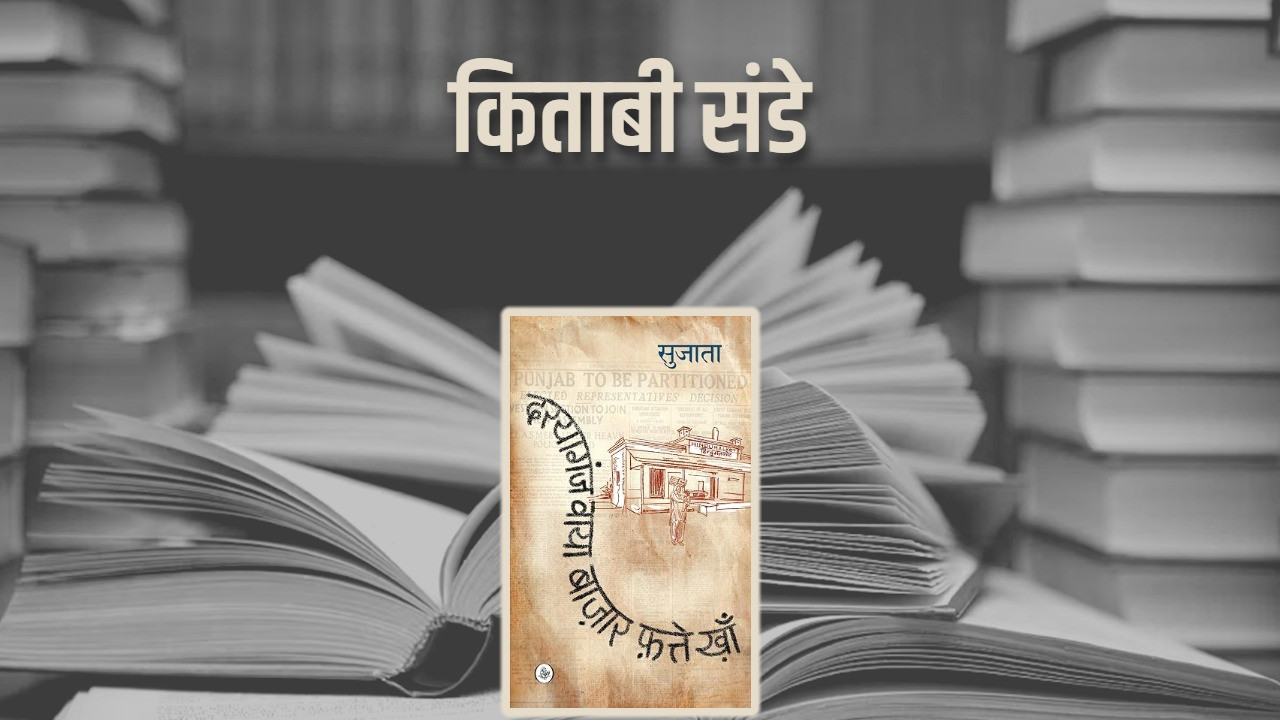
A novel that tells the story of three generations of a family that migrated to India during partition.
People who left the soil of Multan and connected with the soil of Delhi. They connected in such a way that Multan seemed to be left far behind.
Many books have been written on partition, but Daryaganj Vaya Bazaar Fatte Khan is a book that captures the repetition of displacement.
In space, time, and generations.
As if it were a vicious cycle.
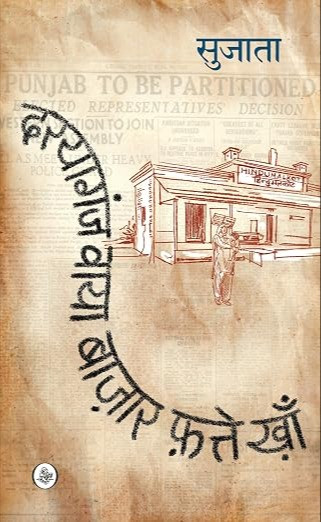
This 438-page book begins in Multan's Bahawalpur state. Where Hindus, Muslims, and Sikhs lived as if they were all made of the same Multani soil. Their language or culture was not Punjabi, Balochi, or today's Indian or Pakistani, but Multani. Bulle Shah's land where the elder brother was called ‘Bhaape’ and the wife ‘Kuwaar’. And one day suddenly it became part of Pakistan.
Hundreds were killed, and those who survived had to flee and live in refugee camps in Delhi. During a mushaira at the Red Fort, Pandit Nehru's eyes filled with tears at a Lahore poetry—
Es mulk di wand kolon
Khoe tusi vi o, khoe asi vi haan
Ina azaadiyan haththon barbaad
Hoye tusi vi o, hoye asi vi haan
(You too lost pieces of this country, we too lost pieces)
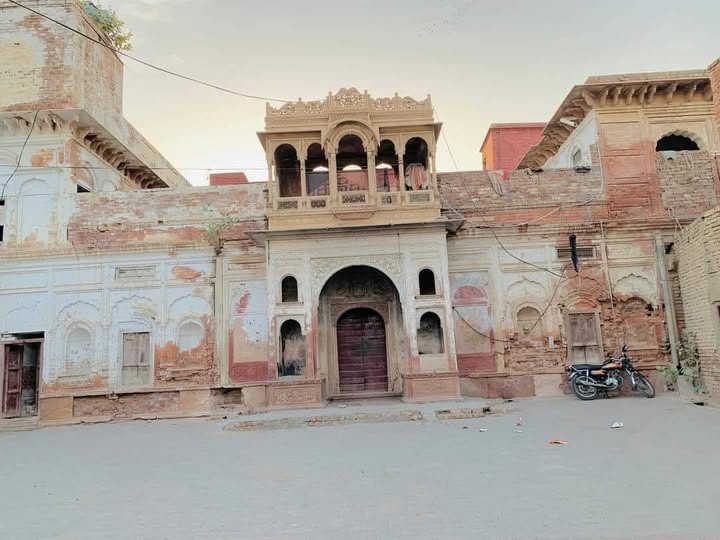
However, the story of Multan and partition is only in the first hundred pages. The subsequent story is of Delhi, where these displaced Multanis start their new lives. The author Sujata has meticulously and gradually translated the dialogues from Multani to Hindi. Except for a few elders who occasionally use proverbs, everyone speaks in Delhi's language. When someone calls them Pakistani or Punjabi, they say they are Hindustani.
They quickly begin to blend into India's everyday life. In government jobs, running shops, writing books, and even becoming singers and filmmakers in the Bombay film industry. At times while reading, it feels like that Muslim woman who ran away with a Hindu during partition and became a singer in films is a true story. The famous poet Kumar Katib sounds familiar. But who knows what characters these are based on.
There is a Sikh character in the book who lives with the guilt of having killed a Muslim companion during the riots, but finds peace when he learns that the person did not die from his knife. Fate is such that during the Delhi Sikh riots, he has to witness that same day again.
Similarly, the migration of people who fled Kashmir and the exodus of Kashmiri Pandits is also depicted as a repetition of displacement. As if partition and displacement were a continuous process, and the tears of those caught in this whirlpool had dried up.
There is a line in the novel—
‘Kulwanti could not be frightened by deprivation. She had never imagined soft mattresses, thirty-six dishes, or cool breezes in her life. She was a generation aware of the cruel reality of the worst days of life in refugee camps’
Although this cannot be called a flaw of the book, the timeline moves a bit too quickly. The twenty years between partition and Nehru's death pass by very quickly. And just as swiftly, the Emergency, the Sikh riots, and the subsequent exodus of Kashmiri Pandits are covered. While this does enhance the flow of the book, it would have been readable even if there were two to three hundred more pages in this book.
There is not much of a language problem, as the author has provided translations of the commonly understood Multani language in footnotes. Some sensual passages are written with such metaphors that they do not appear vulgar from anywhere, but rather remind one of an epic.
As for the repetition of displacement, there are lines in this book—
‘Repetition is not an easy thing… Just think, for centuries, man has been in love, but every time he has to invent new ways to express it. The essence is the same, it is repetition, but even in that, if one can find miracles, that is the true poet’
In the books read this year, the vast canvas shown in ‘Kayi Chand The Sare Aasmaan’ was somewhat reflected in this book.
A must-read book.
—------------------------------------------
The author's thoughts on the book by Sujata
----------------------------------------------------
Daryaganj Vaya Bazaar Fatte Khan
Sujata
Rajkamal Paperbacks
Price ₹ 550
Pages 438

Praveen Kumar Jha
प्रवीण कुमार झा नार्वे में रहते हैं। पेशे से डॉक्टर हैं, मन से लेखक। कई चर्चित किताबें प्रकाशित