
Parag Pawan's poems: A reflection of humanity in tough times
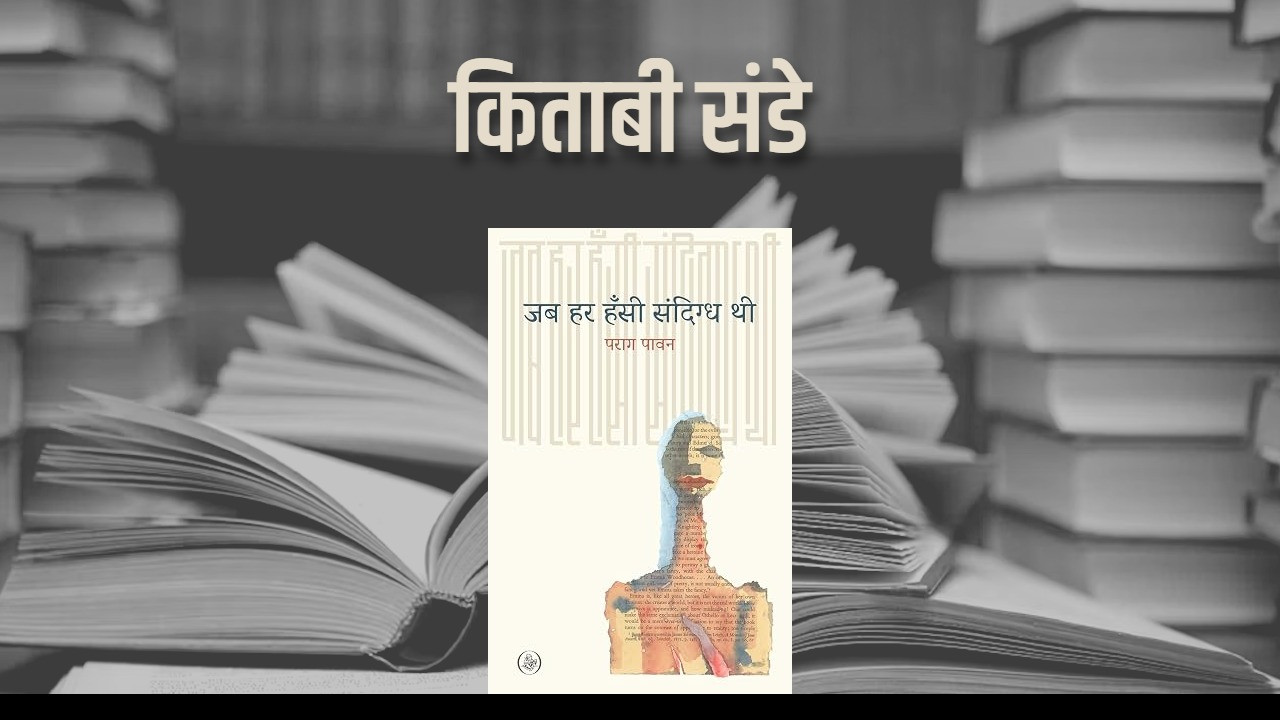
Exploring the concerns of humanity through a sequence of poetry.
Poetry lifts the veil from the hidden beauty of the world, and makes familiar objects be as if they were not familiar.- -P.B. Shelley

Shelley made this statement about poetry in 1821. I do not know what the world around him was like at that time, but the time we are living in has gradually become unbearable, so much so that poetry now says, “this world should be changed as soon as possible.”
This morning, as I write this, news is coming from home that Delhi has been turned into a fortress so that no movement can take place, and youths are being dropped off from trains under the pretext that they are going to be part of some movement. What is young Hindi poetry trying to tell us at this time? The poems of Parag Pawan reflect what is going on in the minds of the youth at this time. Senior Hindi poet Raghuveer Sahai once said in his poem “Laugh Quickly’ that ‘you are being watched.’ Now, it is not just being watched; it is the time that Parag refers to as “when every laugh was suspicious.” Laughter is no longer effective in escaping power. Every laugh is under suspicion.
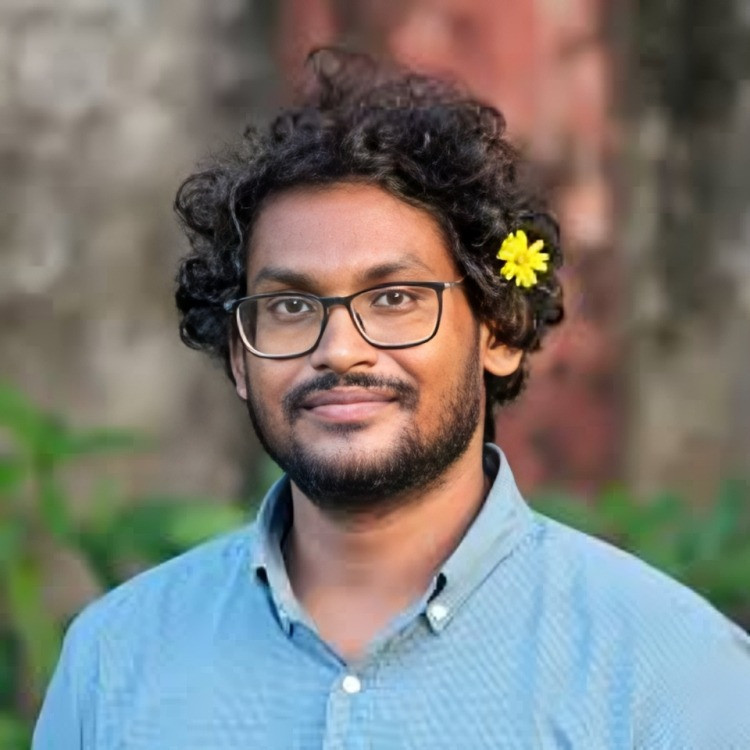
“When Every Laugh Was Suspicious” poems not only document their time as expected of poetry, but the important thing about these poems is that in writing their resistance and asking their questions, they do not rely on any metaphor; they ask direct questions so that these questions cannot be evaded due to any poetic device, nor can their context be changed-
Our unemployment
is lectured by the Prime Minister
but he does not give us work
He works for eighteen hours
while we believe that working more than eight hours
is the exploitation of any individual
If eighteen hours are divided
then at least two people can get work
A third can also
sprout two hours of brightness in their eyes
This collection titled 'Unemployed' contains thirty poems that reveal that even after so many years of independence, the issue of employment has not changed; it still stands before us with its mouth wide open, into which everything is sinking. It is not surprising that this theme recurs in almost every young Hindi poet's work. Every poet is trying to find the root of this question in their own way; another Hindi poet Nishant once wrote that “we cannot digest his job.”
Parag's poems write about every impact of this cycle of unemployment, but to ensure that it does not become an object of pity and you do not just move on saying chch chch! they ask direct questions to those who had long declared this issue to be resolved. Unemployment in these poems is not just a political issue; rather, in subtle meanings, it becomes the thread that connects Hindi poetry with poems from around the world. Wislawa Szymborska also expressed regret in her poem that in the new century we were supposed to solve the problems of hunger and unemployment, but unfortunately, our century has also grown old, and these problems remain unresolved. Spring comes and returns from the threshold; while writing the dedication of these poems, the poet speaks about the beauties of the world,
those beauties that unemployment negates; that wasted age which will never return
Reading this dedication makes one feel how we are living in a time of hardship where, at an age when one should have seen spring, the only regret is for the leaves fallen in autumn; at that age, a poet laments the loss of that age which has been wasted due to the lack of a job. Amidst this clamor of unemployment, let us not forget the context of our time, let us not consider them to be born of some fate in the cycle of time; hence, poetry keeps reminding us,
If the Prime Minister were human
the unemployed would remind him:
You promised two crore jobs every year.
Parag Pawan's collection is not just a narrative of unemployment and N.F.S. festivals; it also embodies the consciousness of women planting rice, Mahishasura, and Muktibodh's statement of the sweeper. This collection is also the statement of that girl who wanted to touch the rain and get wet, but in the same year, she jumped into marriage and died, which will continue to stink in marriage, but amidst all this, it was found that the girl never had a lover. In these narratives, intimacy is the predominant tone of Parag's poems. As we progress through the collection, the fragrance of intimacy embedded in these poems envelops us. In the light of this intimacy, we see how the poet remembers Mangalesh Dabral two years after his departure,
The tree of my voice trembles again and again
I do not lose, I do not tire
I stand like a firm, silent fish
against the current of this great flood
but beauty is so far away
that I need the thread of your lines
to pull and make goodness possible
This fluid intimacy recalls past kisses that now sleep at some depth of time, remembers the dead who will never return to our world, their habits will remain within us as memories, no longer part of life. In this world of intimacy, there are sisters, and while creating a sequence of memories, Parag writes,
What was it
that taught us to laugh
the poem being composed for her
begins with sorrow
Exploring his time, recalling people and scenes, love plays like a background melody in this collection. In this vast world for love, the poet sometimes searches for a foot of space, in that world where there is room for God and Allah to spread, but there is no foot of land for meeting love on this earth. Reading these poems of love makes one feel that the only eternal thing that remains in the course of humanity is love. Those who cannot love may find it strange that two people in love can be of any use to the world; to all of them, Parag says,
Ask those who love
if in one night there can be so much light
that you can measure
the darkness of life for a lifetime.
In this realm of intimacy, the poet's oldest companion is his brother Vihag. Vihag, whose presence reveals the glory of coming together, is infused in Parag's life, like essence in poetry. While reading Parag's poems, Vihag seems like an invisible accompanist, whose unseen presence creates the music of life in these poems.
O guardian of my soul!
Making everything into two
If we get tired
Then we must not let it become lifeless
The enchantment of that woman
This is death
We will share this half and half
We will stop half of death
With the shield of poetry.
Reading this collection of poems by Parag Pawan is to read the concerns, aspirations, and memories of the people of our time. This collection contains some questions, some love, anger born from one’s time, despair that teaches one to stand tall, a salty bitterness, and a larger family; all of these contribute to the creation of the human in this poetry. The human that Parag creates in his collection may be the most authentic representation of our time and our civilization.
--------------------
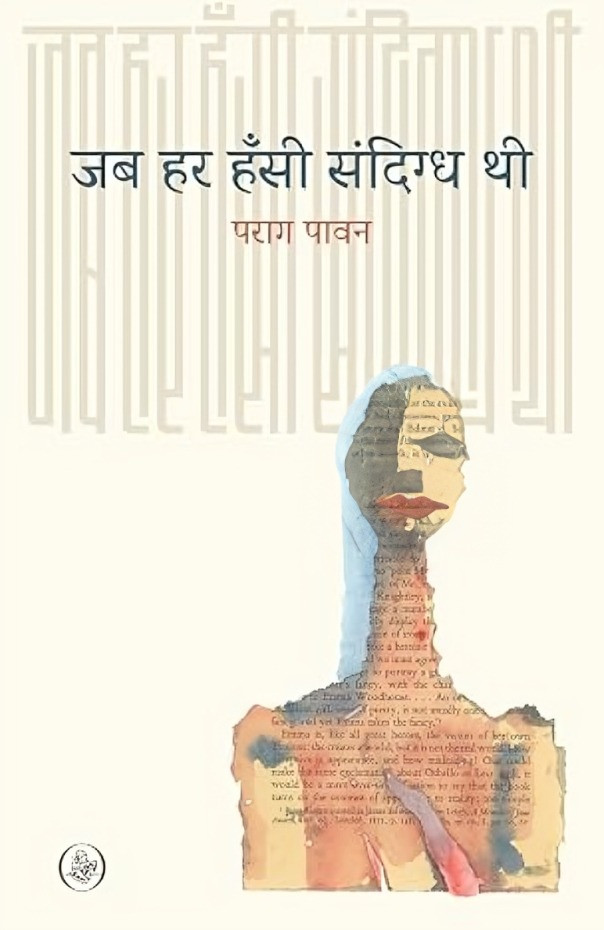
When every smile was suspicious
Parag Pawan
Rajkamal Prakashan, 2025
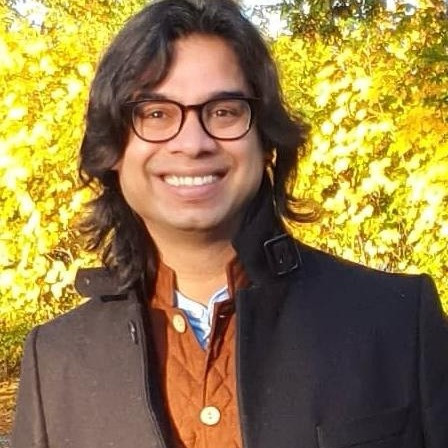
Vivek Kumar Shukla
लेखक हिन्दी साहित्य के अध्येता हैं, एक उपन्यास प्रकाशित। फ़िलहाल डेनमार्क की ओर्हुस यूनिवर्सिटी में पढ़ाते हैं।