
First Hindi book on same-sex relationships launched
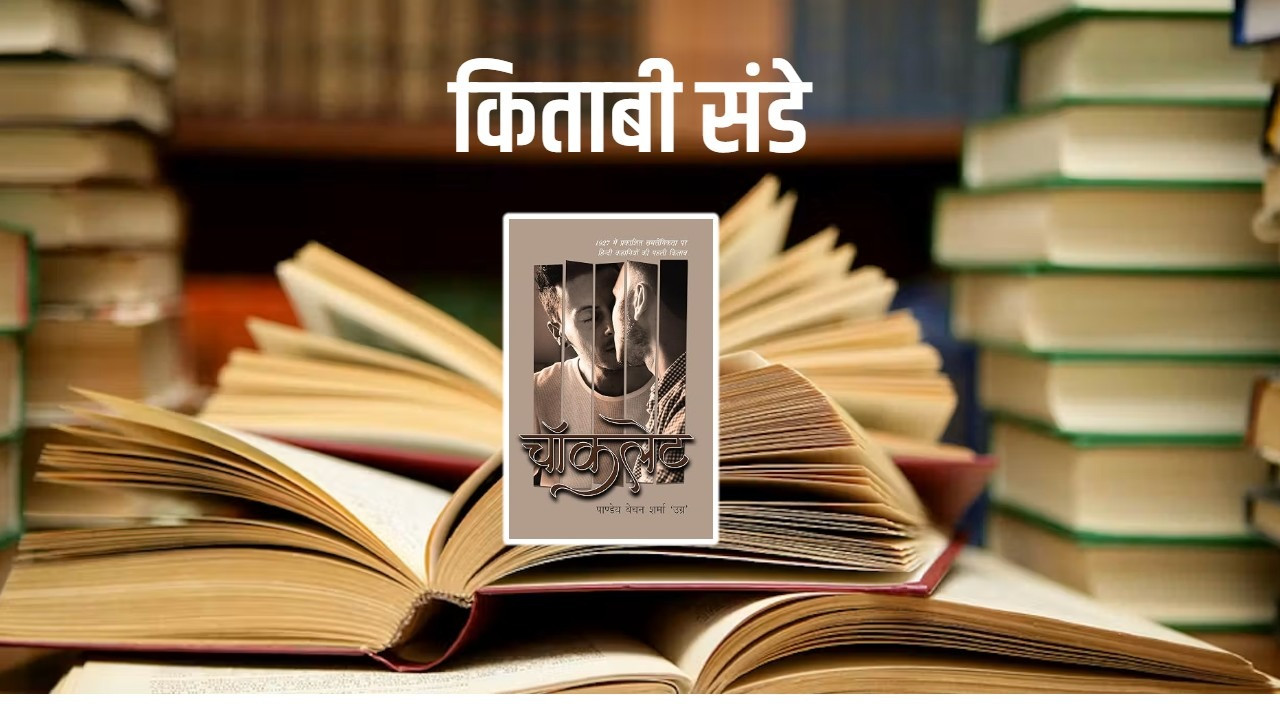
Exploring rainbow love, pedophilia, and vintage chocolates
In this sad breed
the news of the mouse's death colors the newspaper
the sports page is filled with cricket
the editorial is adorned with Pakistani hunger
Section 377 occasionally appears tucked away in a corner
the reader flips the page.
- Kriti Raj
Section 377, which kept India a love-restricted society for a long time, began during the British era. Born from British morality, this law continued to control our society even years after independence. In addition to its other provisions, Section 377 not only deemed relationships between two men or two women unnatural and illegal but also categorized them as crimes.
After many movements, lawsuits, and a long struggle, in 2018, India's court recognized that how two adults choose to live their privacy is their personal matter, and the government and law cannot violate this privacy. This year marks seven years since these relationships were decriminalized, and gradually, they have started to be treated sensitively in our society and films, with their long-standing presence moving towards general acceptance; in this context, it is interesting to know and see what the past of Hindi literature thought about this.
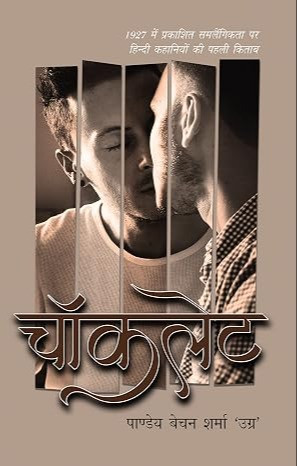
Pandey Bechan Sharma 'Ugra's' story collection Chocolate opens a window to that bygone era and presents a glimpse of the ideology of that time. This story collection was first published in 1927. These stories were initially published in a magazine called Matwala and later in book form. There was a long controversy over these stories, which were even referred to as 'ghasleti literature'; the debate was so intense that it reached Gandhi, who also commented on it. Today, as I read this story collection again, I try to understand what it was in these stories that became the root of all this controversy.
This story collection contains a total of eight stories – Chocolate, Palat, Hum Fidaaye Lucknow, Kamariya Naagin-si Bal Khaye, Chocolate Charcha, Hey Sukumar, Vyabhichari Pyaar, and Jail Mein. The style of these stories is in Ugra's own manner – straightforward and direct, as we see in his autobiography in our news. These stories feature Parsi theatre, conversations on trains, tales of generous landlords, and in all of these, there are boys who become the narrators of these stories. Boys who are sometimes called chocolate, sometimes pocket book, and sometimes palat.
“Listen clearly, remember the definition of chocolate. You may have to face it someday. 'Chocolate' refers to those innocent, young, and beautiful boys of the country whom the monsters of society push into the jaws of destruction to satisfy their 'lust'. These children are destroyed even by the best of society and are made into depraved characters. In different provinces, they have various names. People of our Yukt Pradesh remember them as chocolate, pocket book, etc. There are many such nicknames that civilized language cannot write.”
Reading this collection, it feels as if India is in a state of emergency regarding sexual perversion, where every second person is pedophilic, adolescents are victims of this exploitation, and no place, whether it be a cinema hall or a living room, is safe. As we move forward in the world of stories, we learn that there are people laying traps of grooming everywhere in society at that time. For instance, in the story Palat, a character named Mahashay Ji is in 'love' with the son of the local deputy collector, Harisundar Verma, and to deepen their acquaintance, he uses tricks from Hindi cinema, and after their acquaintance deepens, he takes his 'pure kiss' daily, explaining to Harisundar,
“He said – a kiss is a pure symbol of love. A mother kisses her child with pure love. A brother takes a pure kiss from his younger sister or younger brother.”
The outcome of this kissing is that Harisundar falls ill, is unable to take the exam due to the illness, and fails. The story ends with Mahashay Ji's 'money getting spoiled' and Harisundar's death. The narrator warns Mahashay Ji not to come to his house so that he does not turn the children there into chocolate or palat.
This event of death also appears to occur in other stories. In these stories, characters like Mahashay Ji sometimes go to jail, sometimes get beaten, and sometimes, like the poet Kalyanchandra of 'Vyabhichari Pyaar', leave money in the name of palat and commit suicide out of guilt. When such characters are punished, Ugra does not seem satisfied with that punishment. The character Prasad from Hum Fidaaye Lucknow, who is a teacher, is expelled from school due to these actions. Later, he goes to Calcutta and receives a seven-year sentence for the same actions, and the narrator comments,
“Why wasn't he given the death penalty? Such human beasts should be given capital punishment.”
While reading this collection, the question arises as to what Ugra wanted to convey through these stories? Upon pausing to read, it becomes clear that the biggest problem with these stories is that they conflate pedophilia with rainbow love and do not present any indication or thread to clarify the difference between the two. This technique has been used in many societies around the world; for instance, in some states in America, conservatives have been saying that if gay men are kept as teachers in schools, they will sexually exploit the children studying there. The Chocolate story collection ultimately appears to stand in the same ideological camp. In the story Palat, the narrator clearly states,
“Do you call this love? Love? Even unfortunate love must think that it has some use. Love for a man – for his beauty – should also be for a man! In my understanding, brother, just as 'Nari na moh nari ke roopa', similarly 'Purush na moh purush ke roopa' should also be there.”
It is true that this collection is based on this theme, but the story 'Chocolate Charcha' features a 'chocolate' who is a 21-22 year old college student whose main problem is actually ragging, which Ugra reduces to 'chocolateism'. Secondly, this book has a very subtle underlying communalism. This was the same time when Urdu was being established as the language of Muslims, Bharatendu had already declared the death of Urdu Bibi in 'Urdu ka Syapa'. In this story collection, almost every character reads couplets written in Urdu praising the beauty of adolescent boys and seems to attempt to transform an entire language into the language of pedophilia. When a character argues that Surdas was also infatuated with Krishna or that Tulsidas described Ram's physical attributes in Vinay Patrika, the narrator immediately interrupts him,
“Shut up! You seem to be a complete atheist. You are dragging even Lord Ramchandra and Shri Krishna into supporting boys.”
This chocolate, wrapped in a thin veil of communalism, reveals the regressive thinking of that time when instead of celebrating the colors of rainbow love, it was being transformed into a sexual perversion.
-------------
Chocolate (story collection)
Pandey Bechan Sharma 'Ugra'
Year of publication 1927
Republication - Rajpal and Sons 2021
Vivek Kumar Shukla
लेखक हिन्दी साहित्य के अध्येता हैं, एक उपन्यास प्रकाशित। फ़िलहाल डेनमार्क की ओर्हुस यूनिवर्सिटी में पढ़ाते हैं।