Maulana Azad, Islam and tea
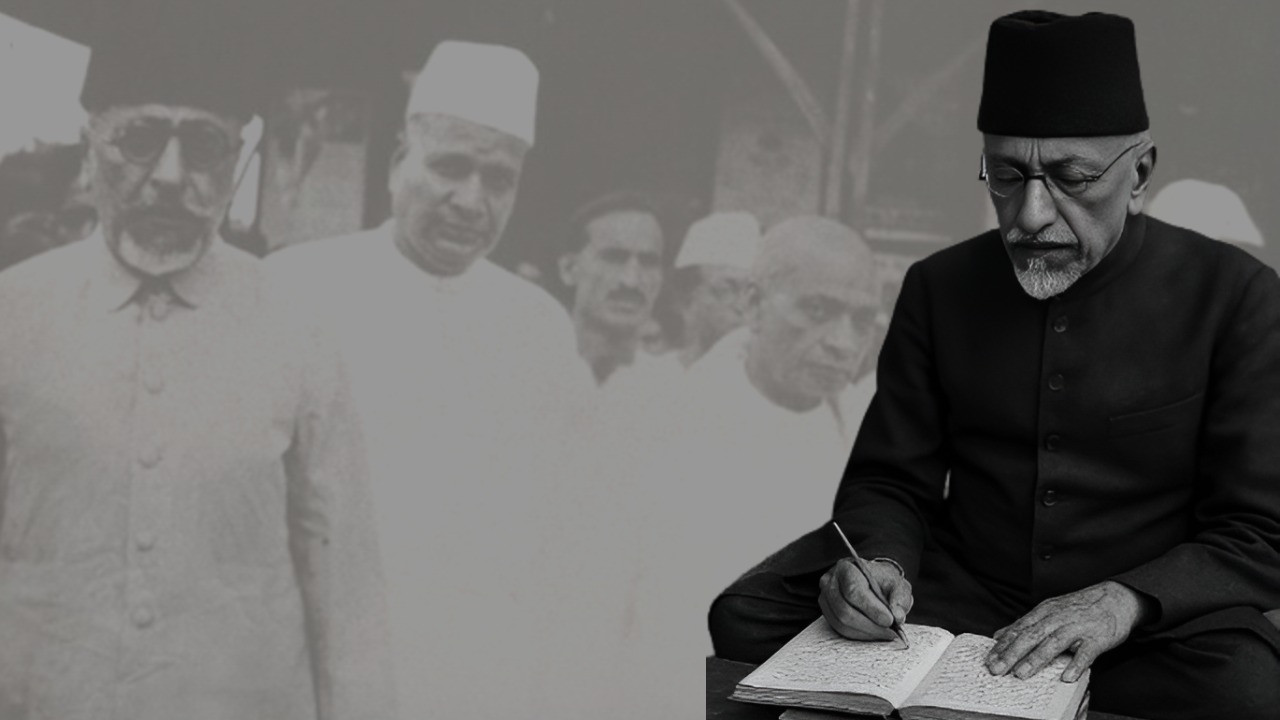
How well do you know Maulana Azad?
Abul Kalam Azad was born in 1888 in the city of Mecca. His real name was Muhiyuddin Ahmed, but his father Maulana Syed Muhammad Khairuddin bin Ahmed called him Firoz Bakht.Abul Kalam Azad's mother, Alia bint-e-Muhammad, belonged to an educated family. Azad's maternal grandfather was a renowned scholar in Medina, whose fame spread far and wide.
After migrating from Arabia, he made Calcutta his workplace. It was here that he began his journalism and political career.
Maulana Azad was inspired by the modernist writings of Sir Syed Ahmad Khan. In his adolescence, he became an active journalist and started publishing the Urdu newspaper Al-Hilal in Calcutta.
Al-Hilal and Al-Balag: Azad's Contribution to Journalism
Abul Kalam Azad also started publishing the Urdu weekly Al-Balag in 1915 from Kolkata, which was an attempt to carry forward the work of Al-Hilal. Al-Hilal was banned by the British government in 1914. As a skilled journalist, Azad adopted a strong anti-British stance through his newspaper.
British imperialism was criticized in his writings, where he used representative examples of the interconnections between religion, ancient history, and ideas to raise public awareness. The newspaper also aimed to increase awareness about the damages caused by tolerance and indifference towards the injustices of foreign rulers.
Maulana Azad emphasized the importance of unity and communal harmony through his newspaper, making it clear that it was essential for all sections of society to work together for freedom. Al-Balag was also banned by the British government in 1916, and Maulana Azad was expelled from Ranchi under the Defense of India Rules. His journalism played a crucial role in politically awakening the people and informing them about the realities of British rule in India.
Munshi Naubat Rai published Khudange-Nazar from Lucknow.Maulana told him that if he increased the number of articles in the magazine, he would be ready to edit it. Thus, this work was assigned to him, and he continued to publish his poetry along with writing articles for it. He wrote an article titled Exrez, and Maulana Shibli requested him to write such an article for Al-Nadwa every month.
When a person walked from Kandahar to meet Maulana Azad
A fascinating incident from Maulana's days of confinement in Ranchi is described by him in Tarjumanul-Quran as follows:
“It was probably in December 1918 when I was imprisoned in Ranchi. After the Isha (night) prayer, I came out of the mosque and felt that someone was following me. When I turned around, a person wrapped in a blanket was standing there.
“Do you want to say something to me?” I asked.
“Yes, sir, I have come from very far.”
“From where?” “From across the border.”
“When did you arrive here?” “This evening. I am a very poor man. I walked from Kandahar to Quetta, where I met some traders from my country who hired me and brought me to Agra. From Agra, I have come here on foot.”
“Alas, why did you endure such hardship?”
“So that I could understand some verses of the Holy Quran. I have read every word of Al-Hilal and Al-Balag word for word.”
This person stayed for a few days and then suddenly left without informing me, so that I would not give him money for his return journey. He did not want to impose this burden on me. Undoubtedly, he must have walked most of the way back as well. I do not remember his name, nor do I know if he is alive or not. If my memory serves me right, I would dedicate this book to him.
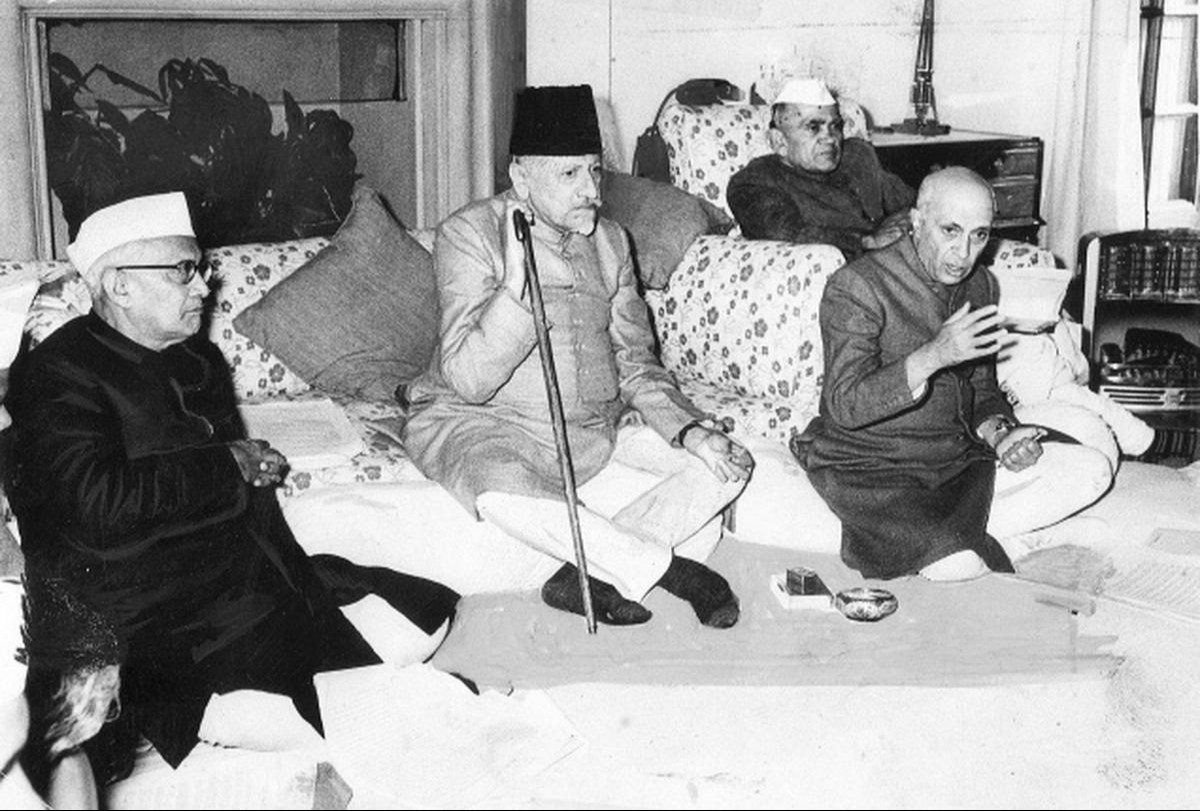
Maulana Abul Kalam Azad was fond of tea
Maulana Abul Kalam Azad was fond of tea. This interest is evident from the letters he wrote from jail after his arrest during the Quit India Movement in 1942. These letters were addressed to his friend Nawab Sadr Yar Jang from Ahmednagar Jail and were published in 1946 in a book titled Ghubar-e-Khatir. Written between August 1942 and September 1943, these letters introduce us to the everyday life of a nationalist leader.
These letters were often written while sipping tea in the morning, so they occasionally mention tea. Describing his favorite tea, Azad writes in a letter dated December 17, 1942, “The Chinese tea I have been accustomed to for a long time is called White Jasmine, meaning ‘Yasmeen-e-Safed’ or, one might say, ‘Gori Chameli’… Its fragrance is as soft as its caif (intoxication) is strong.” He also adds that he “treats his sorrows with hot cups of tea and sometimes dips his pen in the tea cup when the ink runs out, saying, ‘These days, I even gave the pen a sip.’”
Azad mentions in one letter that he uses a Russian finjan for tea. In a letter dated August 27, 1942, he describes its qualities, saying, “These (Russian finjans) are much smaller than regular tea cups. If drunk impatiently, they can be finished in just two sips. But God forbid, why should I become so impatient? I drink tea slowly and in small sips like the old Jura-Kashane-Kuhan-Mashq (traditional drinkers).”
Expanding on his tea experiences, in a letter dated August 3, 1942, Azad writes:
“I have tried to create a mixed caif (intoxication) by combining the delicacy (softness) and sweetness of tea with the bitterness and harshness of tobacco. I light a cigarette with the first sip of tea, then I make this special method such that I take a sip of tea and a puff of cigarette at intervals. Thus, each sequence of tea sips and cigarette puffs gradually blends together, and the sequence stretches longer. This coincidence is so precise that when the last sip of the finjan is taken, the cigarette also reaches its final drag.”
“In the seventeenth century, when the English became acquainted with it (tea), I don’t know what came over them, they started the innovation of adding milk. And since tea became popular in India through them, this new tradition spread here as well. Gradually, it became such that people started adding tea to milk instead of milk to tea… People make a kind of liquid halwa out of tea, drink it instead of eating, and feel happy that they have had tea. Who can tell these fools: Alas, wretched one, you haven’t really drunk it!”
------------------------
References
Arsh Malisiyani, Makers of Modern India, Maulana Abul Kalam Azad, Publication Department