
Gandhiji's personality was shaped by inner strength and principles

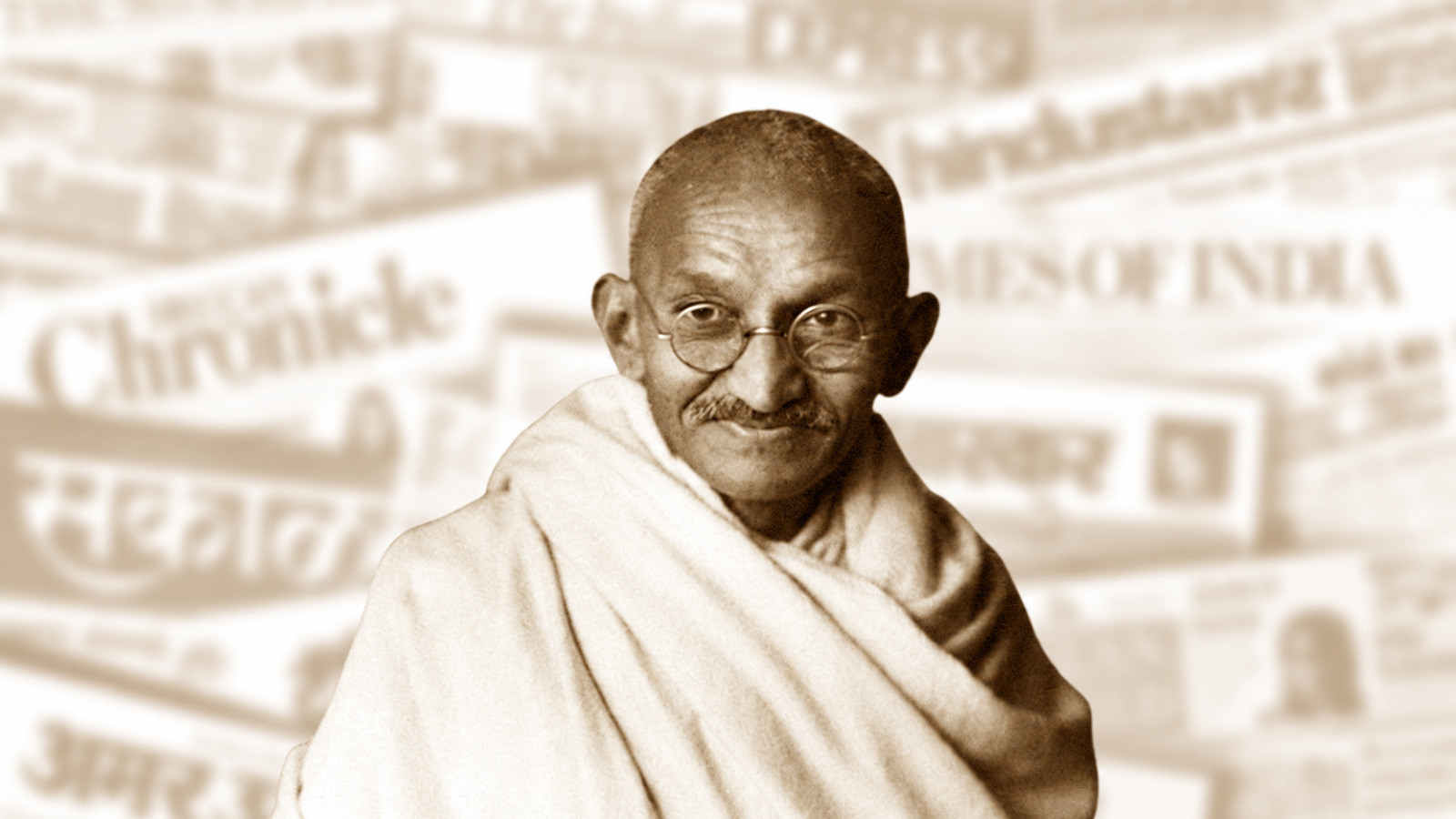
He did not live to see eighty years, as he was assassinated in 1948. Had he not been shot, he might have lived to a hundred.
Mahatma Gandhi's personality was defined not only by his simplicity and humility but also by his inner strength and unwavering principles. His life was an example where self-control, truth, and adherence to the principles of non-violence took precedence over external power or wealth. Gandhiji proved that the leadership of any society could be achieved not just through physical strength but through moral courage and commitment to truth. The foundation of his ideals always rested on his inner strength, which kept him steadfast in personal and collective struggles.
Was Gandhiji very powerful or a wrestler? No. He weighed 113 pounds. He was not tall and robust. He was a short, delicate man who wore glasses and had false teeth.
Was he very sharp mentally if not physically? Was he highly educated? Did he have many degrees? Was he a good speaker? No, he did not study beyond matriculation in India. He did not obtain a B.A., M.A., or any other degree. He went to England, stayed for four years, and obtained a degree as a "barrister." He returned at the age of twenty-two. He spoke hesitantly and in a straightforward manner. His language had no fluctuations or dramatics.
Did he wear very good clothes? No. He did not have any special attire like Swami Vivekananda's turban, Lokmanya Tilak's red turban, or Subhas Chandra Bose's military uniform. Initially, he wore a Kathiavadi turban. Later, he began wearing a white cap, which later came to be known as the Gandhi cap. Those who wore hats, suits, and ties in England abandoned kurtas. A dhoti and a shawl became his attire. Bapu lived like a simple farmer. One by one, he shed all external adornments. People began to call him "Mahatma."
Did he have a lot of money? It is true that his father was the diwan of a princely state. He had a large ancestral house, which still exists in Rajkot. It has become a national monument. However, he did not inherit great wealth, property, or bank accounts from his parents. He had no car, nor any extensive comforts. He gradually gave up his earnings as well. He left nothing for his four sons, except for his name. The money he collected as donations from the public, he returned to the people. He believed that a wealthy person should spend money for the "Daridranarayan" (the poor). He was merely a "trustee" of that money. That is, he was to use it only for good deeds, for the service of society, not as a "capitalist" or "capital owner."
How can we define such a Mahatma Gandhi? Born in October 1869 in Saurashtra, Gujarat, educated in London, he went to practice law in South Africa. When he returned to the country in 1915, he started the movement in Bihar's Champaran. He often lived in ashrams at Sabarmati (Gujarat) and near Sevagram (Maharashtra). He frequently went to jail. When he came to Delhi, he lived in the Bhangi colony. A quarter of his life was spent traveling. He brought together people from all provinces, all religions, and all languages of the country.
In the 1920s, 1930s, and 1940s, he led major “Satyagraha” movements. Sometimes he led the “Swadeshi”Salt movement, sometimes the “Do or Die” or “Quit India movement.” His sacrifices led the country to independence. However, the partition of the country also occurred at this time. On January 31, 1948, he was shot by an assassin. The entire nation referred to him as “Father of the Nation.”
Gandhiji's Urge to Die for Truth
Mahatma Gandhi's long ears led Sarojini Naidu to call him “Mickey Mouse,” and those who considered themselves “Daridra Narayan,” or the poorest of the poor Indians, would want to know how he lived. What did he eat and drink? What kind of people surrounded him? What was his daily schedule?
Mahatma Gandhi went to South Africa in 1893 as a lawyer. There, he witnessed the condition of Tamil laborers and workers from India. The white British rulers treated these black people like slaves. They were subjected to very harsh treatment. They had to pay a tax of three pounds every year for the wages they received. They had no right to vote. Every Indian had to provide fingerprints of all ten fingers. If he did not profess Christianity, his wife was not recognized as his wife upon marriage.
Everywhere, he faced discrimination. White people did not rent houses to black people in their neighborhoods. They had to live in separate parts of the city. They could only travel in “black people” compartments on trains. They could not sit with whites in horse-drawn carriages. They could not attend white schools. Their hotels were separate. They could not do business. Their shops were separate. They could not become citizens of Africa.
Mahatma Gandhi found this discrimination between whites and blacks very disturbing. He published newspapers in protest. He fought legal battles. He organized a movement for black people and made his point through marches. Blacks should have equal housing and transportation as whites. Both should be treated with equal humanity. To prove this, Gandhiji established the “Phoenix ashram in 1904 and the Tolstoy Farm in 1910. This was the beginning of such a settlement.
Gandhiji Redefined the Concept of Ashram
In 1915, upon returning to India, Mahatma Gandhi established an ashram in Ahmedabad on May 24. It was initially called the Sabarmati Ashram and later referred to as the “Satyagraha Ashram”. When he embarked on the Salt Satyagraha in 1930 with 79 companions, he vowed, “I will return only after achieving Swaraj.”
He never returned there after that. After spending four years in prison, he went to Wardha in 1934-35. Jamnalal Bajaj provided him land in a village seven miles from Wardha. There, he established the Sevagram Ashram. Now, what does the word “ashram” mean? We have heard of the ashram of Rishi Vashistha in the Ramayana, where Ram and Lakshman studied. Krishna studied in the Sandipani Ashram. Was it another name for “school” in ancient times? It was also called Gurukul. But where people did not go to study, instead going to the forest, away from the city, to meditate in solitude and peace, was also called an ashram.
In ancient times, ashrams were religious. There were ashrams or schools for learning Sanskrit alongside temples. There were ashrams for Vedic schools. The Buddhists had “Viharas” or “Sangharamas,” while Muslims had “Khanqahs,” and Christians had “Hermitages,” etc. Later, ashrams were established in India for social reform, modeled after missionaries’ “seminaries” and “dormitories” – “orphanages,” “widow ashrams,” “blind ashrams,” etc. Any settlement created away from the hustle and bustle of the city, based on a single ideal, is an ashram. Like “Yoga Ashram.” Or for the sick, “sanatorium” or natural healing centers, etc.
Gandhiji's Ashram was a Laboratory
Mahatma Gandhi's ashram was not just for people of one religion. Prayers for all were held there. It was not just for patients or the disabled. There was a hospital there too. It was not merely a place for teaching and learning. The headquarters of the educational union was also there. It was not just a training place for volunteers or satyagrahis. It was not merely an old age home or a resting place for the elderly.
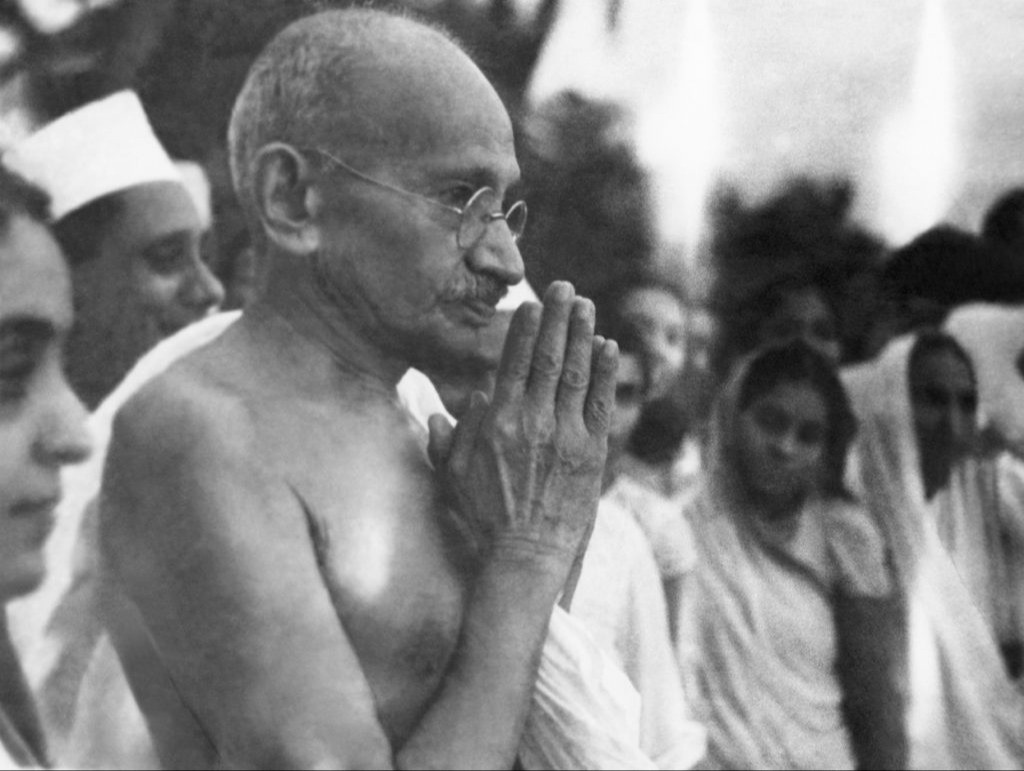
Many prominent leaders such as Khan Abdul Ghaffar Khan, Rajendra Prasad, Acharya Narendra Dev, etc., also came there to rest. It was not merely the main office and guest house of a prominent man. Many of Bapu's guests, both domestic and foreign, came and stayed there. Gandhiji's ashram was a laboratory, as he called it. In jest, he said that all kinds of peculiar people used to gather around him. He treated their ailments naturally. How could people who consulted each other live together? How could they patiently tolerate one another? All this was practiced in the ashram by Bapu. Because of the variety of eccentricities, he humorously referred to “ashram” as “ashram” in Gujarati.
Mahatma Gandhi's ashram was simultaneously a place for living, an office, a hospital, a community kitchen (which was called Rasoda), and a laboratory for collective labor. All members of the ashram did all the work themselves, such as grinding flour, cutting vegetables, cooking, planting trees, running a dairy, cleaning toilets, applying manure to fields, farming, washing their own clothes, sewing, ironing, cutting hair, teaching each other, serving the people of nearby villages, etc., in turn.
No task was too small or too big. No one living there was superior or inferior. Neither fair nor dark. Neither Hindu nor Muslim. Believers in God and non-believers. There was no discrimination. Neither rich nor poor. Neither old nor young, neither woman nor man, neither strong nor weak. No one considered themselves lesser than anyone else. All were equal human beings. Whether highly educated or uneducated. Whether high-ranking officials and lords came or a simple village farmer or a poor laborer, everyone had to eat the same food, wear the same clothes, have the same living space, bedding, and perform the same labor. That is why it was called an ashram.
Mahatma Gandhi established his ashrams in Africa and India at the ages of 35 and 41, respectively, and in India, he established the Sabarmati Ashram at the age of 46 and the final Sevagram at the age of 66.
From Sevagram, at the age of 73, he was imprisoned in Aga Khan Palace and did not return. He then lived in Delhi's Bhangi Colony and occasionally in Birla Bhavan, or in Bombay's “Mani Bhavan.”
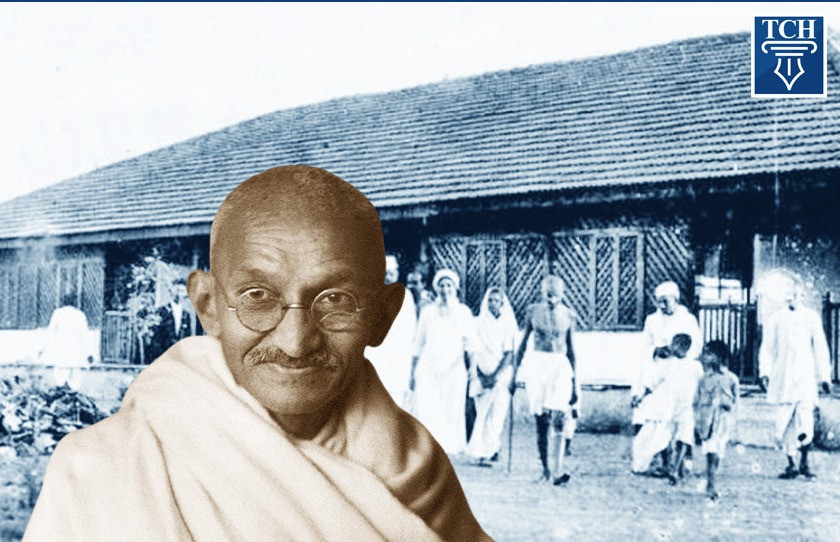
Thus, according to the Hindu ashram system, he began ashram life after the age of forty, dividing his eighty years of life into four parts, and after sixty, he completely dedicated himself to the nation like a sannyasi. He could not live to see eighty years; he was assassinated in 1948. Had he not fallen victim to a bullet, he might have lived to a hundred.
References
Dr. Prabhakar Machwe, In Gandhi's Ashram, National Council of Educational Research and Training