Society trapped in rigid beliefs should remember Nehru: Jayanti special
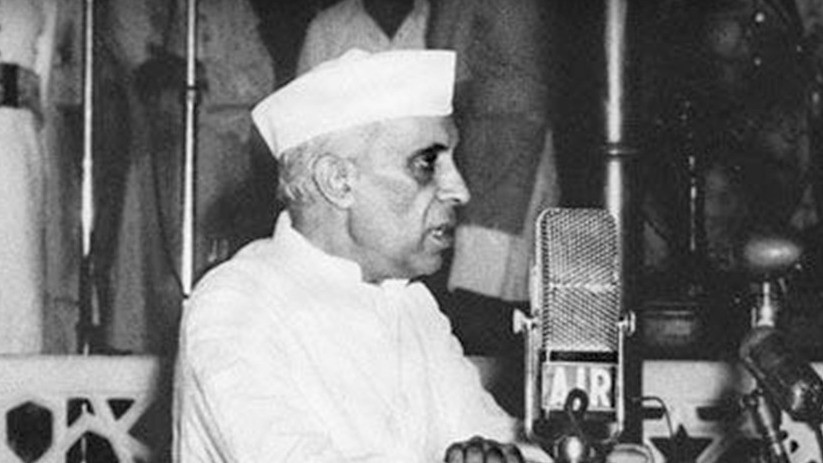
Nehru was a rationalist, but not a dry intellectual.
Pandit Jawaharlal Nehru is the father of the modern era of science and technology in India. Immediately after independence, it was his inspiration that made the development of science and technology possible. Given the circumstances of that time, it was natural for any visionary public figure to see science and technology as a crucial means for the country's development.
Nehru was an advocate of this idea, but the emphasis he placed on science was not limited to freeing the country from the traditional role of a supplier of raw materials for industrialization. While Nehru stressed the advancement of technology, he also placed special emphasis on adopting a “scientific attitude”. In fact, he is considered the proponent of this idea, and now many people around the world have begun to adopt this approach.
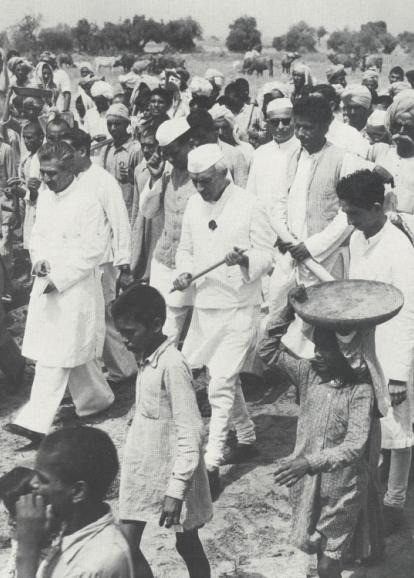
Nehru was rational, but not a dry rationalist. He was somewhat agnostic but respected religious tendencies. He had no faith in superstition and rituals, but did not reject India's cultural uniqueness, which maintains harmony within a conservative ideology. As soon as India gained independence, Jawaharlal Nehru laid the foundation for science and technology in the country. He supported the common belief that the main reason for India's underdevelopment was its lack in the field of science.
He realized that it was essential to establish many laboratories, dedicated scientific institutions for various important projects and missions, and several universities and technology institutes for training scientists and engineers.
In the post-war period, many talented scientists joined this campaign and dedicated themselves to work. They firmly believed that they had a collaborator in Nehru who not only agreed with their ideology but also understood their language.
The policy of technological advancement was initiated with Nehru's support
Overall, this effort has proven to be meaningful. There is a significant presence of qualified individuals in most fields of science and technology, high-level research and development is taking place, and scientists have confidence, which enables them to successfully face major challenges in the technical field. Perhaps even more success could have been achieved if equally capable structures had been established in decision-making and administration to properly utilize this emerging capability.
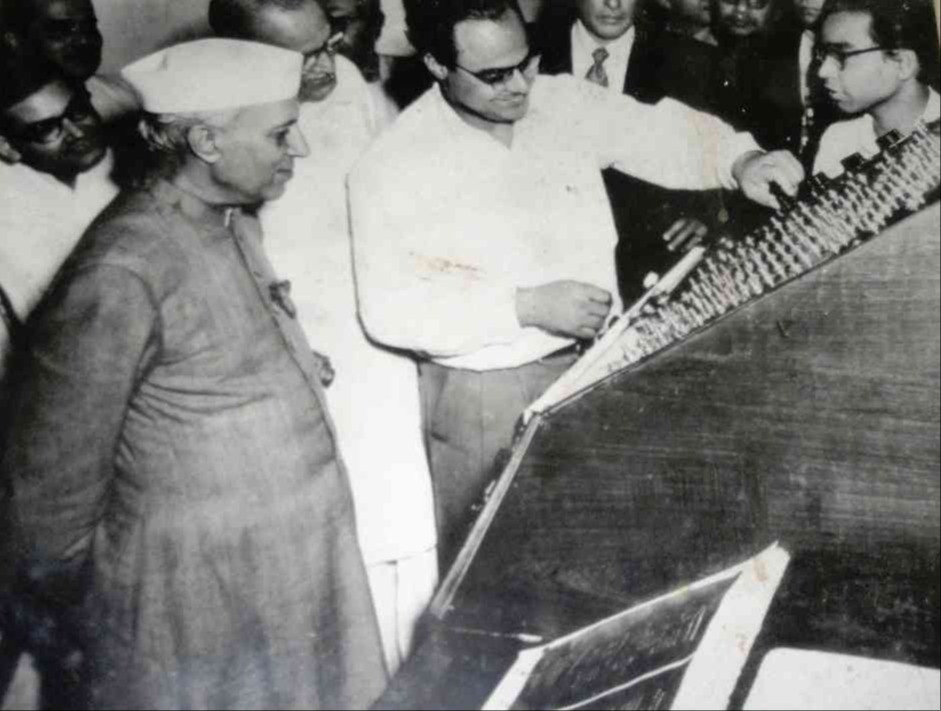
It was with the strong support of Jawaharlal Nehru that the policy of technological advancement was initiated. At one point, the situation was such that not even a pencil or tag was made in the country, but now we are in such a favorable position that, based on the country's manpower and the established technological infrastructure, we can largely meet any industrial or technical need.
Despite all these successes, what is the status of the “scientific attitude”? We have kept science and technology as a mere appendage. This policy has achieved some degree of success, but it has led to the perception that the limited world of science is confined only to factories, industries, fertilizers, and high-yield crops.
Superstition and conservatism still persist in the country, and scientists are not untouched by it. We have begun to see science merely as a tool. Our superficial respect for science is such that it does not give any real power to an individual's personality; its shine fades with a slight scratch.
Science is still not an integral part of our lives
We have not adopted a solid process that would make science an integral part of our lives and create personalities that can fully internalize science. Thus, it can be said that Nehru's dream of establishing a scientific attitude in the country is still unfulfilled. But this situation is not unique to India. Despite significant technological successes, developed countries have also failed to internalize a scientific attitude. It would be more accurate to say that this situation exists not only despite technological success but also because of it.
Even advancements in the field of space science and space technology have deepened the belief in supernatural objects, flying saucers, and horoscopes based on planets. It should have been the case that knowledge of the essential unity of all elements, whether conscious or inert, would increase. A new psychology should have developed, in which the Earth is considered a spacecraft on a singular journey; all its inhabitants regard it as their home, do not engage in any form of conflict with each other, and embody the ideal of “Vasudhaiva Kutumbakam”.
The act of “living” can be coordinated with science in many ways. This requires a development in which individuals do not remain as robots dancing to signals or as soulless brains. A new type of psychology and religion may emerge—one that is not based on the revelations and messages of messiahs but is entirely personal and universal, allowing humanity to better understand its role on this global stage. Einstein also reached a similar conclusion about religion, which could evoke a sense of wonder free from magic and mystery.
Today, disdain for science is increasing
The scientific attitude towards the laws of nature can serve as a proportional theory for analyzing social order, which also includes the role of stability and management. This can lead to the wisdom that the best control is possible only through decentralized information management, as seen in biological processes or the evolution of planets. The characteristic of the scientific method is that it provides analytical knowledge of the interrelationships of various elements. In this chaotic and agnostic world, science is capable of providing direction and knowledge.
Disdain for science is increasing. It is natural that we emphasize the practical aspects of science and technology. However, as far as technology is concerned, it is an extension of human physical capacity and, in this form, a tool for his desires. If this power becomes limited and concentrated in a few hands, those people will certainly become the overlords, and inequalities will increase. It cannot be argued that every extension of capacity is inherently evil. But the main reason for disdain is that humanity is focused on the physical means provided by science but has not understood its essence.
The scientific attitude does not require a person to disregard the aesthetic and cultural traditions of society. The beauty of all nature, music, and joy can be encompassed within their personality. Where they adopt reason and the scientific attitude, they can also keep rhythm with the dance of electrons, molecules, and atoms.
In my opinion, this is the meaning of Jawaharlal's 'scientific temperament'. Based on what I have heard from him, this is what I have understood. The destination of the world is still very far, and our destination is even longer; who knows when this temperament will become universally accessible?