
Why did Gandhi choose salt for the movement?

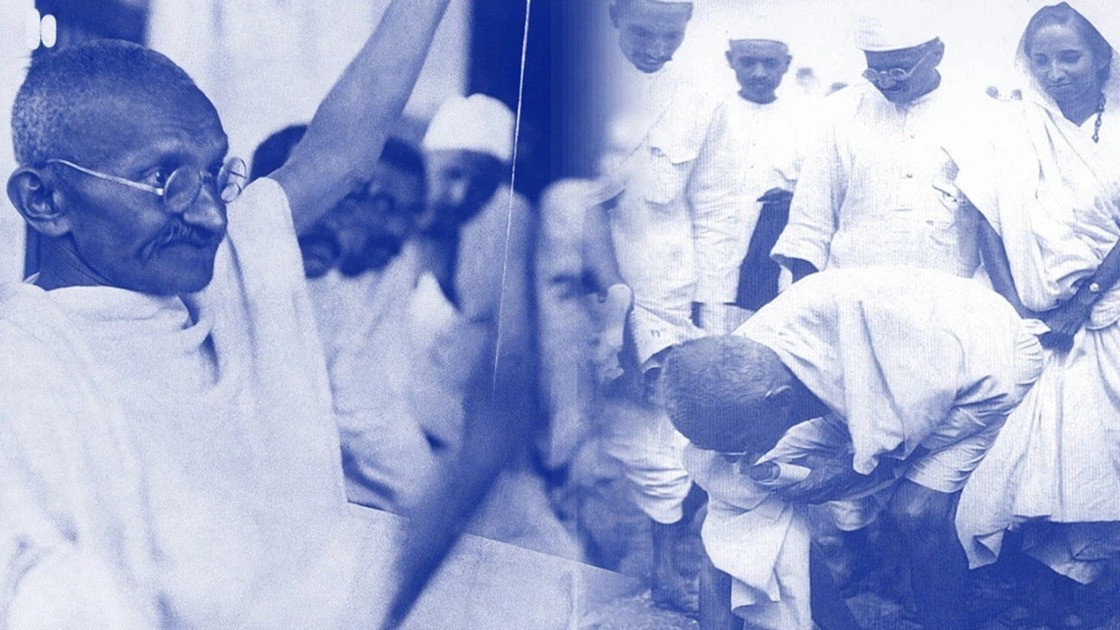
In a lengthy letter, Mahatma Gandhi detailed how the British systematically exploited India's economy.
In 1931, Mahatma Gandhi was called to England for the Round Table Conference, but his views were not heard. Instead, the British government cleverly summoned representatives of the Maharajas, Muslims, Harijans, and other separate entities to inform Gandhi that he was not the sole representative of all of Hindustan.
Frustrated by the British's “divide and rule” policy, Gandhi wrote a letter to the Viceroy of India, Lord Irwin, from Sabarmati Ashram on March 2, 1930, parts of which are as follows:
Dear Friend,
Like many of my other brothers, I had hoped that the proposed Round Table Conference might resolve these grievances. But when you clearly stated that you would not give any assurance that you or the British Cabinet would necessarily support any plan for complete colonial self-rule or Dominion Status, I realized that the Round Table Conference could not provide the solution that the educated people of the country are thoughtfully yearning for, and the millions of mute citizens are unknowingly longing for. After the meeting in Delhi also yielded no results, I had no other option left. The burden of the land revenue that brings so much income to the government is suffocating the peasants. Independent India will have to make significant changes to this policy. The Permanent Settlement, which is praised, only benefits a handful of wealthy landlords, not the peasants. The peasants remain as helpless as before. … The British government's policy seems to drain the peasants dry. Even on essential items like salt, taxes are levied in such a way that the heaviest burden falls on them. …
Salt is one such item that poor people consume more than the wealthy, both individually and collectively. Considering this, the tax appears to be an even greater burden for the poor. The revenue from alcohol and other intoxicants also comes from these poor people, and these substances undermine the health and morals of the populace.
Gandhiji exposed the raw deal of India's economic exploitation
Mahatma Gandhi detailed in his lengthy letter how the British systematically exploited India's economy. The revenue from the salt and liquor taxes was attributed to a nominally elected minister. If any unfortunate minister were to say that such practices are inappropriate, they would be quickly told that India bears such a heavy debt that it is uncertain when it will be lifted. If tax revenue decreases, how will we spend on education?
The British government was the most expensive government in the world. The Viceroy's monthly salary was ₹21,000, while the Prime Minister of England received only ₹5,400 annually. The average daily income of a person in India was less than two annas, while the Viceroy was given ₹700 daily. The Prime Minister of England received only ₹180 daily. The Viceroy consumed the average earnings of five thousand Indians, while the Prime Minister of England took the earnings of just ninety Englishmen.
England was plundering India, and all of Hindustan was united in opposition. However, no political party in England raised a voice against this plunder until 1930.
However, Mahatma Gandhi also stated in his letter that he would undertake Satyagraha against the British government, but in a non-violent manner, believing in “heart conversion” rather than the terrorist path of “an eye for an eye.” Therefore, this movement was referred to as the “Civil Disobedience” movement.
In a letter dated March 3, 1930, Mahatma Gandhi wrote, “How much does the British government spend on collecting the salt tax? Some say eight percent, others say twenty percent. What is the truth?”
Preparations for Satyagraha
On March 5, 1930, Mahatma Gandhi informed the residents of the ashram that the movement would commence on the morning of March 12. “Those who wish to join me must be ready within seven days.” Mahatma Gandhi stated, “Faith in God and each person must carry a copy of the “Gita.” Abbas Tyabji and fifty others were to march first towards Methapur. A horse was to be kept with them, and if Mahatma Gandhi was in good health, he would use that horse himself. He also mentioned that only men would accompany him; women and children would not.
Among the seventy-eight volunteers who participated in the Dandi March were 31 from Gujarat, 13 from Maharashtra, 8 from Uttar Pradesh, 6 from Kutch, 4 from Kerala, three each from Punjab and Rajputana, two from Bombay, and one each from Sindh, Nepal, Tamil Nadu, Andhra, Utkal, Karnataka, Bihar, and Bengal.
On March 6, 1930, in the English weekly “Young India” published by Mahatma Gandhi, he also printed excerpts regarding the penalties of the salt law. A letter from Mahatma Gandhi was sent to Viceroy Irwin through an Englishman named Reginald Reynolds.
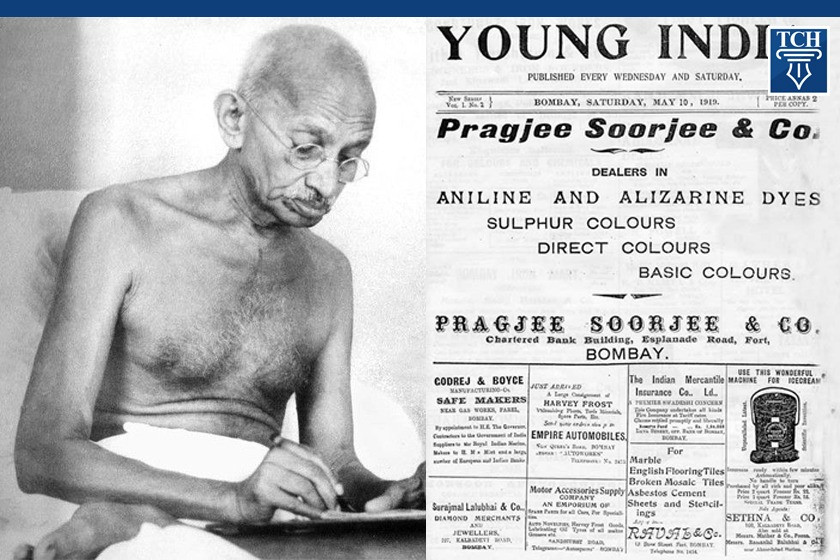
In “Young India” on March 6, Mahatma Gandhi also wrote that the satyagrahis would be so disciplined and unarmed that “if the government has to show some demonic form at this time, about which I have received so many complaints, it would not be entirely wrong. In response to the declaration made by Mr. Malcolm Hailey in the Legislative Council of the United Provinces (then Uttar Pradesh), I must say that the satyagrahis have understood well that for this step, they may have to make sacrifices, and if the rulers show their commendable form, it will not be a new thing for India. I hope that this movement will be shaped in such a way that the surge of anger will subside on its own. Raising hands in retaliation is the inevitable result of this rule.
Decision for the Salt Satyagraha
Gandhiji informed Jawaharlal Nehru via telegram in Allahabad on March 6, 1930, that he had “sent the letter for publication in the name of Irwin. I am starting the march on the morning of the twelfth with sixty people.”
Meanwhile, on March 7, 1930, Sardar Vallabhbhai Patel was arrested. Gandhiji considered this a good omen to start the fight. Gandhiji called for a general strike, saying, “Mill owners should close the mills. Students should not go to schools. All shopkeepers should keep their shops closed.” He also warned that “there is no need to say that non-violence should be observed in Gujarat. Our struggle is non-violent from beginning to end.”
In such a large undertaking of satyagraha, many people want to take advantage. It was reported that in America, a gentleman named Shailendranath Ghosh was claiming to be a representative of the Congress and Gandhiji, saying that they claim to be non-violent in India, but are secretly stockpiling weapons.
Heneiz Holmes informed Gandhiji about this. On March 7, Gandhiji sent a telegram to Holmes saying, “No such man is my representative. Brijkrishna Chandivala's mother was ill. He wanted to participate in the satyagraha. Gandhiji wrote to him to first take care of his mother.”
On March 8, 1930, at a public meeting in Ahmedabad, Gandhiji delivered a speech, excerpts of which are as follows:
“Now the time has come when my and your final test is about to take place. In this matter, the government has made the path easy for you and me |… It is not surprising that Sardar Vallabhbhai Patel has already gone to jail before me. It is his and your good fortune. However, he has put me in a difficult situation by going to jail first. I have to get arrested somehow. The government has unjustly seized salt. I have to take that possession from them. I must get the salt law repealed. I am taking the first step towards complete self-rule. The people of Hindustan are now restless and cannot find peace without attaining freedom…
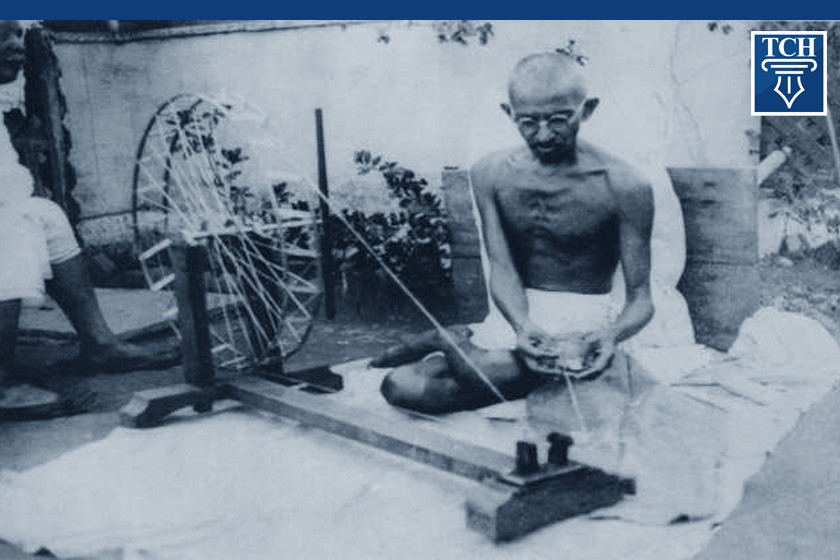
“I am still firm in my decision to march with the group of ashram people on Wednesday morning. … I congratulate you for the peaceful general strike you have undertaken.”
References
Dr. Prabhakar Machve. Salt Movement, Publication Department, New Delhi