
Remembering Ashfaqulla Khan's final message on his birth anniversary
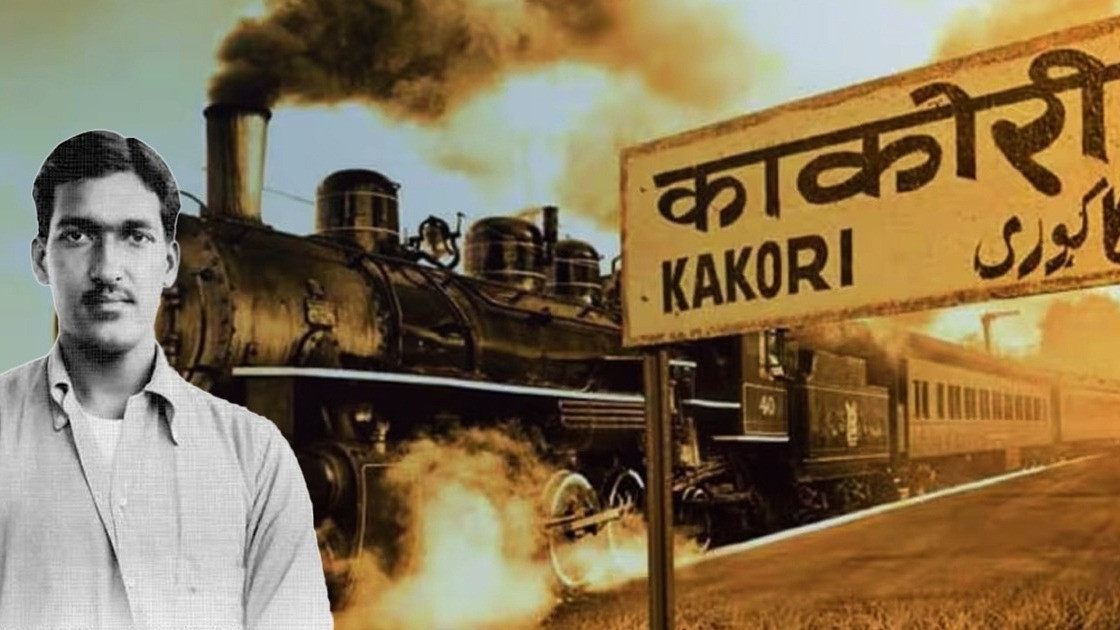
Ashfaqulla Khan's call for unity remains crucial for Indian society today.
On this day, October 22, 1900, Ashfaqulla Khan, born in Shahjahanpur, Uttar Pradesh, is counted among the revolutionaries of the Indian freedom struggle who dedicated their lives to India's independence. His friendship with Pandit Ram Prasad Bismil and his role in the Kakori conspiracy is a chapter in Indian history that showcases love for the motherland and religious unity. He was hanged in Faizabad jail on December 19, 1927. However, the purpose of his life is not only hidden in his martyrdom but also in the ideas he wanted to convey to his countrymen until his last days.
Message of martyr Ashfaqulla Khan from Faizabad jail-
We have played our role on the stage of Bharat Mata. Whether right or wrong, whatever we did, we did it inspired by the spirit of freedom. Our own (i.e., Congress leaders) may criticize or praise us, but even our enemies had to admire our courage and valor. People say we wanted to spread terrorism in the country; this is wrong. The trial went on for so long. Many of us remained free for a long time, and even now some people are free (referring to Chandrashekhar Azad). Yet, we – or any of our companions – did not fire at those who tried to harm us. That was not our objective. We wanted to bring revolution across the country to achieve freedom.
The judges have remembered us with terms like ruthless, barbaric, and human scourge. The General Dyer of our rulers' community fired on the unarmed, including children, the elderly, and men and women. What term did these contractors of justice use to address their own brothers and sisters? Then why this treatment towards us?
Brothers of Hindustan! No matter what religion or community you belong to, come together for the country's work! Do not fight among yourselves unnecessarily. The paths may be different, but the objective is the same. All actions are means to fulfill the same purpose, so why this futile fighting? Unite and confront the bureaucracy of the country to free your nation. Among the seven crore Muslims of the country, I am the first Muslim* who is being hanged for the country's freedom, and thinking of this makes me feel proud.
In the end, my salute to all. May India be free. May my brothers be happy.
Your brother
Ashfaq
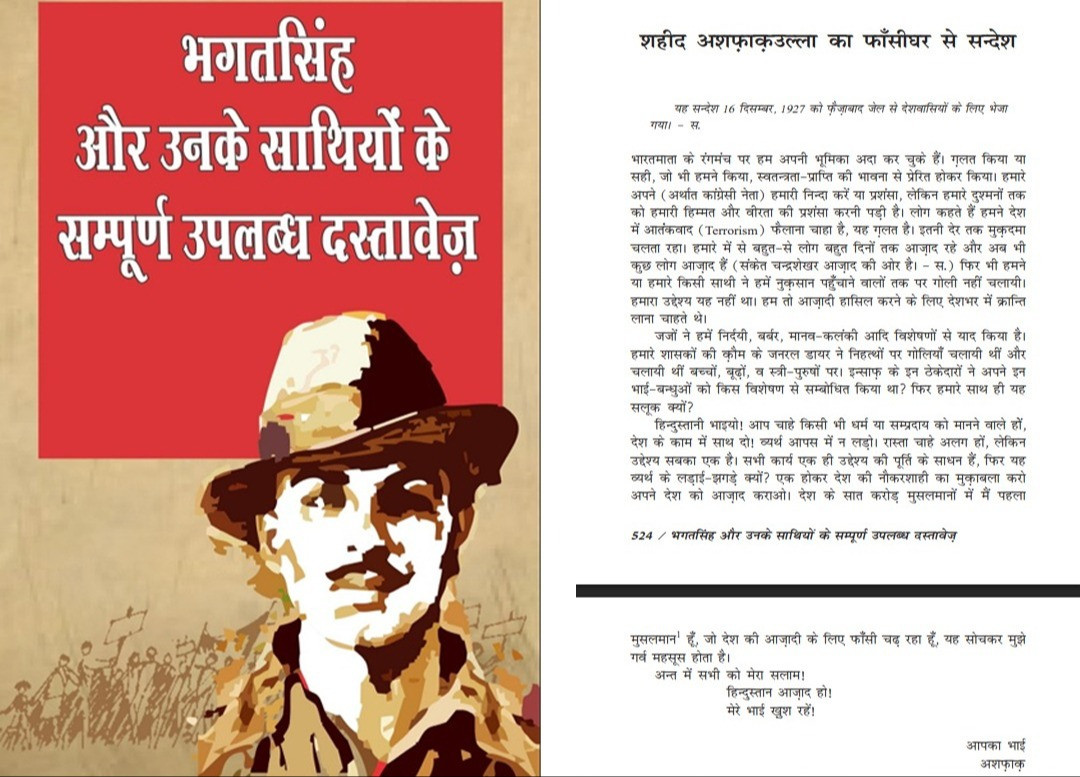
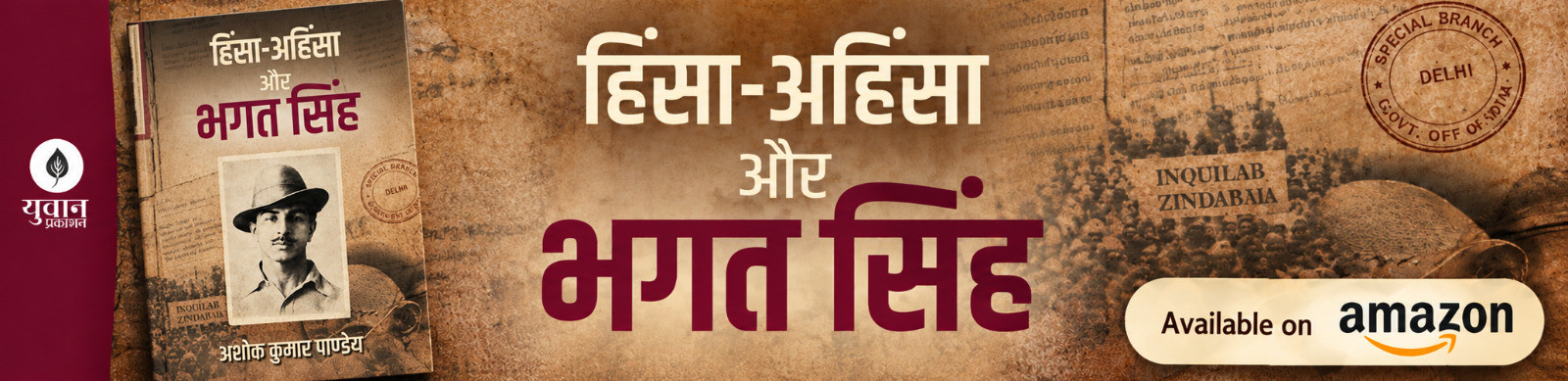
Source- Pages 524-25, Complete Available Documents of Bhagat Singh and His Companions, (Ed) Satyam Verma, Rahul Foundation
The historical fact is that around 100 Muslims were martyred in the Ghadar Party and thousands in the 1857 movement. But to weaken and deceive Ashfaqulla, the police once told him that he was the only Muslim who would be martyred, perhaps that is why he wrote this.
The most important aspect of this message is the appeal in which Ashfaqulla Khan speaks of rising above religion and community to come together for the country. He believes that the paths may differ in the struggle for freedom, but the destination is the same. This idea held special significance during a time when, alongside the struggle against British rule, there were also religious and communal divisions within Indian society.
The friendship between Ram Prasad Bismil and Ashfaqulla Khan is a historical example of this unity. They came from different religious backgrounds, but for them, the freedom of the country was a shared objective. After the Kakori conspiracy, the British government prosecuted the revolutionaries and imposed harsh punishments. Ashfaqulla Khan was also sentenced to death. He was martyred in Faizabad jail on December 19, 1927.
On his birth anniversary today, remembering this message is not just paying tribute to a martyr. It is also about understanding again that for the freedom and progress of the country, its people must stand together. The appeal for unity that Ashfaqulla Khan made in his message is still as important for Indian society today.
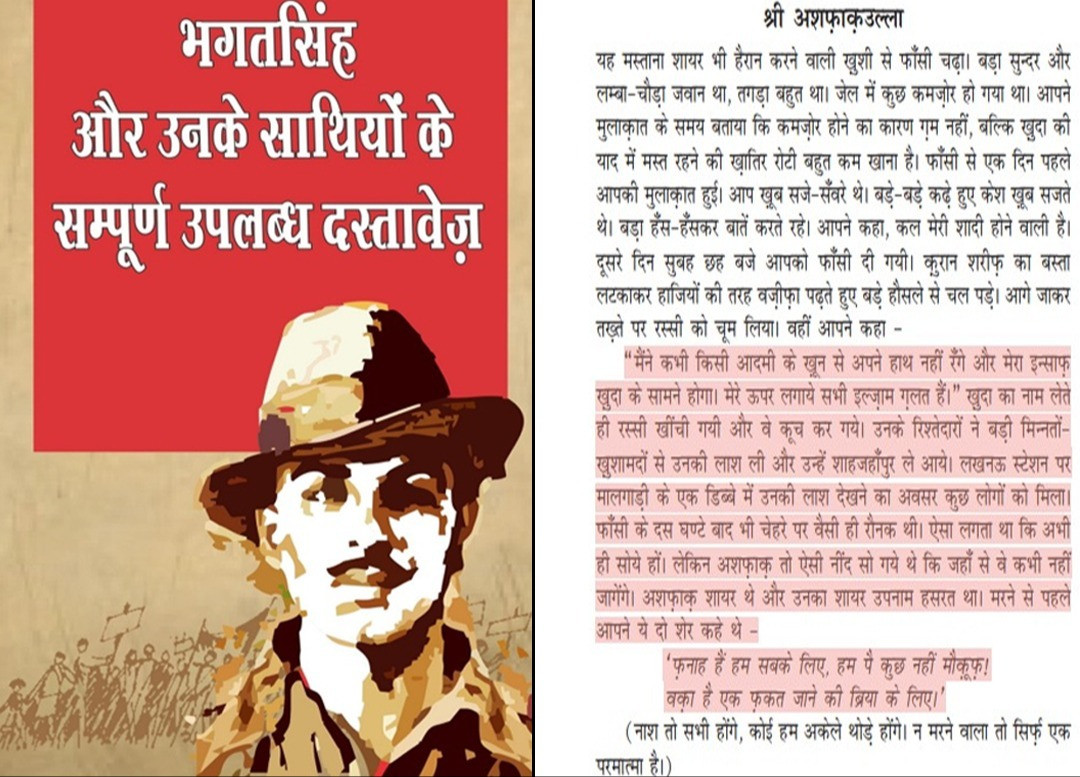
On page number 116 of the complete available documents of Bhagat Singh and his companions, there is a statement recorded in which he said- "I have never stained my hands with the blood of any man, and my justice will be before God. All the allegations against me are false." Martyr Ashfaqulla was also a poet, and his pen name was “Hasrat”. Before his death, he recited these couplets-
All perish for everyone, nothing is reserved for us,
Only the essence is reserved for the Divine Essence.

Md. Tousif
मोहम्मद तौसिफ़ राष्ट्रीय और अंतर्राष्ट्रीय खबरों पर नजर रखते हैं और ‘द क्रेडिबल हिस्ट्री’ में रिसर्चर के रूप में कार्यरत हैं।