
Ambedkar's editorial on Bhagat Singh's martyrdom

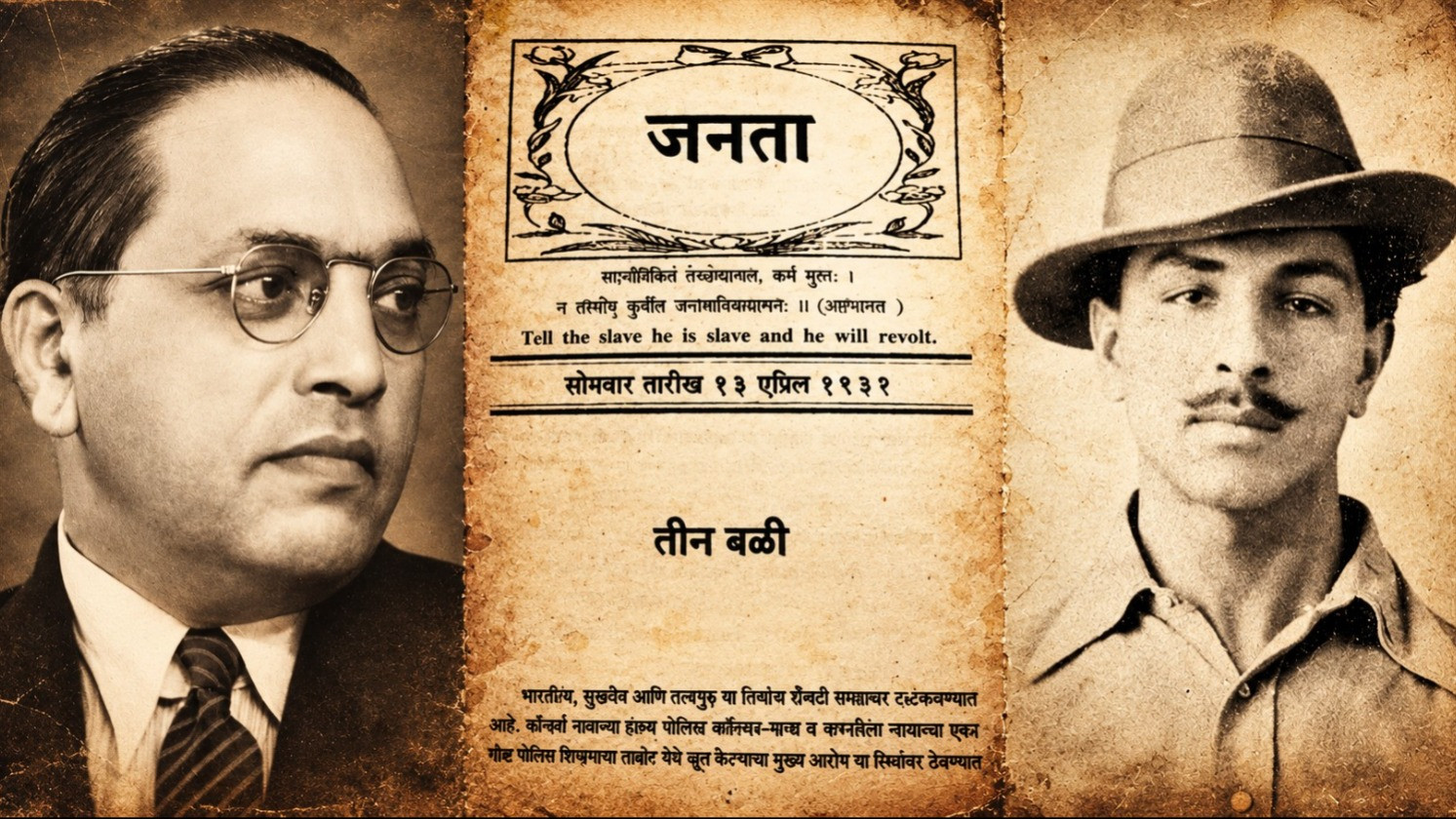
Bhagat Singh and his associates were executed to avoid angering Conservative leaders in England.
On March 23, 1931, Bhagat Singh, Sukhdev, and Rajguru were hanged. Explaining why the British government executed them, Dr. B.R. Ambedkar wrote an editorial titled ‘Three Sacrifices’ in his newspaper ‘Janata’ on April 13, 1931. We are republishing that editorial here.
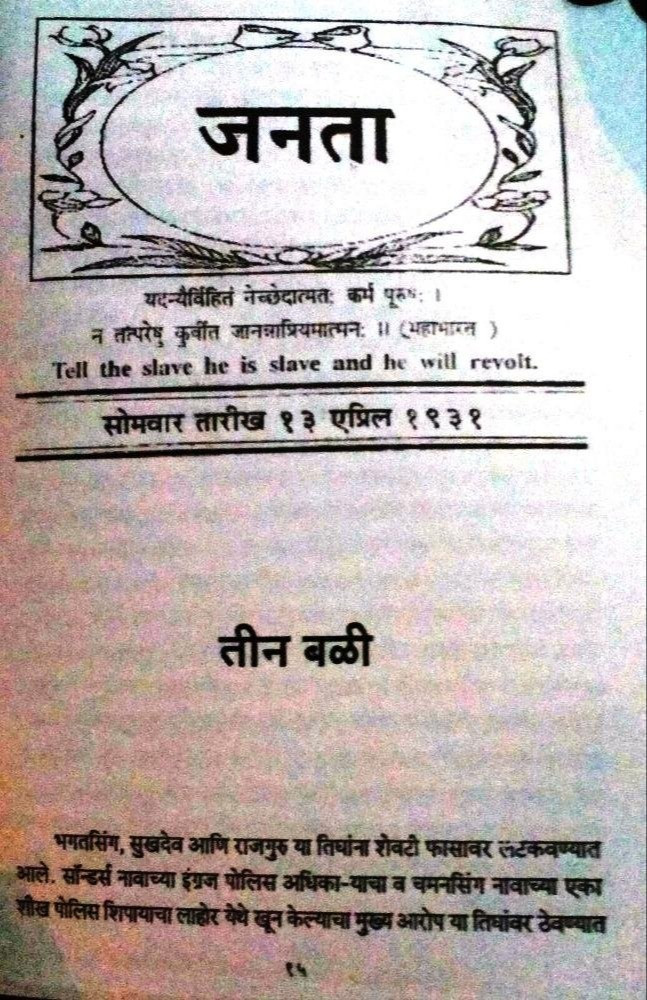
Bhagat Singh, Sukhdev, and Rajguru were ultimately hanged. They were accused of murdering a British police officer named Saunders and a Sikh police constable named Chaman Singh. Additionally, there were three to four other charges, such as attempting to murder a police inspector in Banaras, throwing a bomb in the Assembly, robbing a house in Maulimia village, and stealing valuable items from there.
Bhagat Singh had already admitted to throwing a bomb in the Assembly. For this crime, he and Batukeshwar Dutt had already been sentenced to life imprisonment. One of Bhagat Singh's associates, Jaygopal, confessed that he and Bhagat Singh along with other revolutionaries had killed Saunders. Based on this statement, the government filed a case against Bhagat Singh and his associates.
However, none of the three accused appeared for the trial. A special tribunal consisting of three judges of the High Court was constituted. It heard the case and unanimously sentenced all three to death.
Bhagat Singh's father also petitioned the Viceroy, requesting that the death sentence not be carried out and, if necessary, be commuted to life imprisonment in the Andaman Islands. Many, including prominent leaders, also tried to appeal to the government in this matter. It is possible that Gandhi and Lord Irwin discussed the issue of Bhagat Singh's execution.
However, Lord Irwin did not give any definite assurance to save Bhagat Singh, but in the meantime, Gandhi's speech raised hopes that Irwin would do whatever was possible to save the lives of these three young men. But all these hopes, speculations, and appeals proved futile. On March 23, 1931, at 7 PM, they were executed in Lahore Central Jail. None of them had appealed for mercy.
However, as has been previously published, Bhagat Singh had expressed a desire to be shot rather than hanged. This final wish was also not fulfilled, and the tribunal's decision was implemented to the letter.
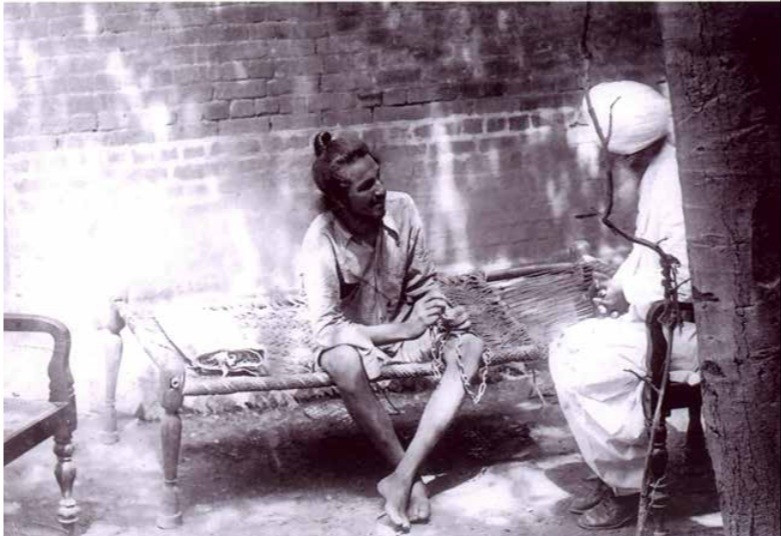
The decision was that they should be hanged until death. If they had been shot, it would not have been in accordance with the tribunal's decision. The orders of the goddess of justice were fully complied with, and all three were executed in the manner prescribed.
Whose execution was this?
If the British government thinks that its devotion to the goddess of justice and strict adherence to her orders will impress people and justify this murder, then it is grossly mistaken. No one believes that this sacrifice was made to keep the goddess of British justice clean and unblemished. The government itself will not be able to believe this explanation. Then how can it convince others under the guise of the goddess of justice?
The entire world, including the British government, knows that behind this sacrifice, there was not devotion to the goddess of justice, but fear of the Conservative Party in England and public opinion there. They felt that the unconditional release of political prisoners like Gandhi and signing agreements with Gandhi's party would damage the empire's reputation. Some hardline leaders of the Conservative Party had launched a campaign saying that the then Labour Party cabinet and the Viceroy acting on its orders were responsible for this. In such a situation, if Lord Irwin showed mercy to political revolutionaries convicted of killing a British officer, it would be like handing a burning torch to opposition leaders.
The Labour Party's position was not stable anyway. In such a scenario, if these Conservative leaders found an excuse to say that the Labour government had pardoned a murderer of an Englishman, it would have been easy to incite public opinion against the government! These hangings were carried out to avert this impending crisis and to prevent the smoldering fire in the minds of Conservative leaders from flaring up further.
This step was taken not to satisfy the goddess of justice, but to please the people of England. If it were a matter of Lord Irwin's personal likes or dislikes, he had the authority to commute the death sentence to life imprisonment. The Labour Cabinet of England would also have supported Lord Irwin in this decision. It was necessary to maintain favorable public opinion here in the context of the Gandhi-Irwin Pact.
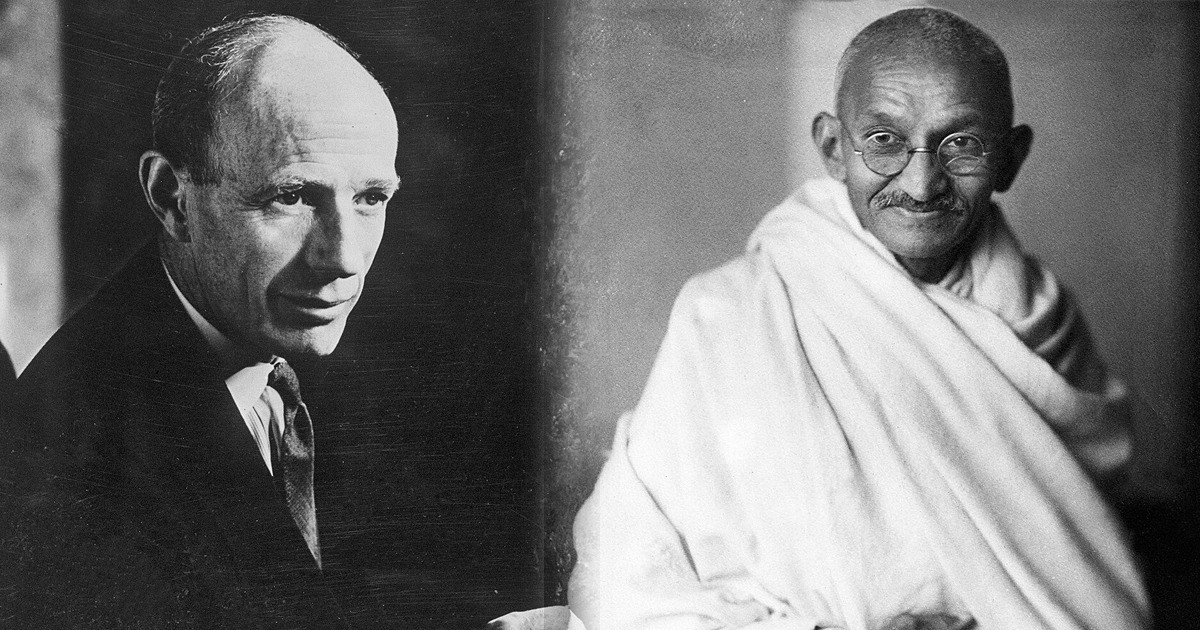
When leaving the country, Lord Irwin must have certainly wanted to earn goodwill. But he had to endure the wrath of his Conservative colleagues in England and the same racist mentality-filled Indian bureaucracy. Therefore, disregarding the public opinion here, Bhagat Singh and his associates were hanged—just two to four days before the Congress Karachi session.
The hanging of Bhagat Singh and his associates, as well as the timing of it, were sufficient to inflict a blow to the Gandhi-Irwin Pact and to thwart efforts to make it successful. If Lord Irwin wanted to sabotage this agreement, he could not have found a better way. In this regard, and as Gandhi also felt, the British government made a grave mistake.
In summary,
To avoid incurring the wrath of the Conservative leaders of England, Bhagat Singh and his associates were hanged. Public opinion here was disregarded, regardless of what would happen to the Gandhi-Irwin Pact. The British government should remember that no matter how much it tries to cover up this fact or present it in a polished manner, it will never be able to hide it.
(Translated into English by Anand Teltumbde. Hindi translation is ours.)
Courtesy: Forward Press, March 22, 2018