
213 killed in South Sudan attack, questions raised on government and UN mission

Before the attack, nearly three dozen UN peacekeepers were stationed in Abiemnom.
According to officials, at least 213 people were killed and 109 injured in an attack that took place on March 1 in Abiemnom town, South Sudan. A new report by Amnesty International states that South Sudanese authorities and the United Nations peacekeeping mission (UNMISS) were aware of the threat of an attack nearly two weeks in advance. The organization concluded that the government did not make adequate preparations to protect civilians, and the mission did not utilize all available measures to prevent the attack. The UN mission stated that it prioritized the safety of people seeking refuge in its camp amid limited resources.
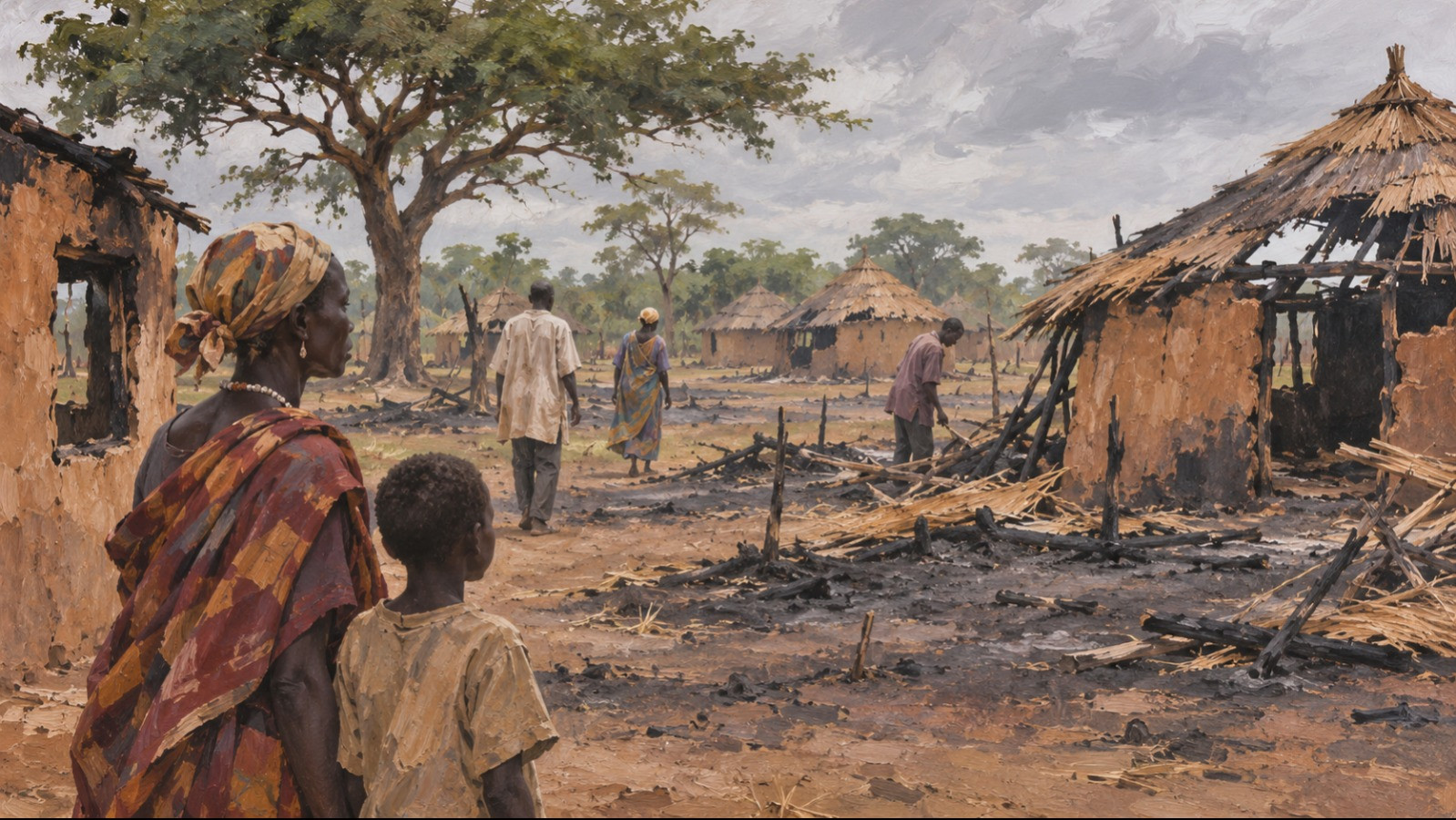
Abiemnom is located in the Rubeng administrative area of South Sudan, near the border with Sudan. According to Amnesty, tensions had been escalating since mid-February. Local residents had warned that arms and fighters were being gathered in the neighboring Mayom County. Officials from Unity State also acknowledged receiving reports of a potential attack. On February 28, around a thousand people arrived outside the UN's temporary camp in hopes of safety. The mission confirmed this in a statement issued on the day of the attack.
According to Amnesty, on the morning of March 1, around 1,000 to 1,500 armed individuals from Mayom attacked the town for nearly four hours. The assailants fired at people fleeing for their lives, set homes and parts of the market on fire, and looted a section of a hospital. Officials stated that among the dead were 130 residents of the town, 76 security personnel, and seven foreign nationals. Amnesty also documented seven killings that occurred outside the camp's back gate, where many residents had fled in hopes of refuge.
For the report, researchers spoke to 82 individuals, including survivors, eyewitnesses, and health workers. They also examined satellite images and verified photos and videos. The satellite images showed more than 230 buildings and other structures destroyed by fire. According to the report, most of the deceased were buried in two mass graves. Amnesty stated that the earlier killings of some youths from Mayom, which remained unresolved, could be a potential reason for this attack.
Mission spokesperson Priyanka Chaudhary told the Associated Press that after receiving initial warnings, the mission had repeatedly requested the South Sudanese army to send additional forces. According to her, amid budget and personnel shortages, the mission allocated its resources to the safety of civilians seeking refuge in the camp and medical assistance for the injured. The mission reported that around 2,500 people found shelter in its safe area.
Before the attack, there were nearly three dozen UN peacekeepers in Abiemnom. The mission sent 40 additional police personnel after the attack. Amnesty has questioned why additional forces were not sent earlier, considering the deadly attack in the same area in April 2025 and the warnings this time. The mission's spokesperson did not provide a direct explanation regarding the timing of the deployment. According to Amnesty, South Sudanese authorities did not respond to its two letters requesting feedback and information on the report.
Amnesty has called on the South Sudanese government to conduct a prompt, impartial, and effective investigation and to make its findings public. This will require the protection of witnesses and preservation of available evidence. The investigation should also examine the roles of those who carried out the attack and those who planned it. Victim families should be informed about the progress of the investigation, justice, and appropriate compensation.
It should be recorded who received warnings and when, what decisions were made regarding sending additional forces, and what options were available at that time to protect civilians outside the camp. Publicizing the review's findings will help determine where decisions went wrong and what additional resources the mission needed for its operations.
The South Sudanese government and the UN mission should clarify who will decide to send additional forces, open temporary shelters, and provide medical assistance to the injured upon receiving threat notifications. In April, the Security Council extended the mission's mandate but reduced the maximum authorized troop strength from 17,000 to 12,000. Therefore, a concrete outcome of the Abiemnom review should be the establishment of a security plan for remote towns that can be implemented in a timely manner with available resources to prevent such barbarity from happening again and to save innocent lives in time.