
Protests against December 4 Hill Council elections in Ladakh

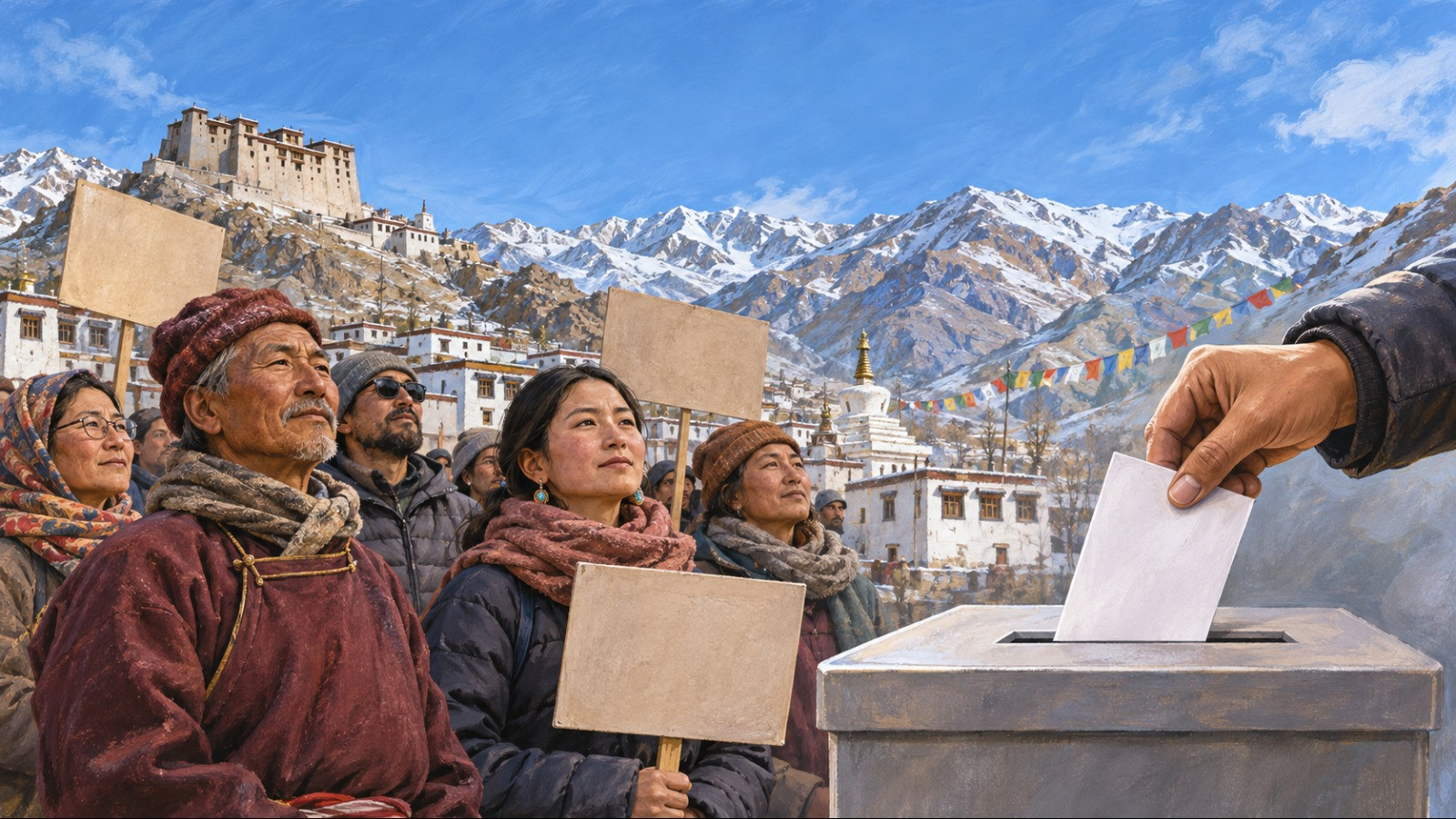
The Leh Apex Body announced a sit-in at NDS Memorial Park starting November 12.
Amid the elections for eight autonomous hill development councils in Ladakh scheduled for December 4, the Kargil Democratic Alliance and other organizations have called for a shutdown in Kargil city. The organizations demand that the council elections be held in April or May instead of December, to facilitate the voting process for the voters in the most crucial areas. As of the morning of November 12, no announcement has been made regarding changing the voting date.
The last date for nominations for the council elections is November 17. The scrutiny of nomination papers will take place on November 18, and candidates can withdraw their nominations until November 20. The entire election process is scheduled to be completed by December 8. Prior to this, voting for the panchayats and the municipalities of Leh and Kargil is set for November 21. In Leh, the Ladakh Buddhist Association, the Numberdar Association, and the Gonpa Association have appealed for a boycott of these panchayat and municipal elections.
The Leh Apex Body had announced a sit-in at NDS Memorial Park starting November 12. Its co-chairman, Chering Dorje, has demanded that elections be held in April or May. Ladakh MP Mohammad Hanifa Jan has also written to Home Minister Amit Shah urging the postponement of the council elections. The administration has stated that arrangements for heaters and separate queues for the elderly will be made at the polling stations. Chief Electoral Officer Rahul Sharma has issued an order that during the Model Code of Conduct, political protests, rallies, and demonstrations that could affect the peaceful conduct of elections will not be allowed within the municipal limits of Leh and Kargil. The order was issued in the context of the municipal elections.
The amendment implemented in October has paved the way for the formation of councils in eight districts. Under the new arrangement, administrative guidelines will be applied to district development plans, and the council's sub-regulations will require administrative approval. Sajjad Kargili, co-chairman of the Kargil Democratic Alliance, stated that local parties should have been consulted before changes to the structure and powers of the councils. Some organizations have also raised objections to the new boundaries of the constituencies. According to the administration, the delimitation has been done keeping in mind the population and existing panchayat and municipal areas.
Since Ladakh became a separate Union Territory in 2019, local representatives have been demanding full statehood and constitutional safeguards under the Sixth Schedule. Reservation in jobs for local youth and separate Lok Sabha seats for Leh and Kargil have also been part of their four-point agenda. In discussions with the Centre, a proposal for an elected body with executive and financial powers for the entire Ladakh has been put forth. Agreement on its structure and the distribution of powers with the district councils is still pending. According to Chief Secretary Ashish Kundra, the next meeting between the Home Ministry and Ladakh representatives is expected to take place after the completion of the election process.
The question is how many voters will be able to reach their polling stations on December 4. Election officials can assess the situation regarding road connectivity, snowfall, and the status of voters staying outdoors during winter in collaboration with district administration and local organizations. Based on that, the reason for maintaining or changing the date can be made public. If the elections are held on the scheduled date, alternative arrangements for remote polling stations in case of bad weather will need to be communicated in advance. The administration may also clarify where and under what conditions peaceful protests can be permitted.
It would be useful to set a date for the next meeting between the Home Ministry and Ladakh representatives for a long-term solution and to present a written draft of the proposed elected body. It should be clear which decisions district councils can make independently regarding land, budget, and development plans, and in which matters administrative approval will be required. The need for direct dialogue between the administration and local representatives has increased following the ban on protests and the removal of Sonam Wangchuk from the protest site. The Centre and Ladakh representatives must engage in timely discussions on statehood, constitutional safeguards, and the rights of elected councils to ensure that the electoral process runs smoothly and that all parties involved do not face any difficulties.