When Sardar Patel refused to wear Mahatma Gandhi's shoes
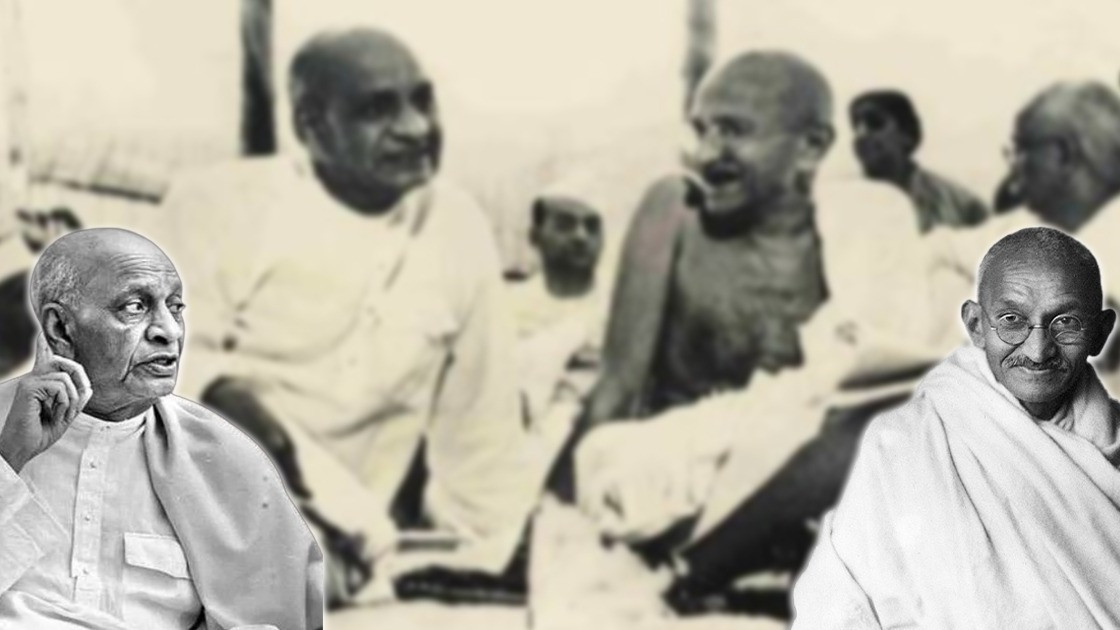
Documents from Yerwada Jail provide evidence of the close relationship between Mahatma Gandhi and Sardar Patel.
There was a deep unity of values and standards between Mahatma Gandhi and Sardar Patel. There was a bond of loyalty and personal affection between them that remained unbroken until the end. Gandhi was always protective of Sardar Patel, as he was familiar with his outspoken and candid nature. He knew that Sardar Patel could sometimes come across as harsh and 'angry' in his speeches, which could lead people to misunderstand his noble intentions and dedication to the nation and secular values.
In 1932, when Gandhi undertook a fast unto death in Yerwada Jail over the issue of communal awards, Sardar Patel was very concerned, as he was also imprisoned in the same jail along with Mahadev Desai and other Congress leaders. Gandhi knew that his decision would stress Patel. He asked Mahadev Desai if Sardar Patel was angry with him. Mahadev Desai replied, “He is under a lot of mental stress. Whether you survive the fast or not, he is worried that there should not be an atmosphere of discontent, conflict, or sorrow around you.” Gandhi responded, “I understand this. Am I not aware of the great grace that God has bestowed upon me by having the company of an extraordinary person like Vallabhbhai?” Gandhi was equally concerned about Sardar Patel's deteriorating health. Almost every letter he wrote to Sardar Patel began and ended with inquiries or advice regarding his health.
Sardar Patel took care of Gandhi like a mother
Sardar Patel was very worried about the physical attacks on Gandhi. Referring to the attack on Gandhi in Pune in 1934, Sardar Patel stated in a statement published in the 'Bombay Chronicle' on July 16, 1934, “I had warned Gandhi about two months ago that Pune could be a source of trouble for him, as I sensed the poison spreading there.”
Despite their mutual camaraderie, whenever they had to express their opinions, they did so without hesitation. In fact, differences in their views persisted during and after the national movement. However, their differences were not so serious as to weaken or break their relationship. The uniformity in their goals, strategies, and moral values was so deep that any long-term division was impossible.
Mahadev Bhai has given an interesting account of the days Gandhi and Sardar Patel spent together in jail. He described how Vallabhbhai took care of Gandhi like a mother and always kept everyone laughing. In Gandhi's words, “There is a special jester in my camp. His spontaneous jokes make me laugh so much that I double over. In his presence, the darkness of sorrow hides away. No despair can keep him sad for long, and he never lets me remain sad either. He does not even care about my being a Mahatma.”
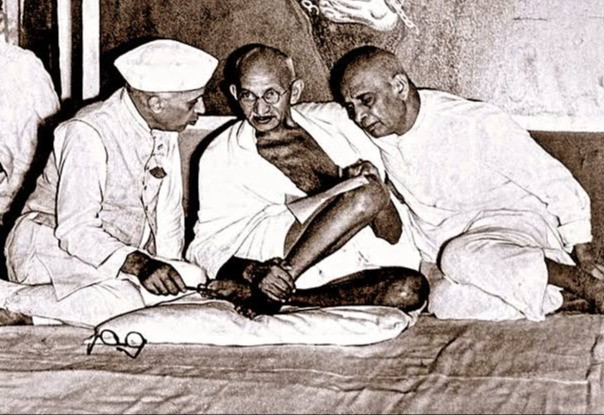
After coming out of jail, Gandhi mentioned his emotional affection for Sardar Patel in these words:
“I was already familiar with his unparalleled bravery, but I did not know that he also had motherly qualities. If I experienced even a little discomfort, he would get up from bed. He took complete care of everything related to my comfort.”
Gandhi wanted to make shoes for Sardar Patel
After the failure of the Round Table Conference, Gandhi and other top leaders were arrested, and a policy of repression was adopted. Sardar Patel was kept with Gandhi in Yerwada Jail, and they remained together for sixteen months—from January 1932 to May 1933. One incident from that time occurred when Sardar Patel was with Gandhi in Yerwada Jail. He did not have shoes.
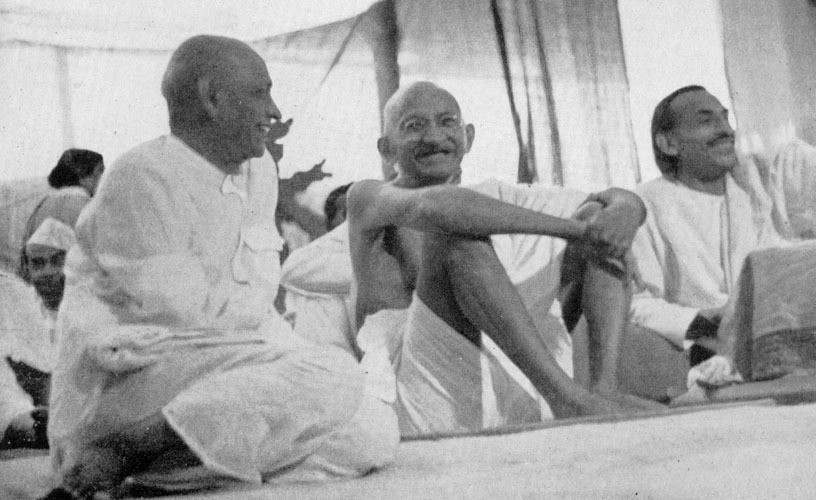
Seeing this, Gandhi said, “Shall I get leather and make shoes for you?”
Upon hearing this, Sardar Patel smiled and said, “Do you know how to make shoes?”
Gandhi replied, “Why not? What is so difficult about it? No task is hard to learn.”
Sardar Patel asked, “Where did you learn to make shoes?”
Gandhi said, “I learned this skill from Kleinbeck and later made several pairs of shoes. A sample of the shoes I made is still kept at the Khadi Institution in Sodpur.”
Upon hearing this, Sardar Patel said, “Bapu, you are right, but I cannot wear the shoes made by you.”
Gandhi asked, “Why can't you wear them? What is wrong with the shoes I made?”
Sardar Patel laughed and said, “Has anyone worn the shoes made by you? I think the shoes made by you can only be kept for exhibitions.”
To this, Gandhi laughed and said, “You are right. Bengali Satyanand Bose had ordered the shoes made by me, but not to wear, for some other reason.”
Sardar Patel curiously asked, “For what reason?” Gandhi said, “He adorned my shoes on his head instead of wearing them and kept them at the Khadi Institution in Sodpur. Now people come there to see those shoes.” Hearing this, Sardar Patel smiled and said, “Bapuji, that is true. You do not consider any task small or big. You complete every task with the same spirit. The shoes made by you also deserve respect in the institution. It is said that fame is like sunlight, which spreads on its own and shows people a new path.”
Gandhi smiled and said, “If that is the case, then everyone should try to look at every task with the same perspective, as the spirit of equality naturally brings fame and respect.” Sardar Patel agreed, saying, “Absolutely right.”
The documents from Yerwada Jail are proof of the relationship between Mahatma Gandhi and Sardar Patel. The relationship between Mahatma Gandhi and Sardar Patel was very close. There were some differences between them, but Sardar Patel continued to follow Gandhi's principles. There was a bond of loyalty and personal affection between them that remained unbroken until the end.