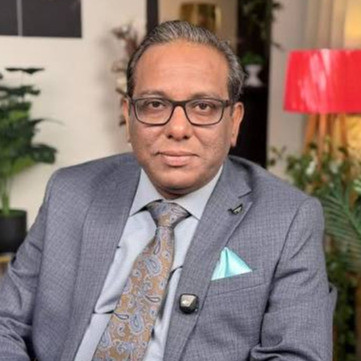
Former home secretary R K Singh's open letter to the nation
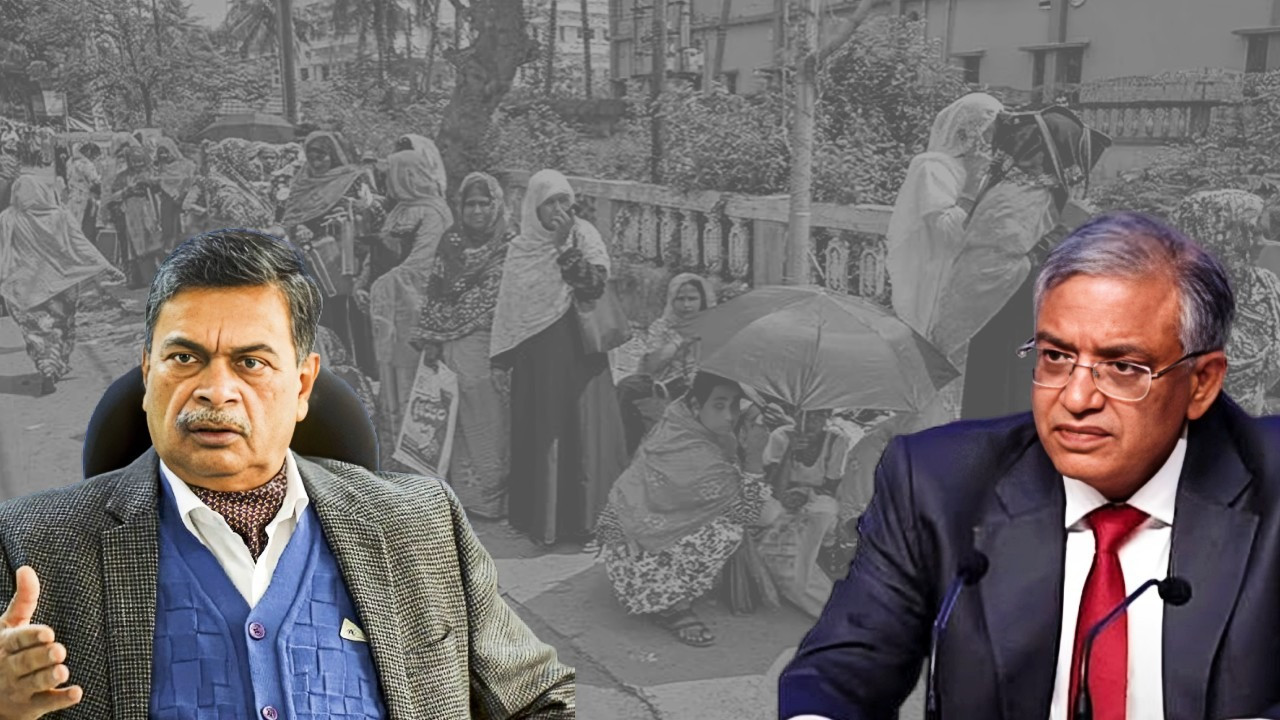
Actions of Gyanesh Kumar pose a threat to democracy
Former Home Secretary and former BJP MP R K Singh has written an open letter to the citizens of the country regarding the ongoing disputes over the voter list and SIR. We are presenting that letter here in Hindi.
An Open Letter to All My Fellow Citizens
Do you want India to remain a democracy? Then you must understand what Chief Election Commissioner (CEC) Gyanesh Kumar and his masters are doing in the so-called SIR. They are violating the law.
- According to Section 21 of the law, special revision can only be done in special circumstances, and the reasons must be recorded in writing in each case. It should also be limited to a particular constituency or part thereof. The order for a comprehensive revision (SIR) for the entire country was illegal. An exception made for special circumstances cannot become a general rule. The Supreme Court's decision to maintain the general SIR was wrong. Another question is: who made the decision for SIR across the country? Was it the entire Election Commission or just Gyanesh Kumar?
- According to Section 21 of the Representation of the People Act, 1950, when the revision of the voter list begins, the voter list in effect at the time of the issuance of the revision notification remains effective until the revision is completed. The revised voter list is only considered final when all appeals related to adding or removing names have been settled. Where appeals were pending, the original voter list applicable on the date of notification should have been used. In contrast, despite pending appeals, a new list with names removed was used in the elections. This was illegal.
- Under Section 22 of the RP Act, the authority to remove a voter's name from the voter list lies solely with the Electoral Registration Officer (ERO), no one else. This too can only be done on the grounds specified in Section 22(a), (b), and (c). There should be a proper inquiry, the concerned person should be given a fair opportunity to present their case, and the name can only be removed after settling the appeals filed against the order. Gyanesh Kumar removed the names of all voters included in the voter list by the ERO after 2003 without any basis, without any inquiry, and without issuing show-cause notices to the concerned voters. This was an open and clear illegal step.
Those whose names were suddenly removed in this manner had to fill out Form 6 as new voters and prove that they were eligible to be registered as voters. This is a clear violation of the Supreme Court's Lal Babu Hussain and Others v. Electoral Registration Officer and Others, [(1995) 3 SCC 100] decision. This decision stated that the burden of presenting solid evidence in support of disqualifying a registered voter lies with the inquiry authority or the objector, not the voter. In such cases, the voter should be given an opportunity to explain why their name should not be removed based on the grounds presented. None of this happened here.
The established judicial principle is that the burden of proof for depriving or punishing a person of any right lies with the person or institution that wishes to take that action. Here, Gyanesh Kumar reversed the responsibility of presenting evidence onto the voter. This is also against the law.
Until now, the government's and the Election Commission's efforts have always been to include all eligible voters in the voter list. This was a campaign to deepen democracy and empower all citizens. For the first time in the country's history, the campaign's aim has become to disenfranchise people.
Gyanesh Kumar has added a new appendix to Form 6. He did not have the authority to do so, as Form 6 is prescribed under statutory rules. He added this appendix against the opinions of both election commissioners. Decisions of the Commission are taken either unanimously or by majority. Both election commissioners were against adding this new appendix. Therefore, adding this new appendix to Form 6 was against the Commission's decision. Why was it added then? On whose orders was it added? This was illegal.
This appendix asked the applicant to state the registration number of their parents' names in the 2003 voter list. How would an ordinary person, say an 18-year-old youth, reach the 2003 voter list in 2026? This has halted the registration of all young voters. The BJP knows that young voters will not vote for them.
Massive objections were filed regarding the inclusion of voters' names in Form 7. Who filed these? How were these forms accepted and acted upon when the people signing them were not even present?
In West Bengal, the names of 16 lakh voters found valid by the ERO were not included because it seems the Election Commission filed appeals against them. Why? On what grounds? Who gave the Commission the authority to file appeals? The two election commissioners say they did not issue any such order. This means the Commission did not authorize anyone to file appeals. So who did this? Gyanesh Kumar? These people were prevented from voting in the elections.
So were some people in the Election Commission and a political party colluding to file a large number of fake Form 7 objections and remove names?
How was the election allowed to take place when millions of voters' appeals were pending? The Election Commission and the Supreme Court must answer this. The decisions made on the appeals indicate that 90 percent of the voters excluded from the list were valid.
A ridiculous thing called "Logical discrepancy" has been brought up. Gyanesh Kumar has no idea about the lives of the poor in India. Their children are not born in hospitals. They do not have birth certificates. They do not even have calendars in their homes. When the BLO went to register them in the voter list, they provided an estimated year of birth. Similarly, when their father's name was registered in the voter list, they provided an estimated year of birth.
These ignorant people in the Election Commission under Gyanesh Kumar said that any difference of less than 15 years between the ages of the father and child is a “logical discrepancy” and on this basis, their names can be removed from the voter list. Names with “logical discrepancy” were removed without any inquiry, which was against Section 21 of the Act.
The largest number of names removed are of the poor and marginalized, those who have no voice. They have been forced to earn a living away from their homes, both before and now. Millions are working in far-off places and other states. They cannot afford to return home for a month to register their names. If they do not go to earn, there will be no food in their homes. They cannot fill out complex forms. They do not have birth certificates and other documents. After all, why would they leave their daily wages for a vote?
Illegal immigrants have not been affected by this. After entering India, they first get their documents made, such as Aadhaar cards, ration cards, etc. Immigrants who came earlier act as helpful networks for them. Disenfranchised Indian citizens are the poor. These ignorant people in the Election Commission and their masters have not understood this. Or perhaps they wanted this.
Gyanesh Kumar has created a digital voter list and given the authority to deny the inclusion of names on the basis of “Logical discrepancy.” Millions of voters' names have not been included on the pretext of “Logical discrepancy.” This is against the law. The authority to add or remove names and publish the voter list is given only to the Electoral Registration Officer under the law. In contrast, the voter list has been centralized and the revision work has also been done at the central level. This was illegal.
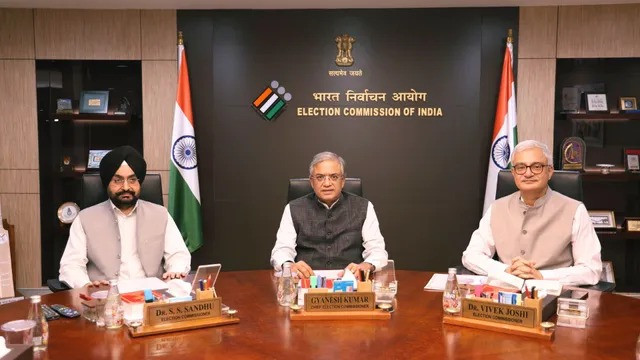
Two election commissioners have reported that those who have the authority to add or remove names, namely ERO, DEO, and CEO, have not been allowed access to the voter list. In Goa, the ERO found 97 voters valid and eligible to be included in the voter list. However, they have not been able to include their names in the voter list so far.
The centralization of amendments to the voter list is dangerous. It can be used to cut the names of voters from booths where votes are cast against the NDA. Did this happen?
Removing voters' names before verification is a serious crime, and Gyanesh Kumar is responsible for it.
So far, 13 crore names have been removed through SIR. This is 13 percent of the total voters, and SIR is not yet complete. In the 2024 elections, the difference between NDA and INDIA was only 3 percent. Therefore, the removal of these names has had an impact on the elections and will continue to do so.
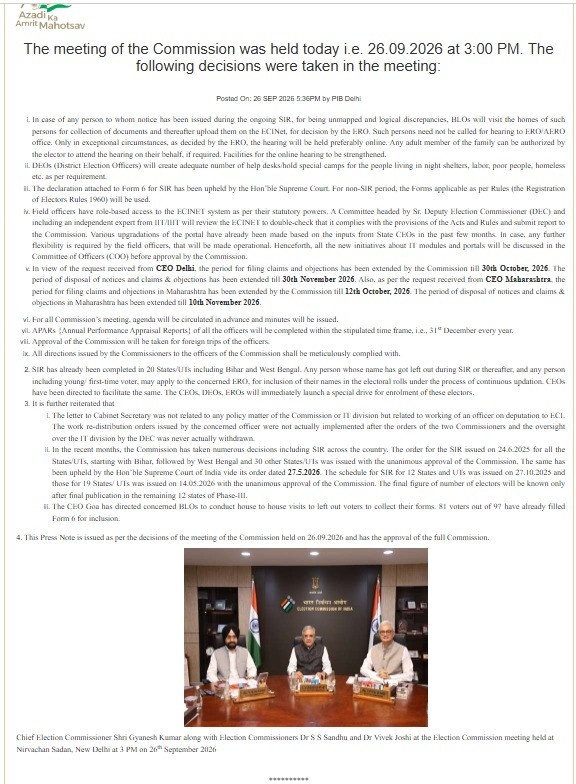
The press note released after the Commission's meeting on September 26 confirms the illegal actions mentioned above.
Did Gyanesh Kumar carry out all these illegal acts himself, or were they directed by his superiors?
The opposition says it will impeach Gyanesh Kumar. This exercise is futile. They do not have enough numbers for that. If they genuinely want a solution, they should file criminal cases against Gyanesh Kumar.
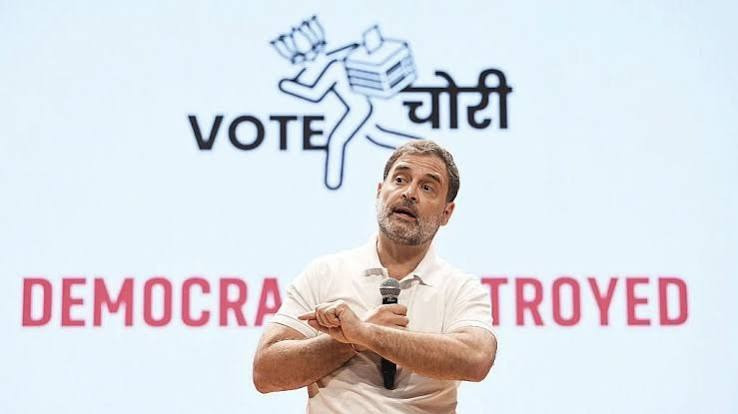
The next step should be for all opposition parties to unite and say that they will not participate in any elections until the Chief Election Commissioner and Election Commissioners resign, and their successors are selected according to the previous selection process, which included the Prime Minister, the Leader of the Opposition, and a sitting judge of the Supreme Court.
In states where elections were held despite millions of voter appeals pending, those elections should be annulled and re-elections should be conducted. Voting should be done using ballot papers instead of EVMs, as no electronic system has yet been developed that cannot be hacked. This is why EVMs are not used in economically and digitally advanced countries.
If we want to preserve our democracy, the entire country must be made aware and united.
The decision regarding SIR has tarnished the reputation of the Supreme Court. Its disrepute is comparable to the decisions justifying the Emergency. The honorable judges should pay attention to this.
The delay in the petition challenging the law related to the selection of Election Commissioners is also sending a wrong message about the Supreme Court. It is a very clear case that the selection of Election Commissioners should not be done by the ruling party, but by an impartial selection committee to ensure their neutrality.
Let us unite to save our democracy.
R. K. Singh
(Retired IAS, former Union Home Secretary)