
No one can be forced to sing Vande Mataram
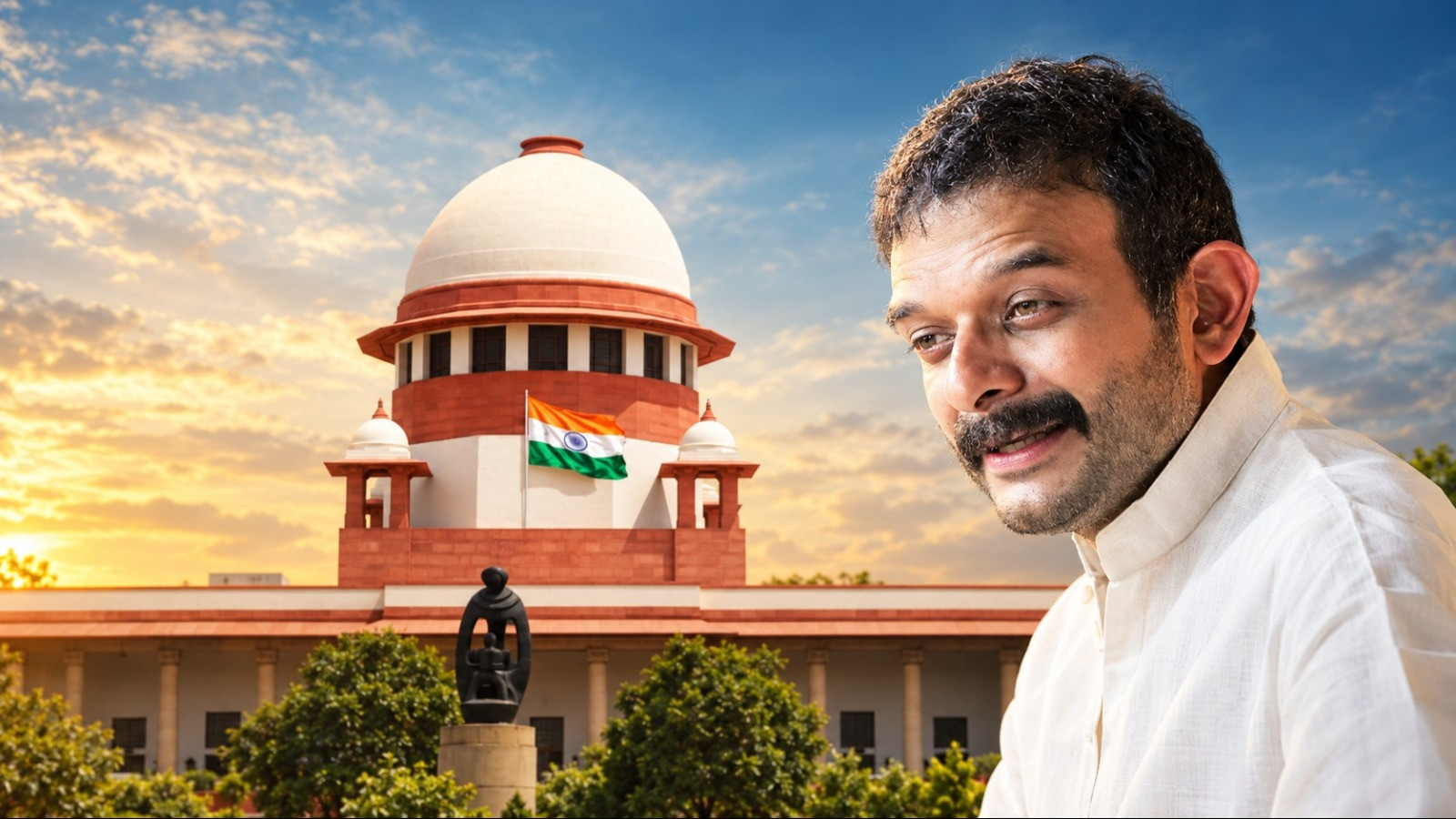
True patriotism can also be displayed by standing silently with respect.
The greatest strength of India's democratic and constitutional framework has been its diversity, plurality, and inclusivity. Whenever those in power attempt to mold patriotism and national symbols into their specific ideology and impose it on citizens, the social fabric of the country and the fundamental rights of citizens come under serious threat.
Recently,
the Supreme Court's remarks on making all six verses of 'Vande Mataram' mandatory and the punitive provision for criminal action for not doing so have once again brought this debate to the forefront of the country. The constitutional advice given by the court against this forced mandate is not only a victory for civil rights but also a strong blow to the communal politics that has used national symbols as a weapon to measure patriotism and divide society.
On September 22, 2026, a three-judge bench of the Supreme Court, headed by Chief Justice of India (CJI) D.Y. Chandrachud and including Justices Joymalya Bagchi and V. Mohan, heard a petition related to the amended law making all six verses of 'Vande Mataram' mandatory and criminalizing the act of not singing it. This petition was filed by the renowned Karnataka musician T.M. Krishna.
During the hearing, the Supreme Court bench cited the historic judgment of the 1986 famous 'Bijoe Emmanuel vs. State of Kerala' case, clarifying the situation completely. The court clearly stated that,
if a person does not sing one or all verses of the national anthem due to their religious beliefs or the voice of their conscience, they shall not face criminal charges or imprisonment solely for this reason. The law of the land, as established in the 'Bijoe Emmanuel' case, is still fully applicable today.
Justice Joymalya Bagchi referred to Articles 25 and 26 of the Constitution, stating that any democratic government can define the scope of national symbols, but it cannot impose criminal penalties on a citizen by violating their religious freedom. The court's message was very clear: true patriotism is also demonstrated by standing respectfully in silence; it cannot be forcibly extracted from anyone's throat by the law's stick.
To understand the roots of this controversy, one must look at the history of 'Vande Mataram' composed by Bankim Chandra Chatterjee.
This song, written in 1875, became a great proclamation of India's freedom struggle. However, when it came to adopting the national anthem in the Constituent Assembly in 1950, the visionary framers of the Constitution accorded national anthem status only to its first two verses.
The reason behind this was quite clear.
The first two stanzas of the song praise the natural beauty, greenery, and land of the motherland, while the latter four verses invoke religious deities and envision the country as Durga and Lakshmi. India is a multicultural and multi-religious country, where monotheistic citizens, especially the Muslim community, consider the worship of any form or deity other than God to be against their religious principles. Therefore, the Constituent Assembly unanimously decided that only the first two verses would be used as the national anthem, to avoid any conflict between a citizen's religious beliefs and their patriotism.
However, the current government, under the ideological agenda of the Bharatiya Janata Party and the Rashtriya Swayamsevak Sangh, has attempted to dismantle this historical national consensus. Amending the law in Parliament to make all six verses mandatory and adding a punitive provision of up to 3 years of imprisonment for not singing it was not merely a matter related to a song.
This was a direct attempt to advance the RSS's agenda of 'cultural nationalism' and 'Hindu nation', where the definition of patriotism is determined solely from a majoritarian perspective.
In the politics of the RSS and BJP, 'Vande Mataram' has always been used as a political weapon. The ruling party's strategy is quite clear: to create a controversy that immediately divides society into two poles. On one side are those who label every government decision as 'nationalism', and on the other are minorities and liberals who stand for the Constitution and their religious freedom. The real aim of this entire exercise is to put Muslims and other minorities in the dock and prove them to be 'less patriotic' or 'anti-national', thereby strengthening the majoritarian vote bank.

Iqbal Ahmad
इक़बाल अहमद पेशे से फ्रीलांस लेखक हैं और यू ट्यूब पर पाँच साल से सक्रिय पत्रकारिता कर रहे हैं। द क्रेडिबल हिस्ट्री पर इनका साप्ताहिक शो ‘द मुस्लिम एंगल’ दर्शकों में लोकप्रिय है।