
Peaceful protests are students' fundamental right: CJI Suryakant

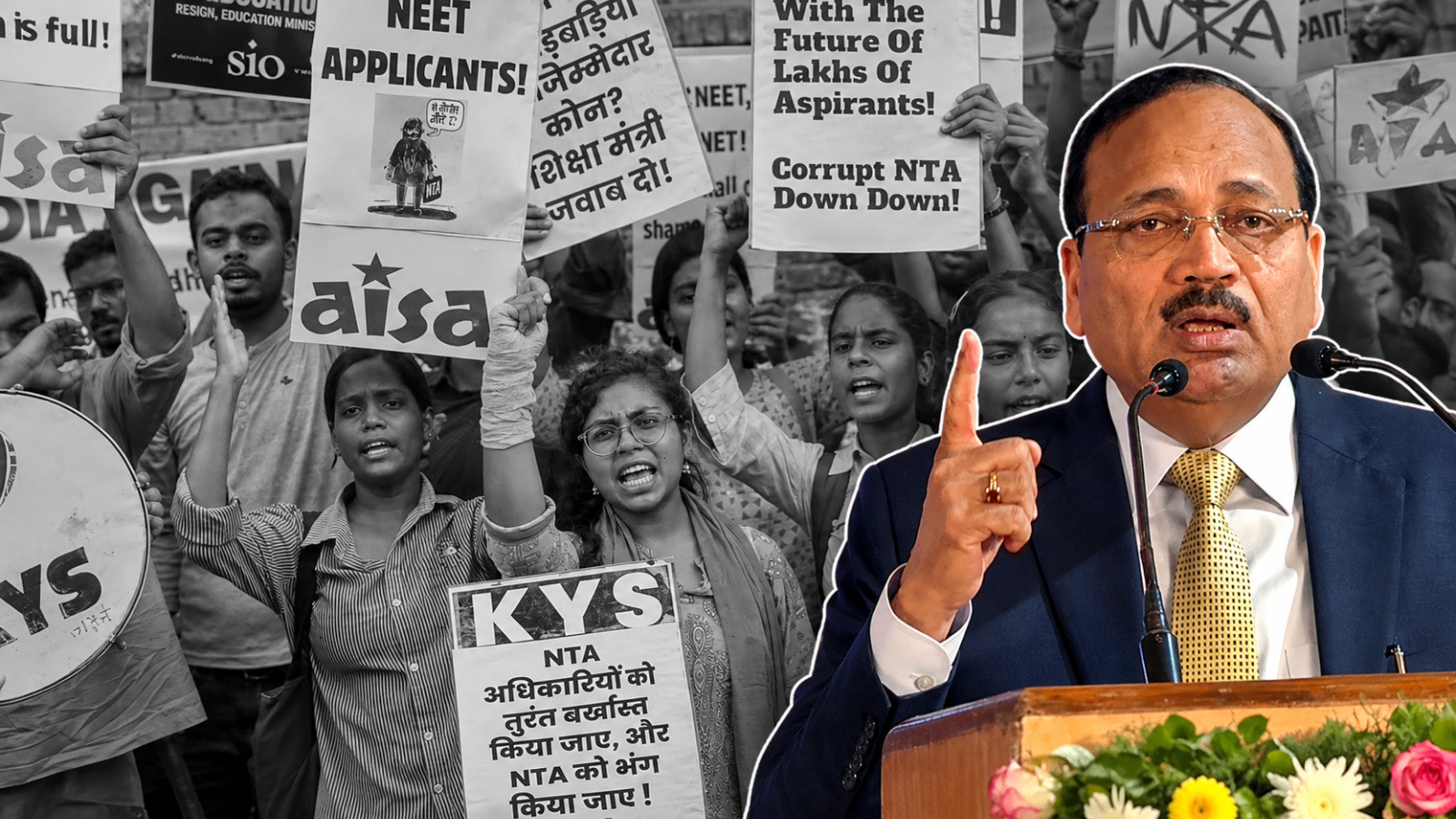
CJI Suryakant affirmed the judiciary's commitment to protecting students' right to peaceful protests.
Chief Justice (CJI) Surya Kant held an open dialogue with students of Chanakya National Law University (CNLU) in Patna on Saturday. During the event held at the university's Ashok Hall, he addressed questions related to police action on peaceful student protests, transparency in the collegium, rising fees, and challenges faced by first-generation lawyers.
Live Law reported that CNLU described it as the first of its kind in Indian history, where a sitting Chief Justice directly interacted with law students without pre-determined questions. According to the university, this conversation held special significance after CJI faced student protests at NLSIU Bengaluru and NALSAR Hyderabad. The event was also attended by Patna High Court Chief Justice and CNLU Chancellor Justice V. Kameshwar Rao and the university's Vice-Chancellor Professor Faizan Mustafa .
A student questioned the police's attitude towards peaceful protesting students. In response, CJI Surya Kant stated that,
The judiciary is committed to protecting the fundamental right of students to peaceful protest.
CJI Surya Kant was engaging with students at Chanakya National Law University (CNLU). He expressed a desire to have an open question-and-answer session rather than a formal address. According to the university's statement, a female student raised a question regarding police action on peaceful student protests.
The question referenced protests against the NEET exam paper leak that took place at Jantar Mantar in Delhi, led by the Cockroach People's Party. This group initially emerged as an online satirical campaign against a comment made by the CJI in the Supreme Court. Later, the CJI stated that his comment had been taken out of context.
CNLU stated that,
The CJI told the student that courts will not remain silent when cases of police brutality come to light. He reiterated the judiciary's commitment to protecting the right to peaceful protest for students.
Another student asked why dissenting opinions recorded in the collegium are not made public. To this, the CJI replied that even disclosures made in good faith can put the concerned individual in an uncomfortable position. He mentioned that there are limits to transparency when it comes to personal dignity. The CJI asked,
If a negative comment about a Chief Justice or judge is included in the collegium's proceedings, how will that person continue their work?
According to the university, the Chief Justice of Patna High Court and CNLU Chancellor Justice V. Kameshwar Rao also attended the event. CNLU stated that this program held special significance in light of recent protests against the CJI at NALSAR in Hyderabad and NLSIU in Bengaluru.
Discussions also took place regarding the financial difficulties faced by first-generation lawyers at the start of their careers. The CJI referred to an order in the case of Sarika Tyagi vs. Union of India, in which he emphasized the need for a support fund to assist young lawyers in their initial years.
Regarding the question of not making dissent recorded in collegium proceedings public, the CJI stated that comments made about a candidate, even if made with good intentions, can put them in a difficult position if made public. According to him, it is also important to consider the impact of such disclosures on the dignity of the individual concerned.
Students also raised the issue of rising fees for legal studies and inadequate scholarships. According to CNLU, the CJI indicated that these concerns would be addressed.
Vice-Chancellor Professor Mustafa proposed including mandatory training in courts during the final year of the five-year law course. He also suggested removing the requirement of one year of advocacy experience for judicial service examinations. According to the university, the CJI responded positively to this proposal. The aim of the proposal is to incorporate practical court experience into the curriculum without reducing the overall duration of the course.
Justice V. Kameshwar Rao mentioned the need to make judicial clerkships in the High Court more competitive and financially attractive. He suggested that the remuneration for judicial clerks at the Patna High Court should be competitive with the opportunities available to law graduates in the corporate sector.
Students also raised the issue of rising fees and inadequate scholarships. CNLU stated that the CJI indicated that attention would be paid to this matter. Justice V. Kameshwar Rao emphasized the need to make judicial clerkships more competitive and financially attractive. He suggested that the remuneration for judicial clerks at the Patna High Court should be competitive with the legal opportunities available in the corporate sector.