Turkey and Qatar sign defense agreement to boost military cooperation
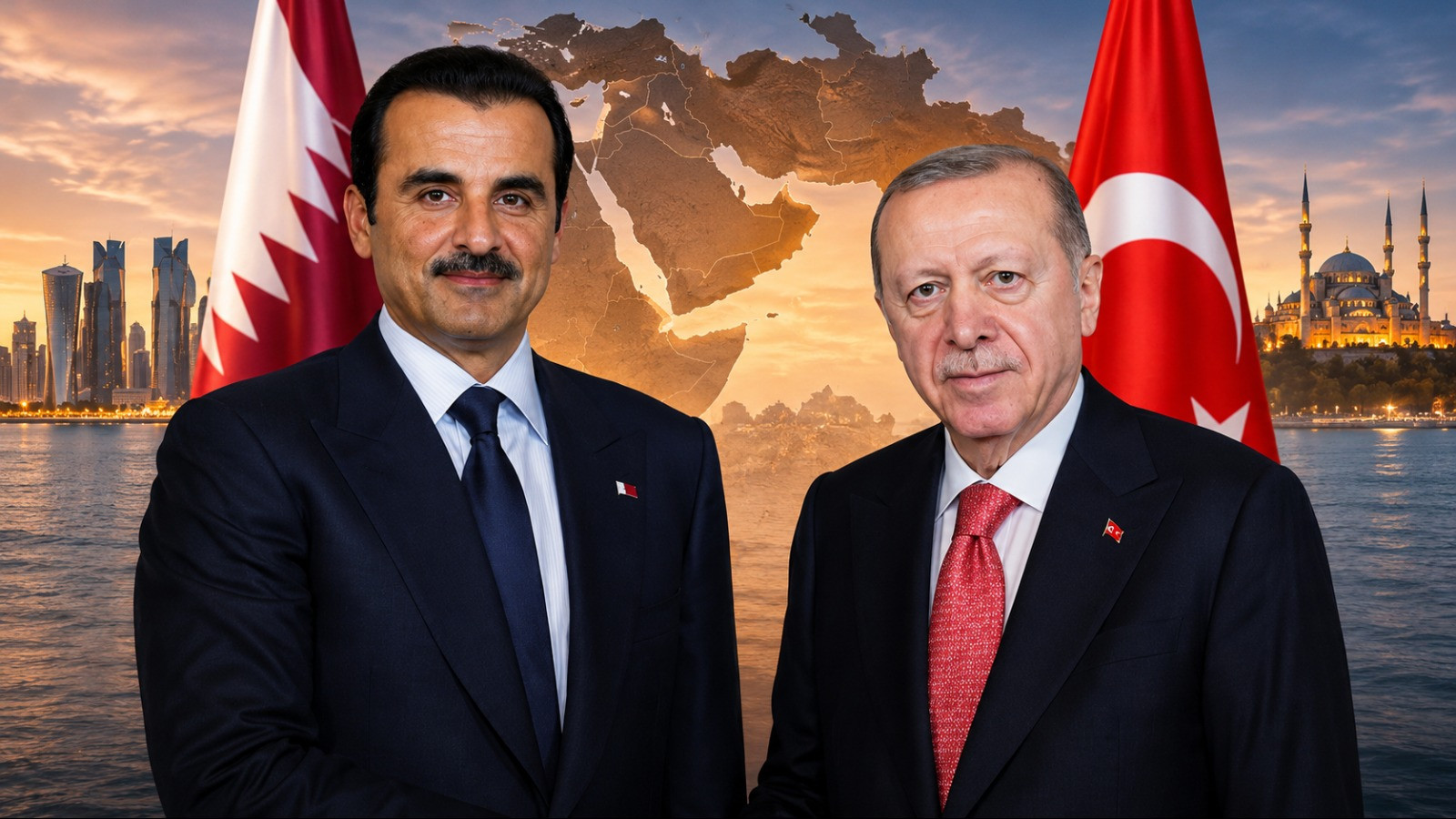
The agreement was reached during the 12th Supreme Strategic Committee meeting in Istanbul, with details not disclosed.
Turkey and Qatar signed a mutual defense agreement on November 13, 2026, in Istanbul. This agreement was made during the 12th session of the Supreme Strategic Committee of both countries, co-chaired by Qatar's Emir Sheikh Tamim bin Hamad Al Thani and Turkey's President Recep Tayyip Erdoğan. The purpose of the agreement is said to be to strengthen collective defense and promote regional security and stability. Under this, both countries will work towards adopting a joint stance in the event of external armed attacks on either party or both.
This agreement comes at a time when the security situation in West Asia remains extremely complex. The conflict between the United States and Iran, regional tensions with Israel, the situation in Gaza, and risks associated with the Strait of Hormuz have heightened security concerns for Gulf countries. In such an environment, Turkey and Qatar's defense cooperation can be seen not only as an expansion of military relations but also as an attempt to strengthen their role in regional diplomacy and security arrangements.
According to the presidential office of Turkey, Erdoğan emphasized the need to work together to prevent the resurgence of conflict in the Gulf region and to pave the way for peace through dialogue. Turkey described the agreement as adding a new dimension to the relations between the two countries. Qatar's Ministry of Foreign Affairs also highlighted both countries' commitment to collective defense and regional security. However, the full terms of the agreement, its legal obligations, and the nature of military action in the event of an attack have not been publicly clarified. Therefore, it would not be appropriate to consider it a guarantee of automatic military intervention like NATO's Article 5 at this time.
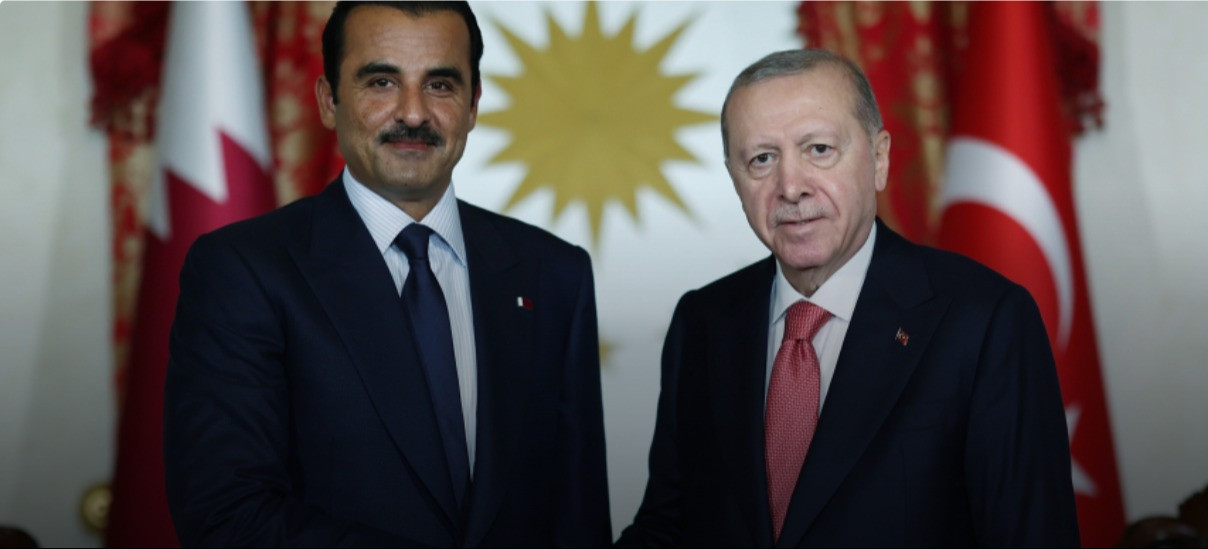
Both countries have agreed to regularly discuss security-related threats and regional and global developments. Joint military exercises, cooperation in the defense industry, and the exchange of military personnel training will be key components of this partnership. This means that cooperation will not be limited to political declarations but may also advance at the level of military contact, training, and defense production.
An important aspect of this agreement is the mention of the 'Brother Memorandum' signed between Turkey, Qatar, Pakistan, and Indonesia. In the joint statement, both countries described this agreement as a significant step towards developing indigenous capabilities to meet their defense needs. This indicates that all four countries are exploring possibilities for cooperation in defense production, technical capabilities, and military needs. However, details regarding any joint military command, permanent alliance, or arrangements for mutual military intervention under the Brother Memorandum have not been made public.
Turkey and Qatar's relations have continuously strengthened over the past decade. In 2017, when Saudi Arabia, the United Arab Emirates, Bahrain, and Egypt severed diplomatic and economic ties with Qatar, Turkey supported Doha. It maintained its military presence in Qatar and assisted in the supply of food and other essential goods. That crisis reinforced political trust and security cooperation between the two countries. Subsequently, partnerships expanded in the fields of defense, trade, investment, and diplomacy.
The economic foundation of cooperation between both countries is also significant. The joint statement from the meeting in Istanbul reiterated the goal of reaching bilateral trade of up to $5 billion in the near future. Both parties agreed to explore new opportunities in trade and economic relations. The Trade and Economic Partnership Agreement (TEPA), signed in 2018 and effective from August 1, 2025, was considered important for this.
According to the joint statement, Qatari investment in Turkey is a crucial part of the economic relations between the two countries. Meanwhile, Turkish contracting companies have completed 206 projects in Qatar, with a total cost reported at $20.8 billion. Both countries also emphasized the need for public-private partnerships, financial cooperation, and sharing experiences between business institutions.
To promote trade, preparations are underway to hold the second meeting of the Qatar-Turkey Joint Economic and Trade Committee (JETCO) in Doha. Additionally, the joint commission related to economic and technical cooperation will also hold its seventh session in Doha. Energy security and liquefied natural gas (LNG) trade have also been key topics of discussion. Both countries expressed their commitment to diversifying energy sources and making regional energy supply more secure.
The agenda of the meeting extended beyond defense and trade to include education, health, culture, labor, and technology. Both countries expressed a desire to enhance contact between universities and educational institutions, professional development for teachers, the teaching of Turkish and Arabic languages, and student exchanges. The possibility of a joint scholarship program was also discussed. In the health sector, there was agreement on sharing training and technical expertise between institutions of both countries. A framework for cooperation in data protection and cybersecurity was also mentioned.
A significant aspect of this meeting was related to regional diplomacy. Turkey and Qatar also signed a separate agreement in the field of peace, reconciliation, and conflict resolution to institutionalize their cooperation in mediation and conflict resolution. Both countries have previously played roles in diplomatic efforts on various regional issues, including Gaza and Afghanistan. Now, they want to advance this role through regular discussions, exchanges of experts, and joint mediation efforts.
On the Gaza issue, both countries expressed concern over Israeli actions and violations of the ceasefire. They emphasized the need for unhindered access to humanitarian assistance in Gaza, reconstruction, and relief arrangements for displaced people. The joint statement condemned the expansion of Israeli settlements in the West Bank, violence, and the displacement of Palestinians. Both countries rejected attempts to change the historical and legal status of the Al-Aqsa Mosque.
Regarding the conflict between the United States and Iran, both countries clarified that the resolution of the crisis should be through dialogue and diplomacy. They stressed the need to respect the sovereignty and territorial integrity of all countries in the region and to avoid targeting civilians and civilian infrastructure. They also emphasized the need to restore safe and unhindered navigation through the Strait of Hormuz. This stance is particularly important for Qatar, whose LNG economy relies on the security of maritime trade routes.
The joint statement also addressed the situation in Syria, Lebanon, Iraq, Libya, Yemen, Sudan, and the Horn of Africa. Both countries supported sovereignty, regional integrity, and political solutions in these areas. Solidarity with Saudi Arabia was expressed in condemning Houthi attacks in Yemen. In the case of Lebanon, there was a call for the implementation of United Nations Security Council Resolution 1701 and a demand for the withdrawal of Israeli forces. Emphasis was also placed on respecting Syria's sovereignty and the 1974 ceasefire agreement.
The defense agreement between Turkey and Qatar is a significant development amid changing security equations in West Asia. Turkey possesses a developing defense industry, military experience, and regional political influence, while Qatar has energy resources, financial capacity, and a significant role in international diplomacy. The partnership allows both to leverage each other's capabilities as complements.
However, it would be premature to view this agreement as the formation of a new military alliance or regional bloc. Its real significance will be determined by how far both countries implement it, the extent of cooperation in joint military exercises and defense production, and their shared response in the event of a real security crisis. It is clear that Ankara and Doha do not want to limit their relations to just trade and diplomacy. They are moving towards working more closely together in matters of regional security, energy, defense technology, and conflict resolution.