
Impact of 100% US tariffs on India

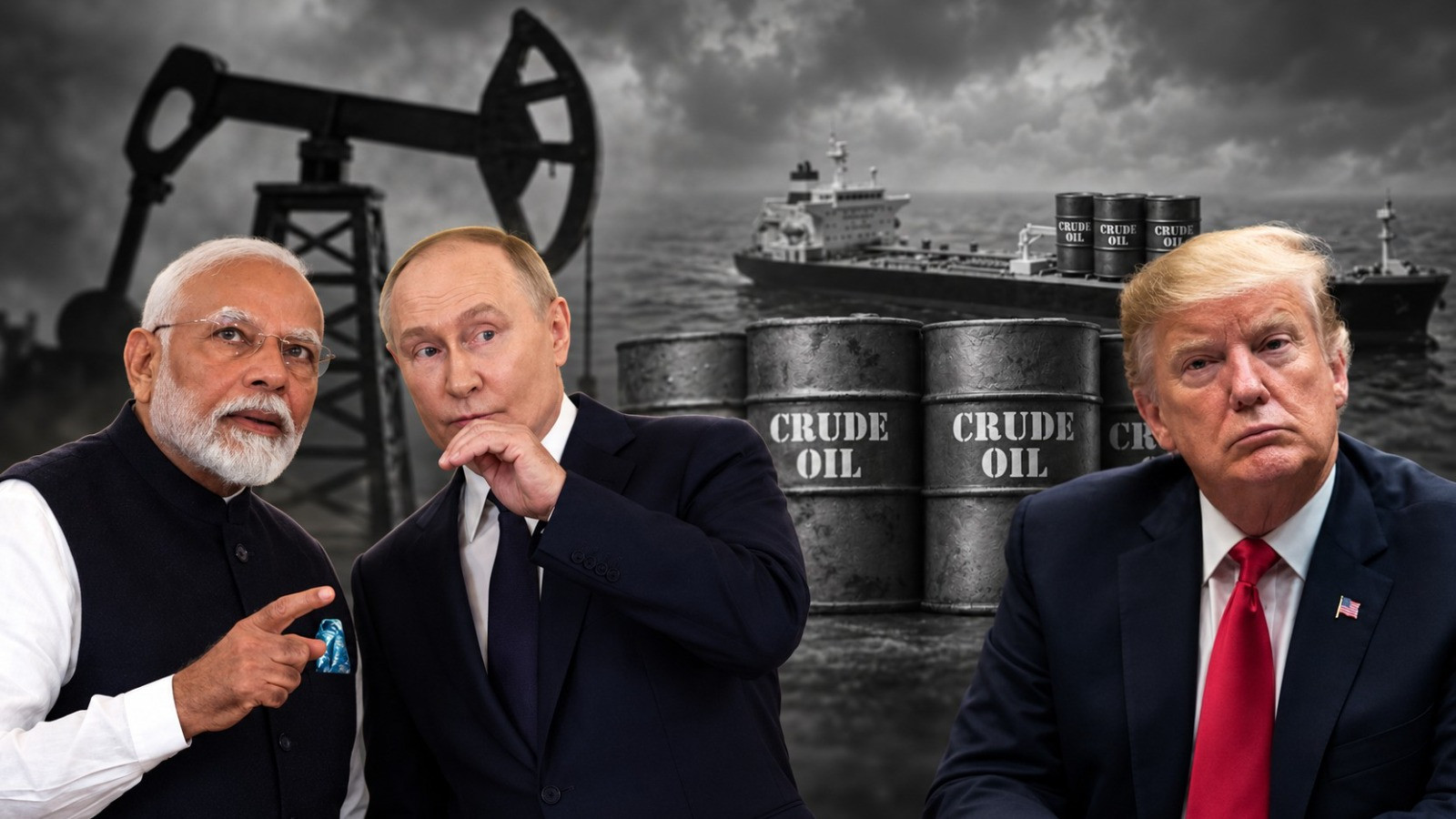
Trump may exercise caution in strictly enforcing the bill until the West Asia crisis persists.
The U.S. House of Representatives passed a bill on Wednesday aimed at limiting Russia's earnings from oil and gas amid the Ukraine war. The bill includes provisions for imposing tariffs of up to 100 percent on the five largest buyer countries of Russian energy. It is noteworthy that India is the second-largest buyer of Russian crude oil.
Lindsey O. Graham Sanctioning Russia and Iran Act of 2026 was approved by the U.S. Senate last month. It now requires only President Donald Trump's signature to become law. However, the bill grants the President broad discretionary powers to implement its provisions.
India imports over 88 percent of its crude oil needs, with Russia currently accounting for nearly half. The ongoing war in West Asia has already strained the global energy market. It remains unclear when Trump will sign this bill and to what extent its provisions will be implemented.
Experts say that there is room for exemptions and concessions in the bill. In the event the law is enacted, India may seek such exemptions from the U.S. However, this would provide the Trump administration with an additional tool to exert pressure on New Delhi during trade negotiations.
The Ministry of External Affairs stated on Thursday that,
the government is committed to maintaining India's energy security by ensuring supplies from various countries in changing global circumstances. The potential impacts of the proposed U.S. law on India-U.S. relations and the global energy market have been raised with U.S. officials.
The Ministry of External Affairs said,
high-level discussions on this issue have taken place with various U.S. representatives over the past few months. India has clearly articulated the potential impacts on bilateral relations and the international energy market. The Indian side has also expressed its resolve to take all necessary steps to protect its commercial and economic interests. The original draft of the bill proposed a 500 percent tariff on all countries purchasing Russian energy. The new version of the bill has limited this to a maximum of 100 percent tariff on the five largest buyers of Russian oil and natural gas.
On paper, this appears to be a significant reduction, but a 100 percent tariff is still very high for India. Especially at a time when New Delhi and Washington are trying to finalize a trade agreement. However, the important aspect from India's perspective is that the U.S. President is also given the authority to grant exemptions from the bill's provisions.
The crisis in West Asia has led to a severe reduction in global energy supplies. In such circumstances, rapidly reducing imports of Russian oil is not a practical option for India. For the U.S. as well, removing millions of barrels of Russian oil from the global market at a time when energy supplies from West Asia are already disrupted would not be a wise move.
Earlier this week, President Trump called for an end to attacks on Russian oil refineries from Ukraine. Prices of crude oil and petroleum products are rising rapidly due to limited supply in the global market.
This raises the question of whether Trump will risk imposing tariffs on countries that purchase large amounts of Russian oil, thereby removing more oil from the market? Experts believe that as long as the West Asia crisis continues, Trump may exercise caution in strictly enforcing the bill.
Imposing strict sanctions could further increase oil and fuel prices. The Trump administration would likely not want to take such risks before the midterm elections in the U.S. this year.
Abu Dhabi-based energy analyst Natalia Katona told Indian Express,
In the current circumstances, implementing this bill would be economically self-destructive for the U.S. The unavailability of Russian diesel has already pushed the diesel crack spread, or refining margin, in the U.S. to $114 per barrel. Any logical economic assessment would go against this bill, but given the political opportunism and economic myopia of the current administration, one should be prepared for any eventuality.
After Russia's invasion of Ukraine in February 2022, Western countries distanced themselves from Russian crude oil. Subsequently, Russia began offering oil to willing buyers, including India, at discounted prices. This is why Russia, which previously sold very little oil to India, has now become its largest crude oil supplier, surpassing India's traditional suppliers in West Asia.
During the West Asia crisis, when oil supplies from Gulf countries decreased, Russian oil proved to be a crucial support for India's energy security. According to analysts,
despite the threat of sanctions, Russian oil remains the most practical and competitive option for Indian refineries. It is extremely difficult to replace it in the current market.
Commodity market analytics firm Kpler reported that,
India imported 20.8 lakh barrels of crude oil per day from Russia in August. This accounted for approximately 45 percent of India's total oil imports. In the previous two months, Russia's share had been over 50 percent.
Kpler's modeling and refining manager Sumit Ritolia stated that the U.S. Senate's decision to push for strict sanctions on Russia has increased the policy risk associated with Russian oil supply, but it has not changed the purchasing outlook for India or China in the near future.
He said, “The bill still has to pass through some hurdles. Its ultimate impact will depend on how strictly the U.S. administration enforces it and how much exemptions or special concessions are utilized.”
According to him, when the security of actual oil supply becomes a concern, policymakers want to avoid steps that unnecessarily disrupt the availability of crude oil. India will certainly seek exemptions from the U.S.
Experts say that the proposed law will provide the Trump administration with another means to use tariffs as a weapon of pressure against India.
Natalia Katona said, “The passage of the bill and its actual implementation are two different things. The U.S. could use it as a tool to exert pressure on India rather than as a hammer of sanctions.”
A trade expert, speaking on condition of anonymity, said that,
Washington could use this bill to secure more favorable terms for itself in the India-U.S. trade agreement. Significant progress has been made in the negotiations of this agreement over the past few months after initial hurdles.