
US spent $38 billion in six-month war against Iran: CBO report

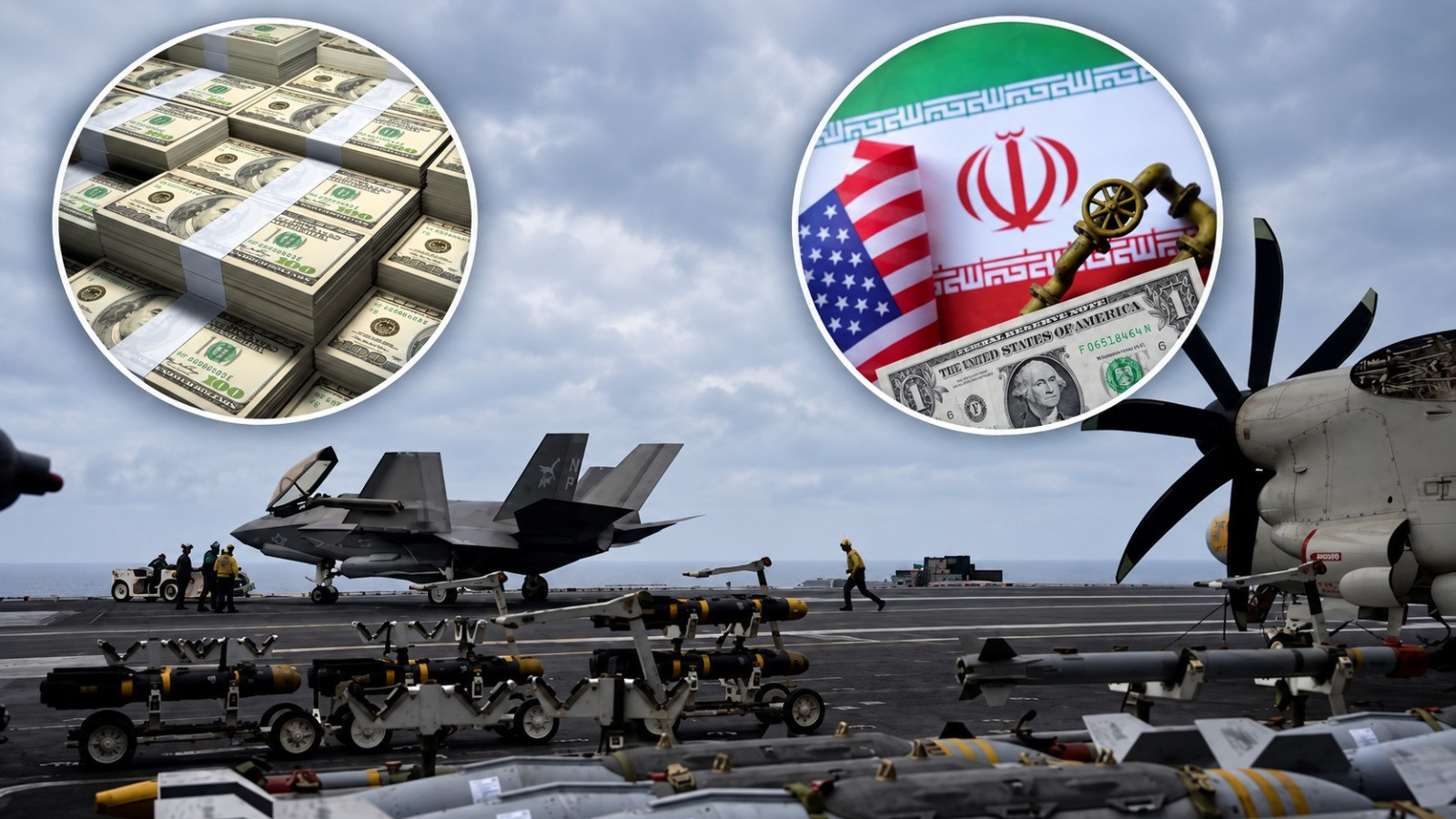
The report estimates an additional monthly expense of around $3 billion if the war continues.
The United States has spent $38 billion on the war against Iran, which has been ongoing for six months. The non-partisan body of the U.S. Congress, the Congressional Budget Office (CBO), estimated in its report released on Tuesday that if the war continues, an additional expenditure of about $3 billion per month will be incurred. This report comes at a time when the Trump administration is seeking ways to end the war and fully reopen the strategically important Strait of Hormuz.
CBO has included expenditures up to August 1 in its calculations. According to the report,
the inflation rate in the U.S. could rise by about 0.5 percent in the first three months of 2027 due to the war.
The report also expressed concern that,
the rising costs of the war could further weaken the deteriorating financial situation of the U.S. In August, the total public debt of the U.S. surpassed $40 trillion. President Trump often compares the Iran war to the wars in Iraq and Afghanistan that began after the September 11, 2001 attacks.
the U.S. spent about $2 trillion during the eight-year Iraq war. Meanwhile, according to Brown University's 'Costs of War' project, the total cost of the two-decade-long U.S. war in Afghanistan was approximately $2.3 trillion.
The continuously rising military expenditures have put significant pressure on the U.S. stockpile of weapons and ammunition. Energy prices have also surged, raising concerns about how prepared the U.S. will be to handle a new conflict if it arises in another part of the world. The cost of the war is also putting additional pressure on the U.S. federal budget, which is already grappling with rising debt and deficit issues.
the majority of the war's costs have resulted from the extensive use of weapons and ammunition. CBO estimates that it could take about five years to restore the U.S. weapons stockpile to its current level.
Reuters reported in August that during the war, the U.S. has nearly exhausted its stockpile of long-range precision-guided missiles. CBO also stated that the U.S. Department of Defense did not cooperate with parliamentary financial auditors in the investigation.
White House spokesperson Anna Kelly described the attacks on Iran by President Donald Trump as "decisive action." She stated that,
these attacks were carried out to prevent Iran from harming U.S. soldiers and interests. Kelly claimed that the U.S. military has sufficient weapons, ammunition, and military resources to achieve all of the President's strategic objectives.
Pentagon spokesperson Sean Parnell also dismissed the findings related to the shortage of weapons. He stated that the U.S. has all the necessary resources available for the President to strike whenever and wherever he wishes. This investigation into the costs of the war was conducted at the request of the top Democratic member of the House Budget Committee, Brendan Boyle.
Boyle stated,
brave American soldiers have lost their lives in Trump's disastrous Iran war, and many others have been injured. In addition to this humanitarian cost, the CBO's non-partisan report clearly indicates that tens of billions of dollars of taxpayer money have been spent on the war, and this expenditure is continuously rising.” So far, 18 American military personnel have died in the Iran war.
CBO report does not include costs associated with recent attacks on commercial vessels in the Hormuz region and attacks on U.S. military bases in the area. The interest costs on the funds raised through borrowing for the war are also not included in the calculations. This expenditure could add $10 billion to the total cost.
CBO states that,
the shortage of critical weapons, including missile interceptors, could impact the U.S.'s overall defense readiness. In the event of a potential conflict between China and Taiwan, the Pentagon's ability to respond could be weakened.
During the Senate hearing in July,
U.S. Defense Secretary Pete Hegseth requested approximately $90 billion in emergency assistance to replenish the stockpile of weapons. Hegseth stated, “If this funding is not received, we will face a serious shortage of critical weapons.
According to the Pentagon's Inspector General report, Iran has damaged or destroyed hundreds of buildings at U.S. military bases located in West Asia. Fighter jets, refueling aircraft, and drones have also been harmed. The Inspector General estimated the cost of the war at $33.4 billion as of June 19, which included approximately $184 million in damages to U.S. diplomatic facilities from Iranian attacks.
Earlier, during the Senate hearing on July 21, Hegseth had estimated the cost of the war to be around $37.5 billion, which is close to the new estimate by CBO.