
Is speaking against exploitation in UP a path to jail under Yogi's Hindu nation?
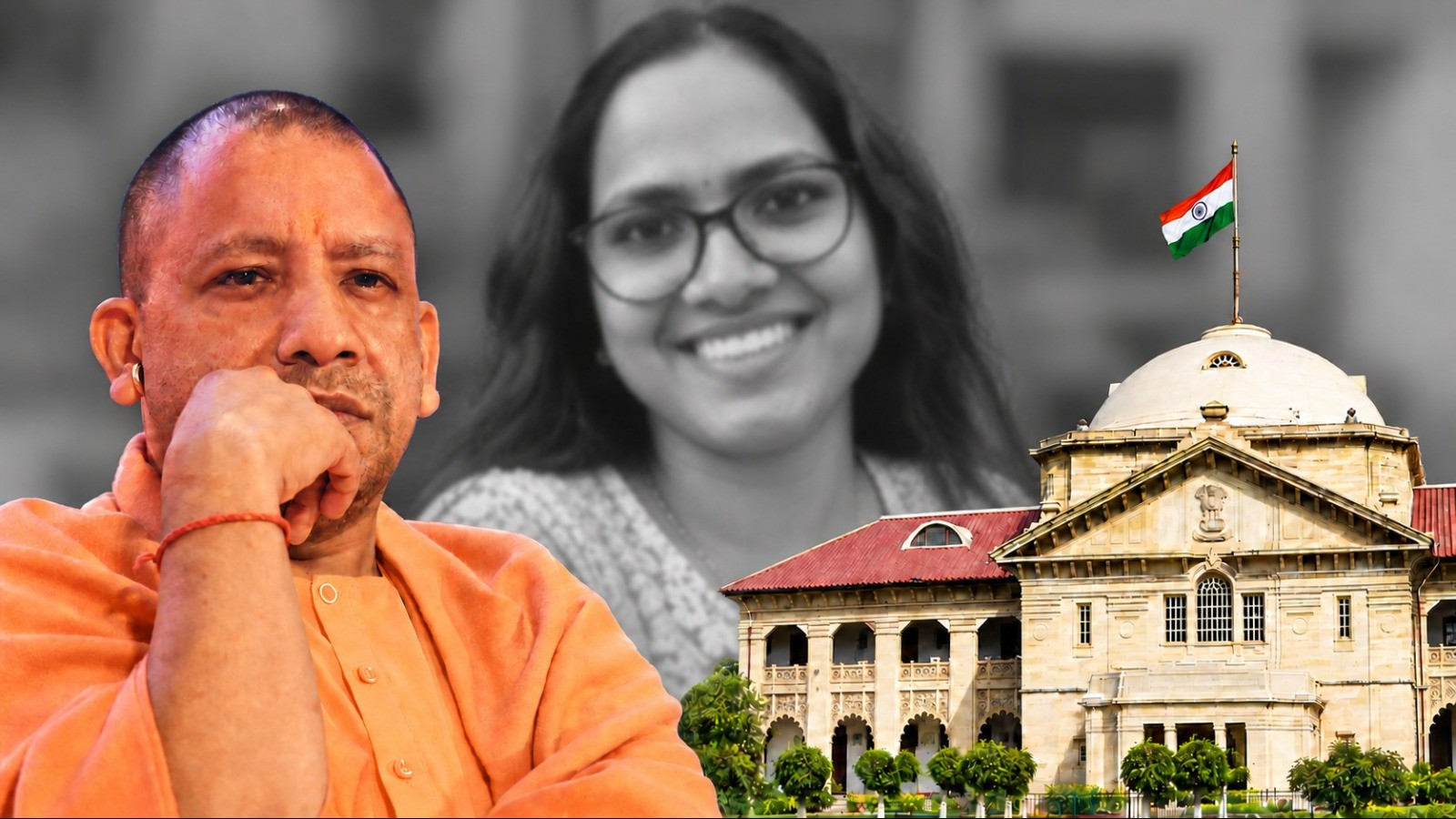
Judges of the Allahabad High Court have warned that continuous 'autocratic' governance could push Uttar Pradesh into a tragic state.
In April 2026, thousands of employees and factory workers working on contracts in the industrial area of Noida staged a protest. Many of them earned only ₹10,000 to ₹13,000 per month. They took to the streets. Their demand was simple. They demanded that their minimum wage be at least ₹18,000 to ₹20,000. However, instead of dialogue, the administration of Uttar Pradesh under Yogi Adityanath responded with heavy force. Roads were blocked, baton charges were carried out on protests, and arrests were made. Many were taken into custody. Serious charges were filed against them in FIRs.
Surprisingly, they were charged under the National Security Act (NSA). Under this law, anyone can be held in jail for up to a year without a hearing. Among those detained was a student named Aakriti Chaudhary, who was participating in the protests.
The decision by the Allahabad High Court to quash Aakriti Chaudhary's detention truly provides hope. It seems that yes, the Constitution is still alive, and democracy is somewhat alive too. This decision is a reminder that everyone has the right to express dissent and protest in a democracy. It is not a privilege but the oxygen of democracy. If the right to dissent and protest against the government dies, democracy dies, and this decision holds significant meaning as attempts to kill it have been ongoing in the country for the last 12 years.
The lawyer representing the state of Uttar Pradesh presented a case in court that the Allahabad High Court called a "fabricated story," stating that there was no credible material to suggest that Aakriti Chaudhary incited violence, arson, or stone-pelting. She is a student activist with no criminal record. The statements made by the District Magistrate of Gautam Buddh Nagar were dismissed by the judges in Allahabad. Aakriti Chaudhary was present at the protest in support of the workers, and that is her right.
The court also noted that the District Magistrate wanted to use Aakriti Chaudhary's detention as an example to prevent all those exercising their right to freedom of speech and expression. This is an even more serious matter. The judges warned that continuous "autocratic" behavior could push Uttar Pradesh into a tragic situation.
The High Court's decision is an essential and welcome support for our constitutional rights. It confirms that everyone has the right to peaceful protest and to demand better wages. This cannot be criminalized. Indeed, workers' protests should be recognized as a legitimate expression of the right to a dignified life rather than viewed as a threat to public order, especially when India aims to develop by 2047, the development of workers must also be included.
The authoritarian steps taken by Yogi Adityanath's government in Uttar Pradesh indicate that dictatorship will prevail in a Hindu nation, not democracy.
Aakriti Chaudhary's release makes it clear that anyone can participate in workers' protests, whether they are students or any citizen. Any citizen can join the movement. It cannot be said that one has nothing to do with the demands of workers.
The decision by the Allahabad court establishes that everyone has the right to live in this country, and everyone has the right to oppose the government. It also indicates that this is not a privilege but a fundamental birthright. Moreover, protesting is not just an individual's right but also a citizen's duty to express dissent in a democracy.
Those who desire a Hindu nation must understand that the saffron-clad Chief Minister is running an exploitative dictatorship in the country's largest state.
The way the Yogi government of Uttar Pradesh justifies the exploitation of workers and attempts to suppress opposition to exploitation easily reveals how a saffron Hindu nation is a dictatorial nation.
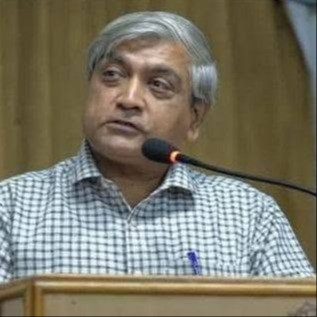
Pro. Hemantkumar Shah
प्रो शाह जाने-माने अर्थशास्त्री हैं और गुजरात में लंबे समय तक अध्यापन के बाद लेखन और सामाजिक कार्यों में सक्रिय हैं।