
US to impose 100% tariff on India's Russian oil imports

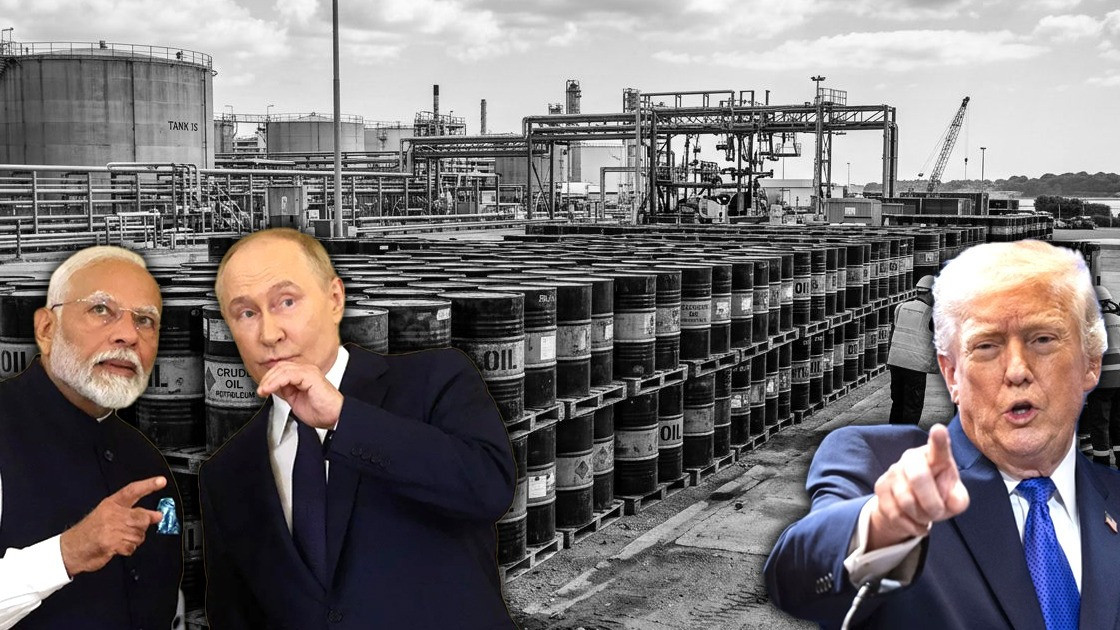
India, the second-largest buyer of Russian crude, faces new US tariffs.
Nationalism, terrorism, nuclear disarmament, and territorial disputes are just excuses. The United States fights wars for business. America can never tolerate another country's dominance in the oil and arms trade. No country is a true ally of America. Prime Minister Narendra Modi should abandon the illusion that Donald Trump is his true friend. India's friendship with Russia is not new. Since the time of Nehru, Russia has been our natural ally. America has always been irked by the friendship between Russia and India, and this jealousy has been proven once again. India, the second-largest buyer of Russian crude oil, has once again come under America's radar.
The US Senate has approved a new sanctions bill that will give President Donald Trump the authority to impose tariffs of up to 100 percent on countries buying oil and gas from Moscow. Passed by a significant majority of 86-11, this law allows Trump to impose tariffs on the world's largest buyers of Russian energy.
The US Senate has approved a bill imposing tariffs on major buyers of Russian petroleum products, such as China and India, by a large majority. It is claimed that such trade helps sustain the Ukraine war. The bill has been renamed the 'Lindsey O. Graham Sanctioning Russia and Iran Act of 2026.'
This allows US President Donald Trump to impose a 100 percent tariff on goods from countries that are among the five largest importers of Russian oil and gas. Currently, China, India, Azerbaijan, Hungary, and Slovakia are the five largest importers of oil and gas from Russia.
Telegraph reports that the US tariffs could directly impact India. In June, Russia's share in India's total oil imports was a record 52 percent, which reached about 56 percent in July. Another major customer of Russian crude oil, China, could also be targeted, although there is doubt whether the US will take such a risk. The bill was vigorously pushed last month by the late Republican Senator Lindsey Graham. Its aim was to increase pressure on Russia over the Ukraine war by targeting its energy exports, one of the Kremlin's largest sources of revenue.
Senator Darlene Graham, nominated to take her brother's place, said,
"This law hits Putin where it hurts the most."
The proposal still requires approval from the House of Representatives, and it is unclear whether Trump will use its toughest provisions. The law gives the President considerable authority on how to implement the sanctions. But even the prospect of such a move is enough to pose difficult questions for India.
Since Moscow's invasion of Ukraine in 2022, Russian crude oil has been the backbone of India's energy strategy. Cheap Russian oil has helped shield India from global oil price shocks and kept refinery profits strong. Indian refineries are operating at full capacity, and refined fuel exports are expected to reach the highest monthly level of 2026 in July.
Ukrainian drones are continuously attacking Russian refineries, affecting oil processing capacity across the country. Meanwhile, India has found another way to profit from this. Moscow has reached such an unusual situation that it has to import fuel from countries like India. According to shipping data company Kepler, Russia's gasoline production has fallen to about 308,000 barrels per day, the lowest level in the past 21 years.
According to Kepler's senior analyst Sumit Ritolia,
Russia's refining system is under constant pressure due to attacks and ongoing repairs. Russian oil is the "strongest shield for India's energy security," as it is available in large quantities, reliable, and low-priced.
Any attempt to severely limit Moscow's oil sales could have consequences far beyond Russia. It could increase energy prices and raise costs for oil-importing countries. Moscow remains one of the world's largest energy exporters. If sanctions are imposed on Iranian and Russian crude oil simultaneously, prices could skyrocket.
This dilemma has long complicated efforts by the US and other Western countries to impose sanctions on Russia. Since the start of the Ukraine war, Washington has imposed several sanctions on Russia, but has also provided some exemptions to ensure Russian oil continues to reach global markets and prevent a major energy price crisis worldwide. For India, Russian oil, which has helped keep fuel costs in check, could now pose a major problem. If this bill becomes law and Trump decides to use its toughest provisions, India could face a difficult choice—continue buying cheap Russian crude oil or risk another confrontation with its largest trading partner, the United States.