
Political clash over 'Now it's Mathura's turn': Akhilesh Yadav counters Keshav Prasad Maurya

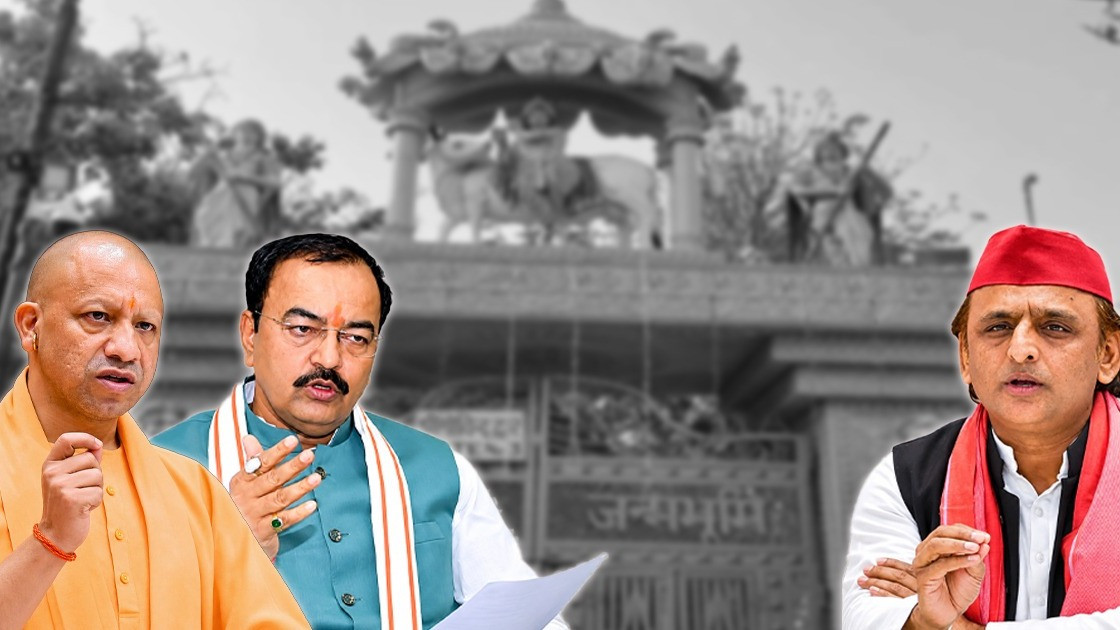
A meeting on electoral strategy in Mathura, mentioning the birthplace, indicates BJP's intent to prioritize this issue in the upcoming campaign.
In Uttar Pradesh, ahead of the 2027 Assembly elections, the issue of Shri Krishna Janmabhoomi has returned to the center of political debate. Deputy Chief Minister Keshav Prasad Maurya invited Akhilesh Yadav for a 'kar seva' for temple construction in Mathura, to which the SP president questioned his religious commitment. The BJP's Mathura meeting, new electoral slogans, and statements from other leaders have now linked this controversy to faith, social equations, and electoral strategy. However, the land dispute that is the subject of this rhetoric is still pending in court.
The statement that intensified this debate was made by Deputy Chief Minister Keshav Prasad Maurya during the BJP's two-day strategic meeting in Mathura. He stated that, like Ayodhya, a grand temple should also be built at Shri Krishna Janmabhoomi, and the path for this could be through judicial processes or mutual dialogue. He also challenged Akhilesh to join the efforts for temple construction if he is indeed a devotee of Krishna. Maurya's invitation appears to be an attempt to challenge the political position of the SP chief and his Yadav identity with a religious appeal.
Keshav Prasad Maurya's slogan - “Ayodhya is ours, now it's Mathura's turn” further clarified this message. The BJP's slogan “Radhe-Radhe, make the lotus bloom” also connects the religious identity of Braj with the party's election symbol. The mention of Janmabhoomi during the meeting on electoral strategy in Mathura indicates that the BJP wants to prioritize this issue in the upcoming campaign. However, it remains to be seen how much benefit this will bring in the elections.
Akhilesh Yadav responded to this challenge with sharp sarcasm. He called Maurya a fake Sanatani. On the other hand, Maurya accused Akhilesh Yadav of being anti-poor, anti-backward, and anti-Dalit, and reiterated his challenge for him to come to Mathura. This statement from the Deputy Chief Minister of Uttar Pradesh can also be seen as a counter to the strong Dalit slogans during Akhilesh Yadav's Dalit Mahapanchayat in Agra and the Samajwadi Party's political strategy to bring backward, Dalit, and minority communities into its fold.
In June this year, Chief Minister Yogi Adityanath also urged Akhilesh Yadav to support the BJP's demand for building a temple at Krishna Janmabhoomi, stating that just as the Ram temple was constructed, similar efforts should be made for the Krishna temple.
Leaders from the Samajwadi Party and Congress raised issues related to land acquisition, corruption, and displacement of people, stating that the BJP had first looted Ayodhya and now wanted to include Mathura in that list. SP MP Rajiv Rai said that they first lost the Faizabad Lok Sabha seat, then faced defeat in the Legislative Council elections, and now if they wish to try their luck in Mathura, may Lord Krishna grant them wisdom.
Amid these statements, the stance of the Vishwa Hindu Parishad is noteworthy. VHP's international president Alok Kumar stated that the matter is in court and the council will proceed through constitutional and judicial means. According to a report by Times of India, the council is not in favor of starting a widespread public movement immediately. Therefore, it would not be appropriate to present Maurya's invitation for 'kar seva' as part of a declared movement.
Several petitions related to the dispute are pending in the Allahabad High Court. The temple side has demanded rights over the land related to the Shahi Idgah and other reliefs. According to a report by ANI on November 17, a date of November 20 has been set for an order on four applications. These include questions related to old orders, the formation of parties, and previous agreements. However, it would be premature to consider any potential order on these applications as the final decision on the entire land dispute.
The personal comments exchanged among politicians in this matter pose the risk that public issues such as employment and health may be sidelined in the elections. In the coming days, the challenge will also be before the leaders. While discussing religious faith, they will have to ensure respect for judicial processes, the rights of all parties, and social peace. It will also be essential for voters to see what concrete proposals are put forth regarding issues related to their lives alongside electoral slogans. The political impact of the Mathura debate will have to be awaited in the Assembly elections.