
Rahul Gandhi warns against election boycott, says democracy will collapse

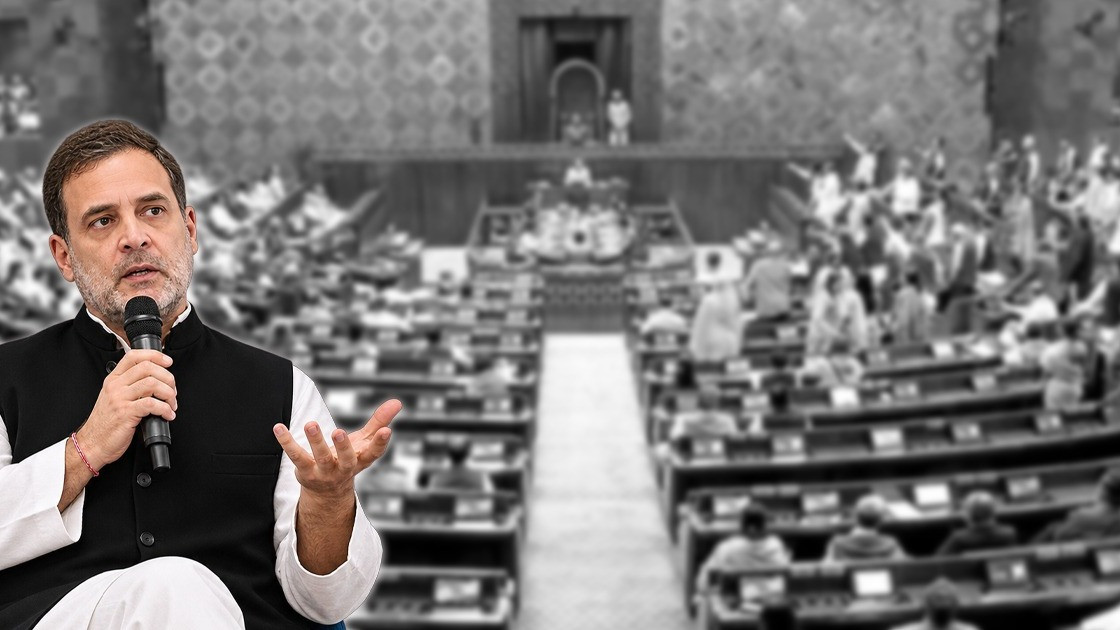
Rahul Gandhi stated that urging millions of workers to abstain from elections will weaken the democratic framework.
Leader of the Opposition in the Lok Sabha, Rahul Gandhi, has stated that despite raising serious questions about the electoral system, the opposition will continue to participate in elections. During a conversation with Professor Robert Pape from the University of Chicago, Rahul Gandhi clarified his strategy, saying that the decision to withdraw from elections could undermine the legitimacy of the entire democratic process in the eyes of the public. He stated that the opposition will expose alleged irregularities and communicate its message to the people. He also mentioned that they are not ready to accept a non-democratic India.
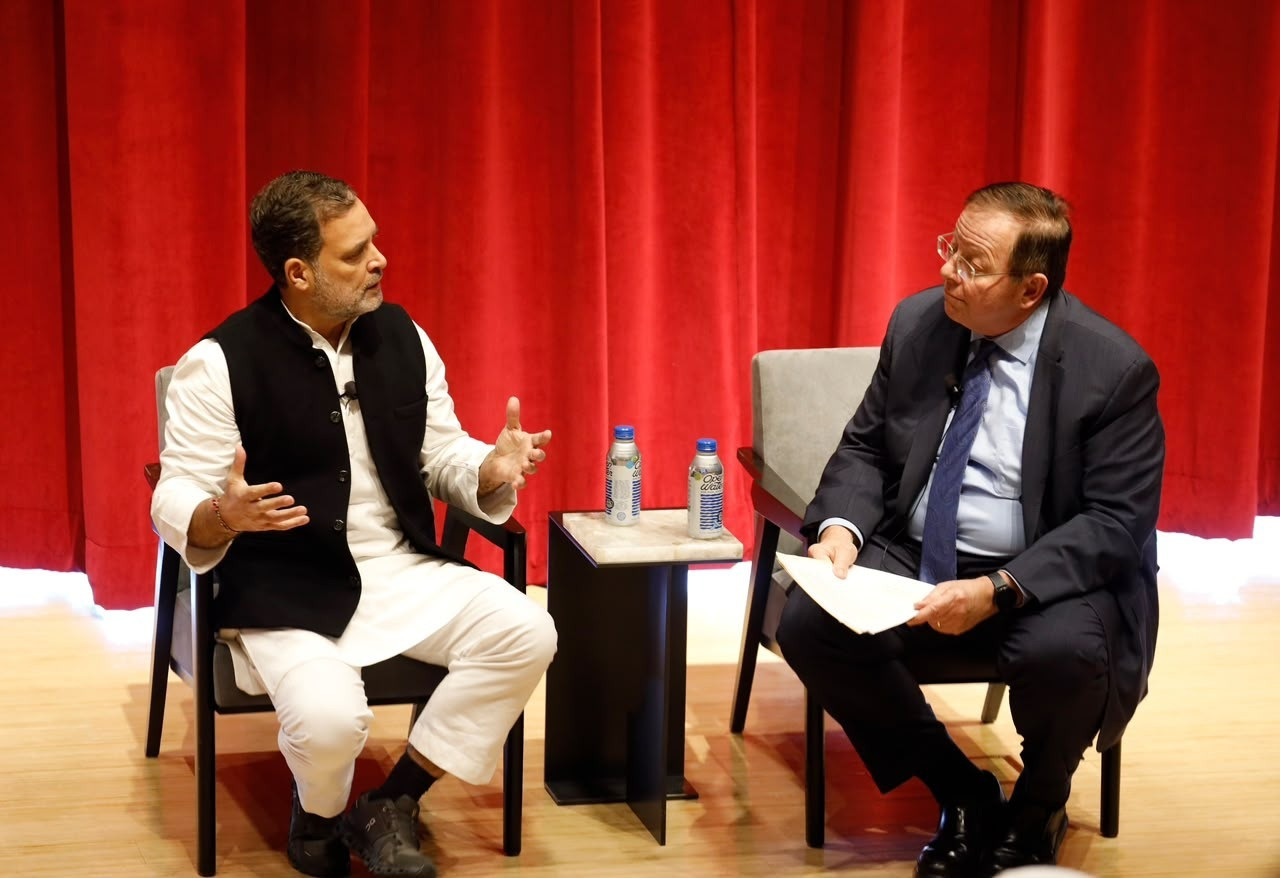
This conversation took place during the Chicago Project on Security and Threats (CPOST) program at the university. The topic was ‘The Iran War and India’s Role in the World’. According to the university's program schedule, the event was held in the David Rubenstein Forum's Friedman Hall. Robert Pape, the director of CPOST and a professor of political science, was the moderator of the discussion. There was also time allocated for audience questions. Available news reports have prominently featured the parts of the conversation related to the electoral system and democracy.
Explaining the potential impact of an election boycott, Rahul Gandhi raised the issue of opposition workers. He argued that asking millions of workers not to contest elections would weaken the democratic framework. He spoke about informing the public of the alleged irregularities and the importance of remaining part of the electoral process. According to him, the Congress party wants to advance institutional grievances alongside electoral participation. The next test for the opposition will be to transform this strategy into evidence, legal action, and campaigning among voters.
In the conversation, Rahul Gandhi claimed that the opposition is also receiving information from within the Election Commission. According to him, some senior-level individuals are expressing dissent regarding the current circumstances. He expressed confidence that the alleged irregularities will eventually come to light. In available reports, he has not disclosed the identities of these officials or any documents related to their contacts. He stated that these officials are also astonished by the mismanagement of the electoral process and do not wish to work within the existing system, and that such unconstitutional arrangements will collapse in due course.
Rahul emphasized the importance of fearless expression for citizens in Indian democracy. He stated that the ability for people to speak without fear is a major strength of the country, and the opposition wants to strengthen it further. He mentioned that the credibility of elections and the voice of the citizen are interconnected. Voters should have confidence that they can express their preferences and that their votes will be accurately recorded and counted. In this context, he described questioning the functioning of electoral institutions as part of his political struggle.
He also mentioned his concerns related to the 2014 Lok Sabha elections. According to Rahul, some electoral discrepancies were politically incomprehensible to the Congress. He said that later, when he received evidence according to his understanding, some senior party leaders had advised caution in making public allegations.
In discussing electoral irregularities, Rahul Gandhi reiterated an allegation involving a woman from Brazil. According to reports, he claimed that a woman who had never been to India voted 23 times in a state election. This statement raises questions about the use of multiple voter entries in a single photograph, the registration of related individuals, and evidence of actual voting. Different investigations into these aspects are necessary. He stated that he will continue to fight against such arrangements and expressed happiness that so far they are winning this battle, as it is not just the Congress party's fight but that of millions of citizens of India.
Political controversy regarding Rahul's visit to the US had already begun before the event. BJP spokespersons accused him of tarnishing India's image abroad. In response, Sam Pitroda, president of the Indian Overseas Congress, stated that the program is a long-planned academic dialogue and that discussing public issues of India abroad is natural in the era of global information dissemination.
Earlier, during a conversation at Columbia University, Rahul Gandhi had stated that India is facing an economic crisis and had also mentioned the growing concerns regarding employment among the youth, stating that the small industries and agricultural sector need to be revitalized as the government has failed to provide jobs to the youth, and that the benefits of incoming private sector investments should be equitably distributed rather than being limited to a few select industrialists like Adani and Ambani. In the coming year, several states will hold assembly elections, and it will be interesting to see how Rahul Gandhi and the opposition direct the issues related to the Election Commission and the youth movements in this context.