
Election Commission responds to Yogi Adityanath's claim of 1.27 crore missing Hindu voters

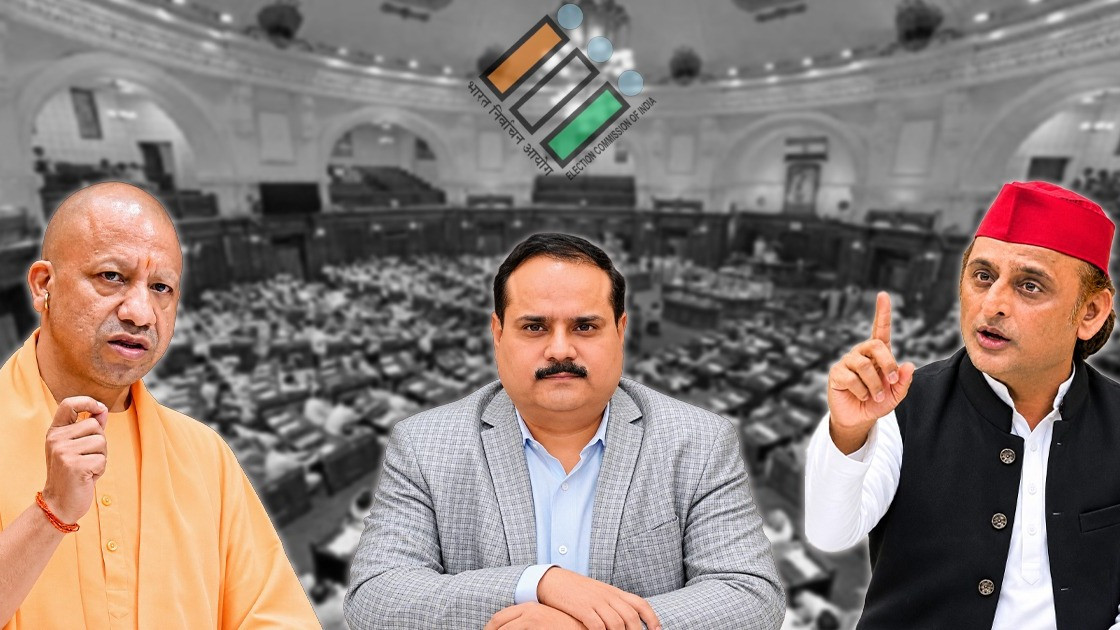
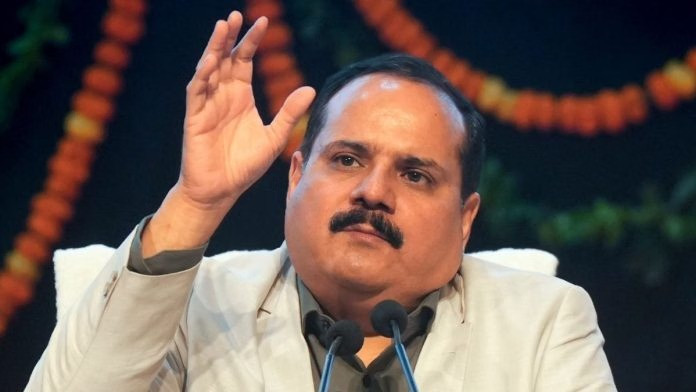
Navdeep Rinwa clarified that the Election Commission does not maintain records of voters' religion or caste.
Debate over the voter list has intensified ahead of the 2027 Assembly elections in Uttar Pradesh. A few days ago, Chief Minister Yogi Adityanath claimed that 1.27 crore Hindu voters are missing from the state's list. Now, Uttar Pradesh's Chief Electoral Officer Navdeep Rinwa has clarified that the Commission does not maintain records of voters' religion or caste and does not release statistics based on these criteria. During a press conference in Lucknow on November 17, he stated that not finding a name on the list should not be considered as the removal of an already registered voter's name.
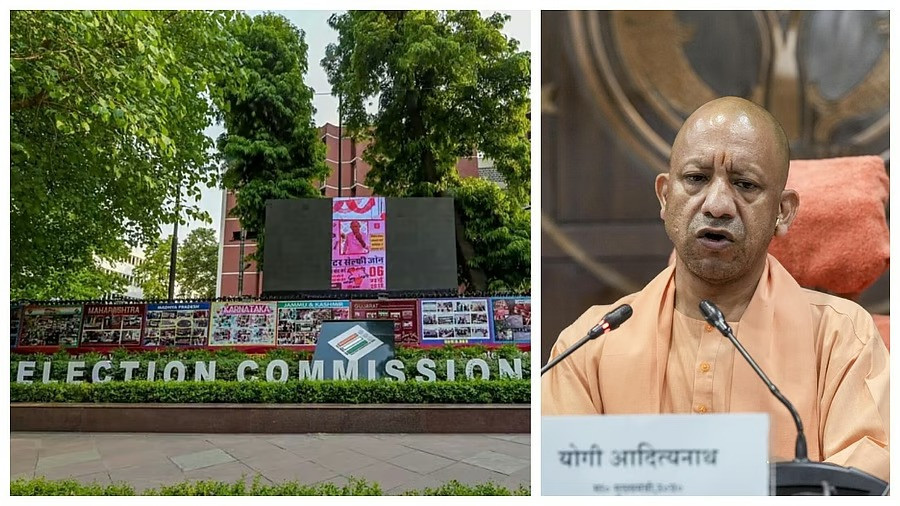
Chief Minister Yogi Adityanath had stated earlier in November that many names present in the panchayat elections list are not in the Assembly voter list. He also claimed that beneficiaries of government welfare schemes and young voters have been left out. According to Yogi Adityanath, the BJP has submitted a memorandum to the Election Commission demanding the inclusion of such eligible individuals' names. He raised questions about the increase in the number of Muslim voters and the opposition of Samajwadi Party president Akhilesh Yadav to the SIR.
Navdeep Rinwa explained that the Commission's database contains information such as the voter's name, age, gender, relationship, and house number, but does not include details of religion and caste. He mentioned that any independent organization could analyze potential religious identities based on names by downloading public voter lists using software. The Commission itself does not perform such classification. Following this clarification, questions remain regarding the methodology used by the Chief Minister to prepare his religious statistics and their verification.
The Print reported, citing an official from the Chief Minister's office, that Yogi's data is based on internal research conducted over five months. The official defended the data but refused to disclose the methodology used to collect it. This makes it currently difficult to independently verify which lists were matched, how names were identified, and what processes were adopted to prevent double counting of the same individual across different categories.
The second aspect of the controversy is the difference between missing and removed voters. According to Rinwa, there is an estimated gap of about 2.58 crore between the state's adult population and registered voters. This includes eligible individuals who have never registered. The approximately 2.04 crore names removed from the SIR were reported to be related to categories such as absent, transferred, deceased, and duplicates. Without clear bases for these different numbers, their comparison can create confusion.
The example of Makhdoom Pur village panchayat in Raebareli illustrates this difference. According to Rinwa, there were 1,987 names in the panchayat list and 1,539 names in the Assembly list. The door-to-door verification revealed reasons such as death, migration, marriage, and registration at neighboring polling stations. Additionally, 92 eligible residents were found to be outside the Assembly list. Officials assisted them in filing their Form-6 applications. According to the electoral officer, these individuals were not registered in the Assembly list even before the SIR.
Samajwadi Party (SP) chief Akhilesh Yadav has raised questions about the source of the Chief Minister's data. The Samajwadi Party has submitted a memorandum to the Commission demanding an affidavit and evidence from Yogi Adityanath. The party referred to the incident in 2022 when the Commission sent a notice to Akhilesh Yadav for alleging discrepancies in the voter list. The SP questions why similar accountability is not being established for the Chief Minister's allegations.
Based on the data released so far, the draft list on November 17 includes a total of 13,58,68,905 voters in Uttar Pradesh. This marks an increase of 18,84,113 compared to the final list in April. Among these, there are approximately 7.38 crore male voters, 6.20 crore female voters, and 4,042 third-gender voters. This increase reflects the difference after both the addition and removal of names. These figures do not determine increases or decreases based on religion.
Voters still have the opportunity to check their entries and apply. Claims and related objections will be accepted until December 16. Form-6 can be used to include names, and Form-8 can be used to correct details. After resolving objections, the final list is set to be published on January 4, 2027. Along with verifying political claims, it will also be essential to see how timely decisions are made on applications from eligible citizens whose names have been omitted and how they are informed about it.