
EC bars voter list corrections without consent on Form 8

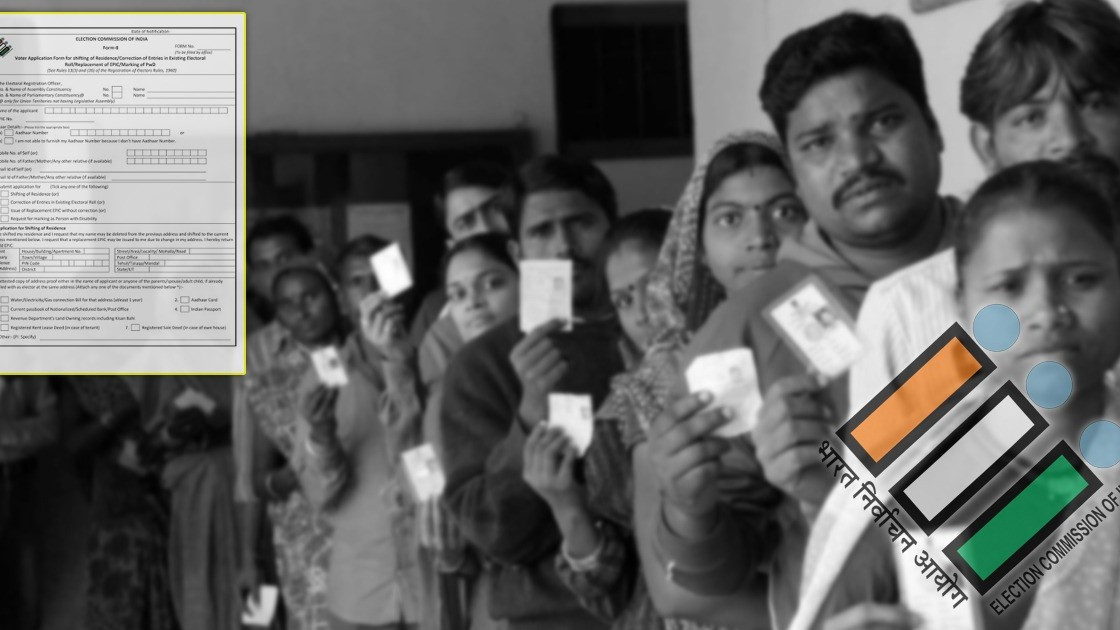
Entries can be corrected only after verification through a Form 8 signed by the voter and approval from the competent officer.
On Constitution Day, news has emerged about the essential right to vote: incorrect entries will be corrected through Form 8. Errors in a voter’s name, date of birth or photograph on the electoral roll will no longer be changed solely through software. The Election Commission of India has directed the Chief Electoral Officers of the States and Union Territories concerned to verify such entries and make corrections only after receiving Form 8 bearing the voter’s signature and approval from the competent officer. The directive, dated November 25, 2026, will apply during the Special Summary Revision (SSR).

The Election Commission has asked officials to match existing voter details with information collected during the Special Intensive Revision (SIR) and correct them. If discrepancies are found in details such as a name, a relative’s name or the type of relationship, date of birth, mobile number or photograph, the entry will be flagged for verification. The Booth Level Officer (BLO) will then visit the voter concerned to verify the details and, where necessary, obtain a completed and signed Form 8.
The Electoral Registration Officer (ERO) or Assistant Electoral Registration Officer (AERO) will scrutinise and dispose of the application. The entire process will be conducted through the relevant officer module on ECINET. The most important condition in the Commission’s letter is that no change will be made solely on the basis of an automatic identification procedure. Thus, computer matching will initiate the verification, while the final decision on a correction will be taken through the prescribed process.
The directive assumes greater significance amid the ongoing debate over the accuracy of electoral rolls. According to The Times of India, voters, Booth Level Agents of political parties or other persons can also complain to election officials about incorrect information on the voter list. However, information will not be treated as incorrect merely because a complaint has been received or software has flagged an error. Officials will have to contact the voter concerned and verify the information. Only then will the voter list be corrected through the prescribed process.
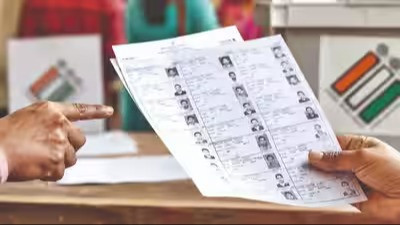
For instance, the spelling of a voter’s name may differ between two records. Digits may be transposed while entering a date of birth, or a technical error may occur while adding a photograph. Such a discrepancy is not proof of deliberate submission of incorrect information. The correction process will have to establish which record contains the error. Treating information collected during the SIR as automatically correct without verification could also result in a new error replacing an old one.
Form 8 is not a new application. According to the Commission’s guidelines, an already registered voter can use it to correct details, change residence, obtain a replacement voter identity card or be marked as a person with a disability. To seek a correction in the details, the relevant option must be selected and documents supporting the claim submitted. The new directive links the existing correction mechanism with errors being identified during the SSR.
Voters should first check whether their name is on the list or whether only the details recorded against it are incorrect. The procedures for these two situations should not be treated as the same. The Election Commission’s voter services website offers facilities to register, correct details and check the status of an application. Those applying online should keep their EPIC number handy so they can check the application’s progress later. It is also useful to keep a record of receipt when submitting an application offline.
The distinction between a name not appearing on the list and incorrect details despite the name being present is particularly important. The Commission’s official information specifies Form 6 for inclusion of a name and Form 8 for correcting existing entries. However, in special circumstances related to the revision, voters should check the latest instructions in their State and confirm the procedure with the relevant election officer. An incorrect form or incomplete documents could delay the application process.
Revision deadlines may also vary from State to State. Therefore, the deadline in one State should not be assumed to apply across the country. Voters should check the notice issued by the Chief Electoral Officer concerned. The reach of BLOs will be particularly important for the elderly, migrant workers and those unable to use digital facilities. An opportunity to make corrections is effective only if citizens are informed about it and can practically submit an application.
In the coming days, the success of this order will be measured by how it is implemented. There should be a clear record of how many entries were flagged, how many voters were contacted and how many applications were approved or rejected. The requirement for a signed application and the bar on automatic changes are important safeguards. But trust will be strengthened only when correct details appear on the list in time and citizens are informed of the decision on their applications. Ensuring both the accuracy of the voter list and the participation of eligible citizens is the real test of this process. On Constitution Day today, when our country is a democracy, the Government and institutions must promptly remove every obstacle to the right to vote.