
Supreme Court did not approve changes to Form 6: CJI

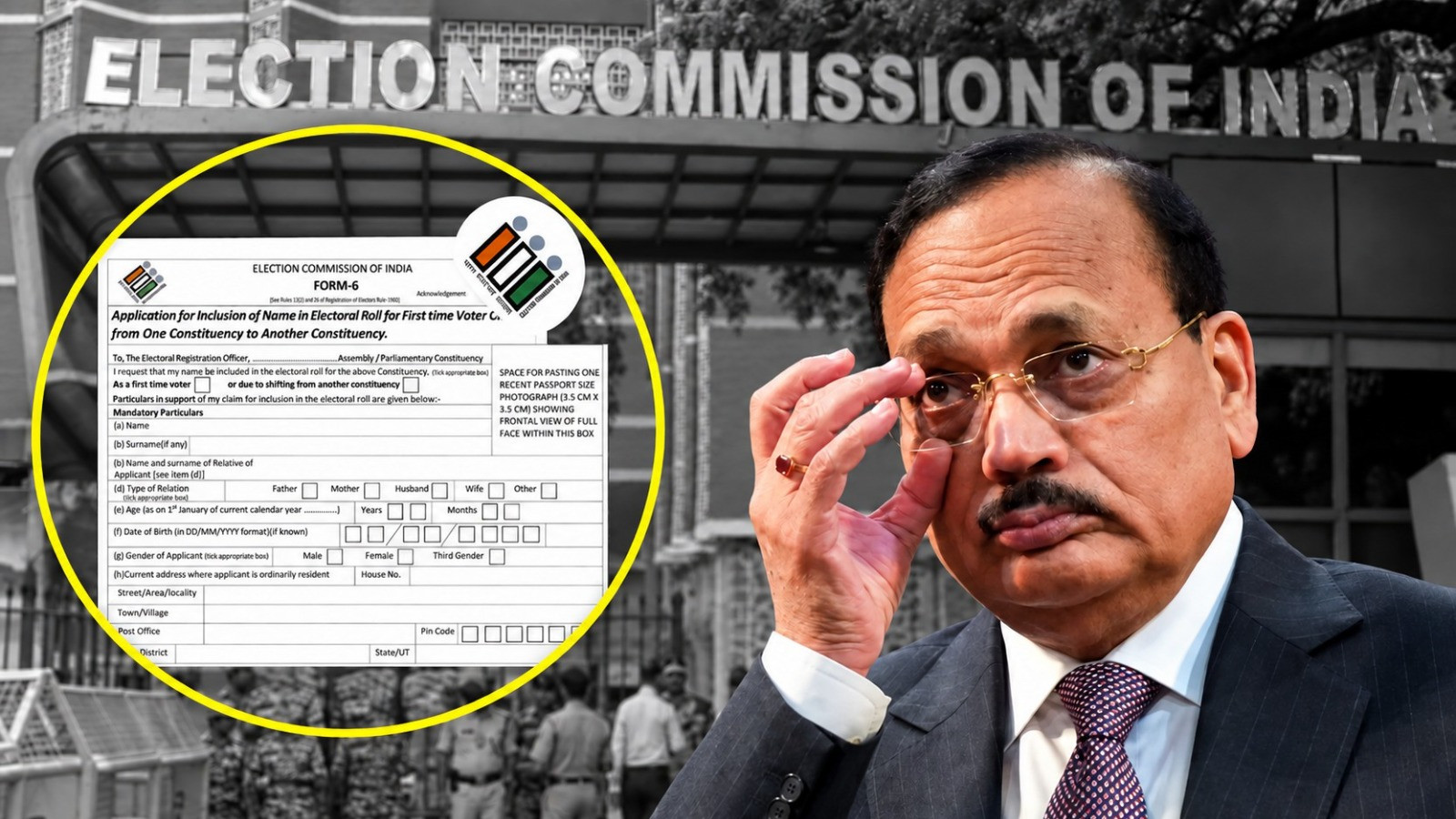
CJI's remarks came during the hearing of petitions against Chief Election Commissioner Gyanesh Kumar.
The Supreme Court said on Monday that it has not approved any modified Form 6 amid allegations of illegal changes in the voter registration form. Chief Justice D.Y. Chandrachud clarified that the court would like to see who made what changes after the Election Commission's report is submitted. This remark came during the hearing of petitions filed against Chief Election Commissioner Gyanesh Kumar.
According to a report by Live Law, senior advocate Menaka Guruswamy raised the issue of new conditions added to Form 6 before a three-member bench headed by the Chief Justice. She argued that changes were made to this statutory form used for registering new applicants in the voter list, which were not permitted under the law. According to her, these changes affected the registration of eligible voters.
In response, the Chief Justice stated that,
“Let it be absolutely clear that we have not approved any modified Form 6. It should also be clear that when the report is presented, we would like to see who made what modifications.”
This comment from the court has raised questions about the changes made to the form and the role of the officials responsible for them.
The controversy is related to the Election Commission's online voter registration form. For the first time, a new section was included in the digital version of Form 6, asking for information about the applicant's parents' status.
This information was being sought in the context of the previous special intensive revision process, i.e., SIR. However, no amendments were made to the statutory form.
Form 6 is used to include the names of new voters in the voter list. The petition raises the question of how additional conditions were added to its online version when the form prescribed under the law was not changed. The petitioner alleges that this has caused unnecessary difficulties for eligible youth who are about to become voters for the first time.
Meanwhile, the Election Commission has removed the SIR-related declaration added to Form 6 from its ECINet application portal in those states where the SIR process has been completed. The Commission had announced on September 26 that forms applicable under the Voter Registration Rules, 1960 would be used outside the SIR period. This announcement was made amid the controversy over the additional information being requested in the online form.
During the hearing, Menaka Guruswamy cited an example from Delhi, referencing a report from The Indian Express. She stated that the manner in which the SIR was conducted in Delhi should be examined. Her argument was that two new conditions were added to Form 6 and such forms were distributed. She also mentioned that she received a notice based on the new form, while the form prescribed in the rules' schedule cannot be modified in this manner.
Guruswamy was representing the petition of advocate Shailendra Mani Tripathi. The petition alleges that,
Chief Election Commissioner Gyanesh Kumar, in collaboration with the Director General of Information Technology, digitally altered Form 6 on the ECINet portal in July 2026. According to the petition, this step was taken in disregard of the Commission's binding majority stance.
The petition claims that Election Commissioner Sukbir Singh Sandhu formally recorded on August 13, 2026, that this change is “unauthorized and illegal.” He stated that it has caused arbitrary harassment to young and eligible new voters and should be withdrawn immediately. The petitioner alleges that despite this, the altered form remained available on the portal.
The main argument of the petition is that changes to the statutory Form 6 for first-time registering young voters were made unilaterally. There was neither legislative authority for this, nor was there any amendment made to the Voter Registration Rules, 1960. According to the petition, the characterization of this change as unauthorized and illegal by the Commission's majority raises serious questions about its validity.
The petitioner has also raised the issue of the official legal protection available to the Chief Election Commissioner. The petition alleges that the deliberate manipulation of the voter list has no legitimate legal connection to their official duties. Therefore, such alleged acts fall outside the scope of official immunity and create personal criminal liability. These are currently the allegations made in the petition. The Supreme Court has stated that it will investigate the changes once the report is available.