
Congress accuses PM Modi of knowing about election commission irregularities

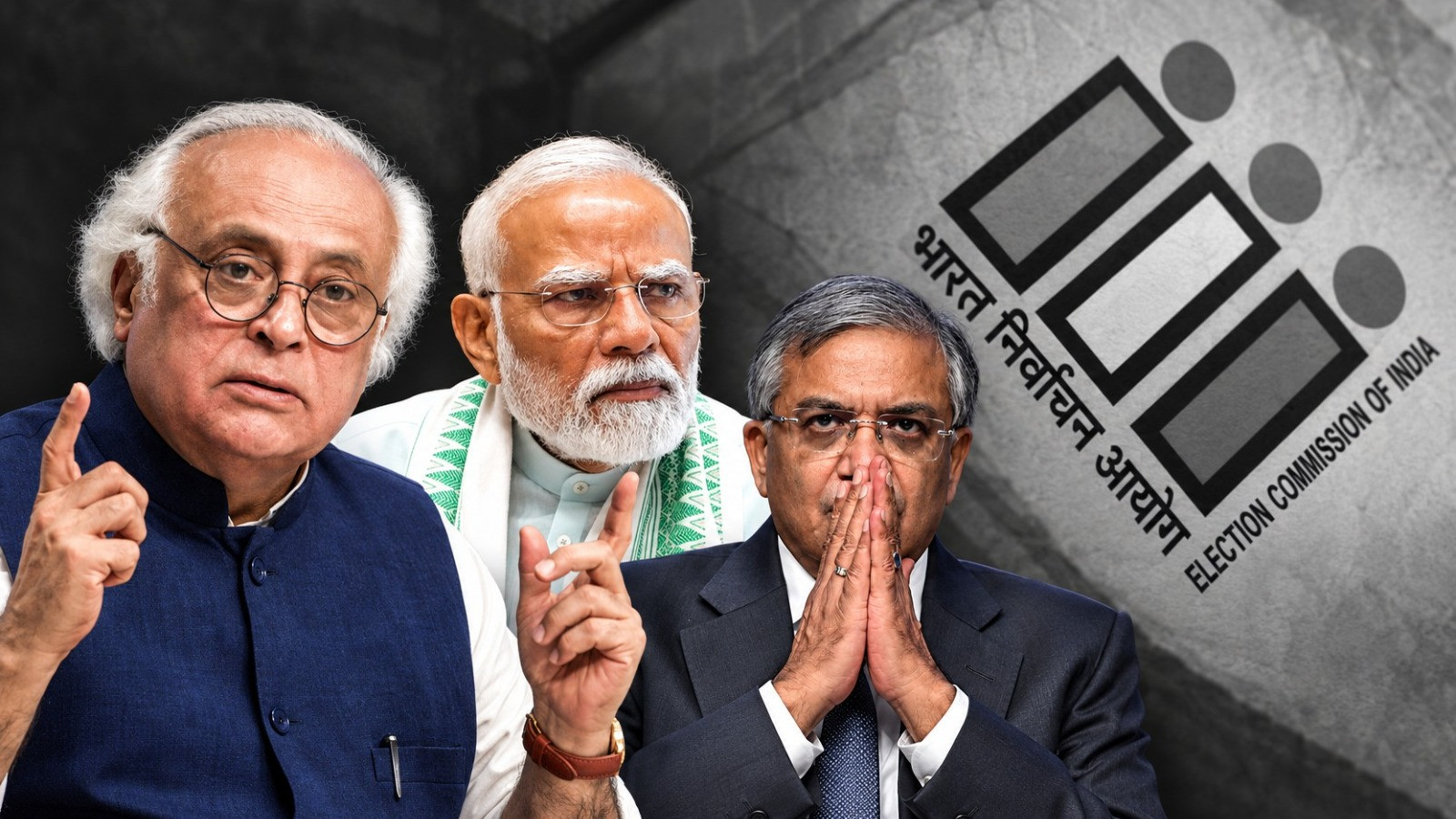
Congress General Secretary Jairam Ramesh claims objections from two election commissioners reached the PM's department.
Congress General Secretary Jairam Ramesh has alleged that Prime Minister Narendra Modi was aware of the restriction imposed by the Election Commission's Information Technology (IT) department on access to the electoral registration officials' ECINet portal. Ramesh claimed that objections from two election commissioners had reached the Department of Personnel and Training, which comes under the Prime Minister's purview. On this basis, he alleged that the decision to restrict access was possibly taken with Modi's knowledge and direction.
With these allegations, the Prime Minister's name has also been linked to the ongoing controversy regarding the functioning of the Election Commission and the process of preparing the voter list. The Congress has been questioning the functioning of the Commission under Chief Election Commissioner Gyanesh Kumar and demanding his removal.
Jairam Ramesh referred to a report published in Hindustan Times, questioning the role of the Election Commission official against whom two election commissioners had lodged a complaint with the Cabinet Secretary in July. The Congress leader alleged that despite the complaints, the concerned official continues to play a central role in the functioning of the Commission.
On the social media platform X, Ramesh wrote that,
instead of taking action against the official, he has now been entrusted with the responsibility of overseeing the controversial IT department of the Election Commission. He alleged that the letter sent by the two election commissioners to the Cabinet Secretary was written due to an order from this official.
According to Ramesh,
through that order, the oversight mechanism for the functioning of the IT department was removed. He alleged that this was done to allow the department to operate without transparency.
The Congress General Secretary stated that,
it has now come to light that since August, the same official has been given the authority to oversee the IT department. On this basis, he questioned the clarification provided by the Commission in its press release issued on September 26. The Commission's clarification was misleading and aimed at concealing the actual events. According to him, the fact that the official against whom the complaint was made later received oversight authority raises serious questions.
He linked the role of the concerned official to the decision-making and oversight mechanisms within the Commission. However, Ramesh alleged that decisions were taken with the Prime Minister's knowledge or direction. Ramesh stated that both election commissioners had raised the issue of restricting access to the electoral registration officials, or ERO, to the ECINet voter list portal. According to him, the commissioners had also expressed concern over the sidelining of ERO's statutory powers in matters of adding and removing names from the voter list.
The Congress leader alleged that,
this arrangement of the IT department was interfering with the jurisdiction of the officials. He stated that the complaint had reached the Department of Personnel and Training, or DoPT, and the responsible minister of this department is the Prime Minister himself.
On this basis, Ramesh claimed that,
the Prime Minister is aware of the entire matter and it is possibly happening at his direction. He alleged that Chief Election Commissioner Gyanesh Kumar and the Prime Minister have retained the concerned official in his position to maintain centralized control over the entire system. Linking this to the Congress's allegations of 'vote theft', Ramesh stated that the picture of SIR is becoming increasingly clear.
The controversy surrounding the Election Commission intensified when a report by The Indian Express claimed that election commissioners Sukhbir Singh Sandhu and Vivek Joshi had recorded objections to decisions and orders related to the Special Intensive Review, or SIR, at least 14 times in the past ten months. Both commissioners stated that these decisions were issued without their knowledge or recommendation. Following this, the Congress raised questions about the decision-making process of the Commission and the arrangement for collective deliberation within it.
Facing criticism over these objections, the Election Commission clarified that it is normal for different opinions and comments to arise during deliberations in any institution. The Commission also made it clear that all its orders are fully legally supported and have been issued following established statutory procedures.