
All sealed madrasas to reopen as Uttarakhand HC delivers setback to Dhami government

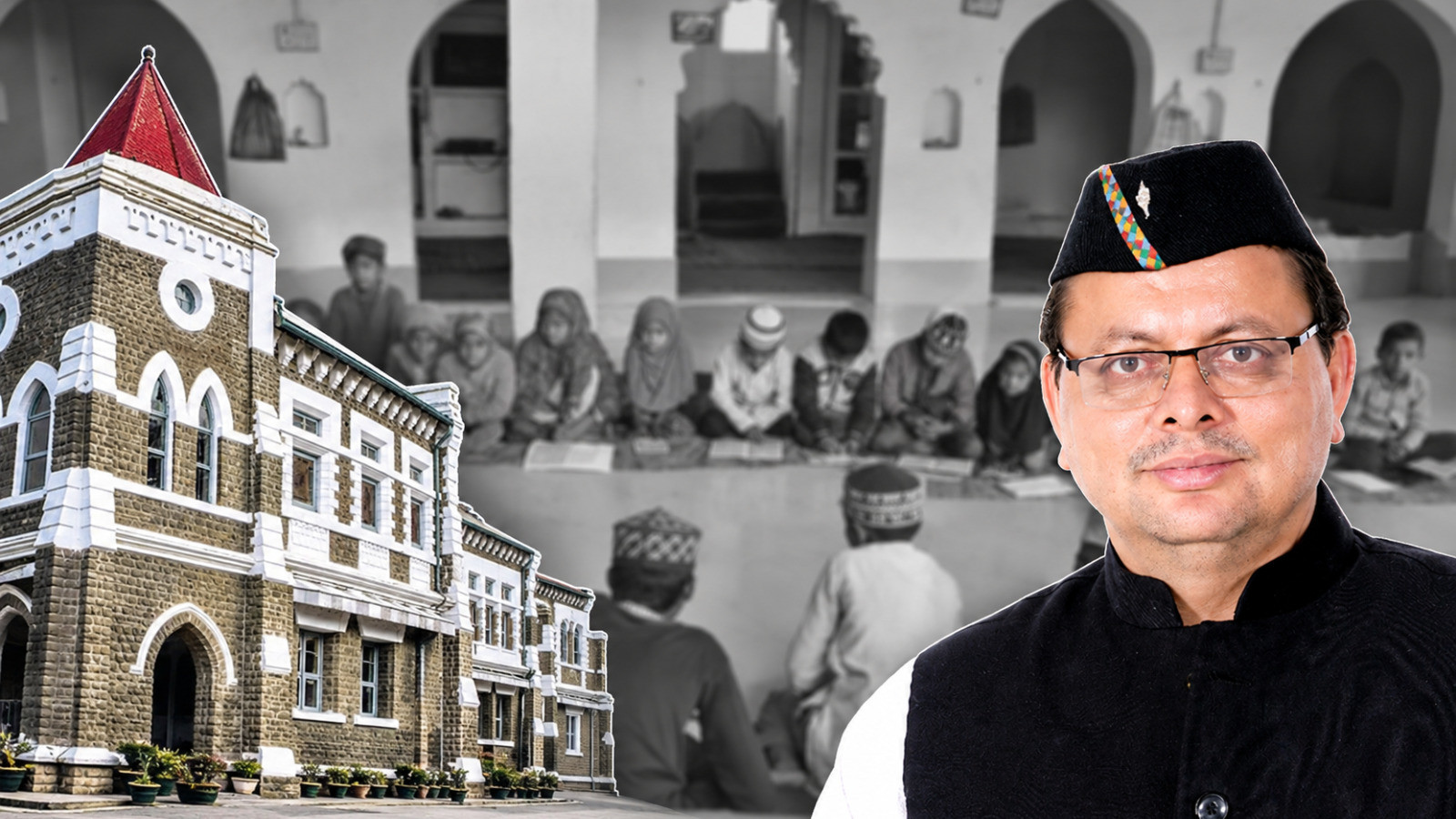
In the past nine years of the BJP government in Uttarakhand, 179 out of 452 registered madrasas have shut down.
The Uttarakhand High Court has ordered the de-sealing, or opening, of sealed premises related to maktabs and madrasas while hearing several cases together in the state. The court clarified that the concerned institutions can operate maktabs, but registration/recognition from the Uttarakhand Madrasa Education Board will be necessary for running a madrasa or using the term ‘madrasa’ in the institution's name.
This order was pronounced by Justice Manoj Kumar Tiwari in response to several petitions, including one from the Madrasa Inam-ul-Uloom Society. The court disposed of all petitions together due to similar legal and factual questions.
The petitioners argued that the premises where they were operating maktabs had been sealed by district-level officials without prior notice and without valid reasons. They contended before the court that the right to teach students the Quran, grammar, and moral education in a maktab is protected under the Constitution.
The court also noted that according to the Uttarakhand Madrasa Education Board, there are two categories of Islamic educational institutions—maktab, where primarily religious education is provided, and madrasa, where religious education is also combined with preparation for various examinations. According to a letter dated March 4, 2025, there were 416 madrasas registered with the Uttarakhand Madrasa Education Board at that time, and about 88 institutions had applied for registration.
The state informed the court that only institutions registered and recognized by the madrasa board can use the term ‘madrasa’ in their name. The state argued that in recent years, the number of such institutions has increased that claim to be madrasas without board recognition. The state also contended that children studying in such institutions and their parents might have the false impression that the education received there would be valid for future employment opportunities in the government or corporate sectors. According to the government, this was the reason officials had to intervene.
The High Court referred to the Uttarakhand Madrasa Education Board Act, 2016, in its judgment. Under the law, ‘institution’ includes madrasas established by Muslim minorities and recognized by the board, or Oriental colleges. Meanwhile, ‘madrasa education’ includes subjects prescribed by the board, such as Arabic, Urdu, Persian, Islamic Studies, Tibb, logic, and philosophy.
The court also mentioned the Uttarakhand Non-Governmental Arabic and Persian Madrasa Recognition Regulations notified in 2019. These regulations include provisions related to the recognition of madrasas, eligibility, buildings, infrastructure, and the suspension or withdrawal of recognition.
During the hearing, the petitioners informed the court that they were willing to give an affidavit before the concerned SDM promising that until their institutions receive registration/recognition from the madrasa board, they would neither run a madrasa nor use the term ‘madrasa’ in their institution's name.
Keeping this undertaking in mind, the High Court disposed of the petitions. The court directed that the educational premises/buildings operated by the petitioners be de-sealed. For this, an affidavit must be given before the concerned SDM stating that until the institution is registered with the madrasa board, they will not run a madrasa and will not use the term ‘madrasa’ in the institution's name.
Additionally, the court clarified that,
the petitioners will be allowed to run maktabs in the concerned premises, and their right to operate maktabs will not be interfered with without any legal authority.
However, the court also made it clear that if any petitioner fails to comply with their given undertaking or is found using the term ‘madrasa’ unauthorizedly in the institution's name, the concerned officials will be free to take necessary action against them.
It is noteworthy that before this order from the High Court, it is important to understand how this order has dealt a blow to the BJP government in Uttarakhand. In fact, the BJP has been in power in Uttarakhand for the past 9 years, and during these nine years, a planned scheme has led to the closure of 40 percent of the madrasas in the state. According to a report by The Observer Post, nearly two out of four madrasas recorded in old government records in Uttarakhand are no longer operational.
According to official figures from the state government,
of the 452 registered madrasas, 179 have been closed. This number accounts for approximately 39.60 percent of the total registered madrasas. Additionally, 19 other madrasas have been sealed due to violations of regulations.
These figures have emerged at a time when the BJP government in Uttarakhand has made significant changes to the recognition system for madrasas and other minority educational institutions. Under the old system, a total of 452 madrasas were registered in Uttarakhand. After the closure of 179 madrasas, many questions have arisen regarding the future of madrasa education and related institutions in the state. Furthermore, 19 madrasas have been sealed by the administration for failing to comply with the prescribed rules and standards.