
Election Commission launches special campaign amid controversy

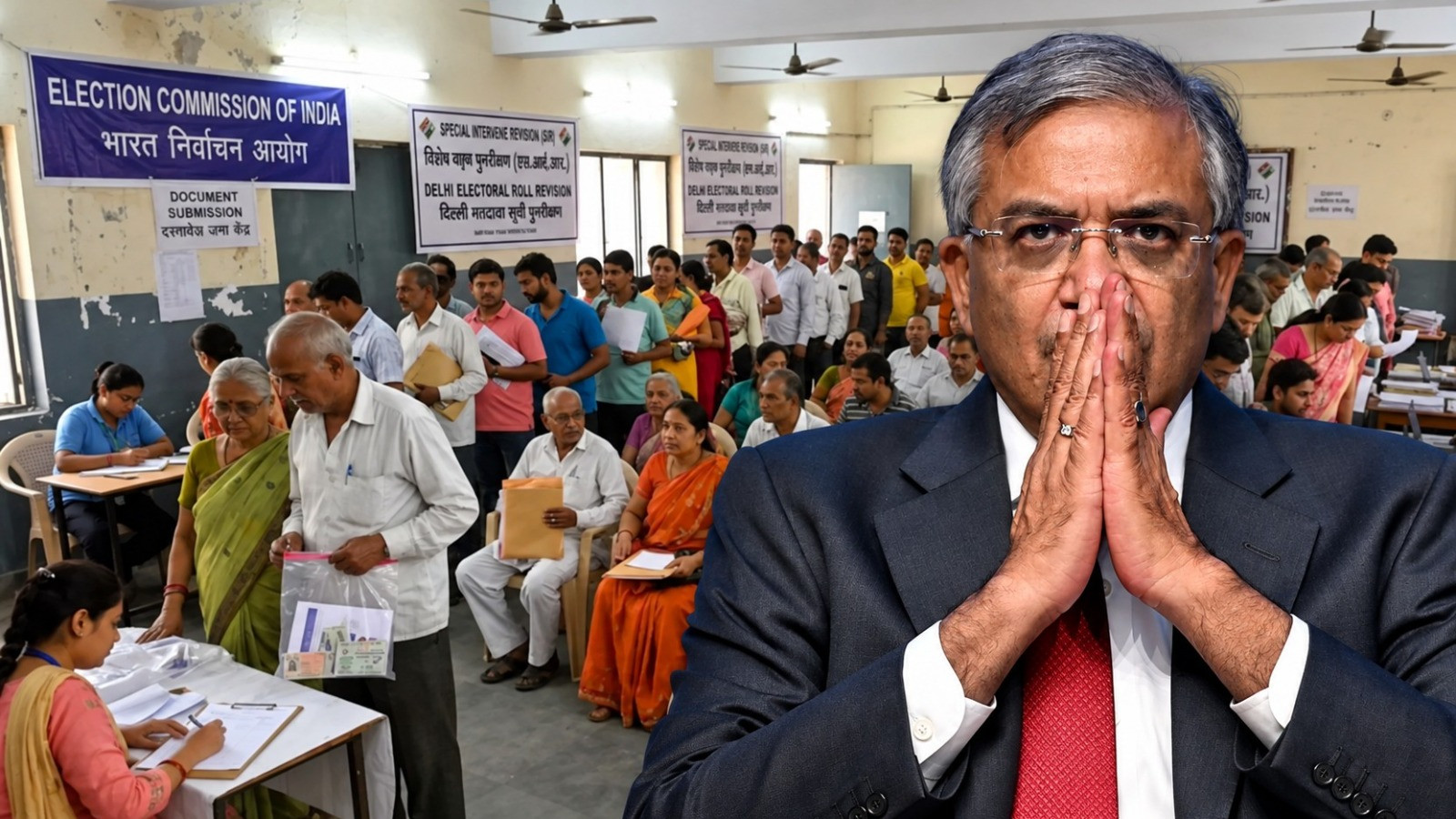
The campaign will not use the Form 6 template deemed illegal by two election commissioners.
After widespread opposition from the opposition and citizens, the Election Commission is gradually retracting all decisions that two of its commissioners had questioned, stating that these rules were made arbitrarily under pressure by the Chief Election Commissioner without any meetings. Both commissioners had objected to the changes made in Form 6, calling it illegal.
According to a report by Indian Express, the Election Commission of India (ECI), facing criticism for the removal of a large number of names from voter lists during the ongoing Special Intensive Revision (SIR) across the country, has now directed a ‘special campaign’ to add the names of ‘excluded’ individuals to the voter lists in 20 states and union territories where this process has been completed. This directive was sent in writing on September 29 and reiterated during a video conference with the Chief Electoral Officers (CEO) of all states on Thursday.
This step has been taken at a time when the commission's role is under intense scrutiny regarding the removal of 13 crore names from the draft voter lists of 30 states and union territories. A week earlier, on September 23, an investigation by Indian Express revealed that there were questions within the commission about who would be included in the voter list and who would be left out.
The investigation revealed that Election Commissioners Sukhbir Singh Sandhu and Vivek Joshi had objected in writing 14 times over 10 months to decisions made in the commission's name without their knowledge. These included changes to Form 6 used for new voters and decisions like centralized control on ECINet. ECINet is the software on which voter lists were prepared during the SIR, and now all voter lists are available on it.
In a letter sent on September 29 by the Secretary of the Election Commission to all Chief Electoral Officers, it was stated,
In states and union territories where SIR has already been completed, the Chief Electoral Officer, District Electoral Officer, and Electoral Registration Officer (ERO) will conduct a special campaign to add the names of excluded voters and young first-time eligible voters under the continuous updating process.
This campaign will use the version of Form 6 that does not include the question added in July. The online form had begun asking applicants whether their or their parents' names were in the voter list after the last SIR. The form could not be submitted without answering this question. Thus, an 18-year-old whose parents' names had been removed had no way to complete the application with correct information.
Only the government can change this form by amending the rules, but no such amendment had been made. Both election commissioners had stated this in May. In August, Sandhu termed this change as ‘unauthorized/illegal’. Now, the letter of September 29 has limited this announcement to just the ‘phase of SIR’. In the 20 states where SIR has been completed, first-time voters and those ‘excluded’ from the list will fill out the general form as prescribed by the rules.
On Thursday, this directive was further elaborated during the video conference with all Chief Electoral Officers of the states. According to officials present at the meeting, the Deputy Election Commissioner present instructed the Chief Electoral Officers to compare the voter lists before and after SIR, prepare a list of those removed, and identify if any voter has been left out.
An official from the Election Commission stated,
It has been instructed to visit homes, especially in cases where the voter's name is not registered elsewhere, is not duplicated, and has not passed away. Such individuals have been asked to fill out Form 6. In this process, Chief Electoral Officers have also been asked to seek assistance from political parties or their booth-level agents.
All Chief Electoral Officers have been instructed that if a person's name has been improperly excluded, it should be added again through Form 6 used for new voters. The Chief Electoral Officer of Goa will also have to adopt this route to re-add the names of those 97 voters who, despite being found eligible by the state's ERO, were not included in the final voter list published on February 21.
As reported by Indian Express on September 24, the names of these 97 individuals were removed during the draft list phase. They presented documents, and the ERO found them eligible. However, officials later discovered that there was no option to reverse the decision to remove names in ECINet. The Chief Electoral Officer sent eight letters to the commission in seven days. Copies of each letter were also sent to the Director General (IT) Seema Khanna, but no response was received, and the final list was published without including these voters' names.
Sandhu had expressed this concern in writing on August 14. He wrote that according to the law,
All responsibilities related to the voter list lie with the ERO, DEO, and CEO,” but “access control has been centralized by the Director General (IT).” He also wrote that the Director General (IT) has “no legal authority to limit the proper and full access and freedom to operate granted to statutory officers under the law.
In May, Joshi had described it as “the gradual centralization of the voter list database” and demanded an audit. By the time of the commission's meeting on September 26, there had been no response to either of the two comments. The letter of September 29 came three days after that meeting. This was the second full meeting of the commission after April. It was announced that voters who received notices for being ‘unmapped’ or for ‘logical discrepancies’ would not need to appear for hearings. Additionally, a committee with an independent expert from IIT or IIIT would review ECINet, and any necessary “additional facilities” would be activated in the software for field officials.
The letter informed the states about changes related to hearings. A copy of it was also sent to the Director General (IT) for necessary changes in ECINet. It also addressed an issue raised by both election commissioners. According to the letter, the announcement associated with Form 6 will be “used only during the phase of SIR,” while outside SIR, “the forms applicable under the Electoral Registration Rules, 1960 will be used.”
After the meeting of the ECI with all Chief Electoral Officers of the states on Thursday, Maharashtra has instructed its electoral registration officers that no voter's name should be hurriedly removed. Maharashtra is currently the largest among the states where SIR is still ongoing.
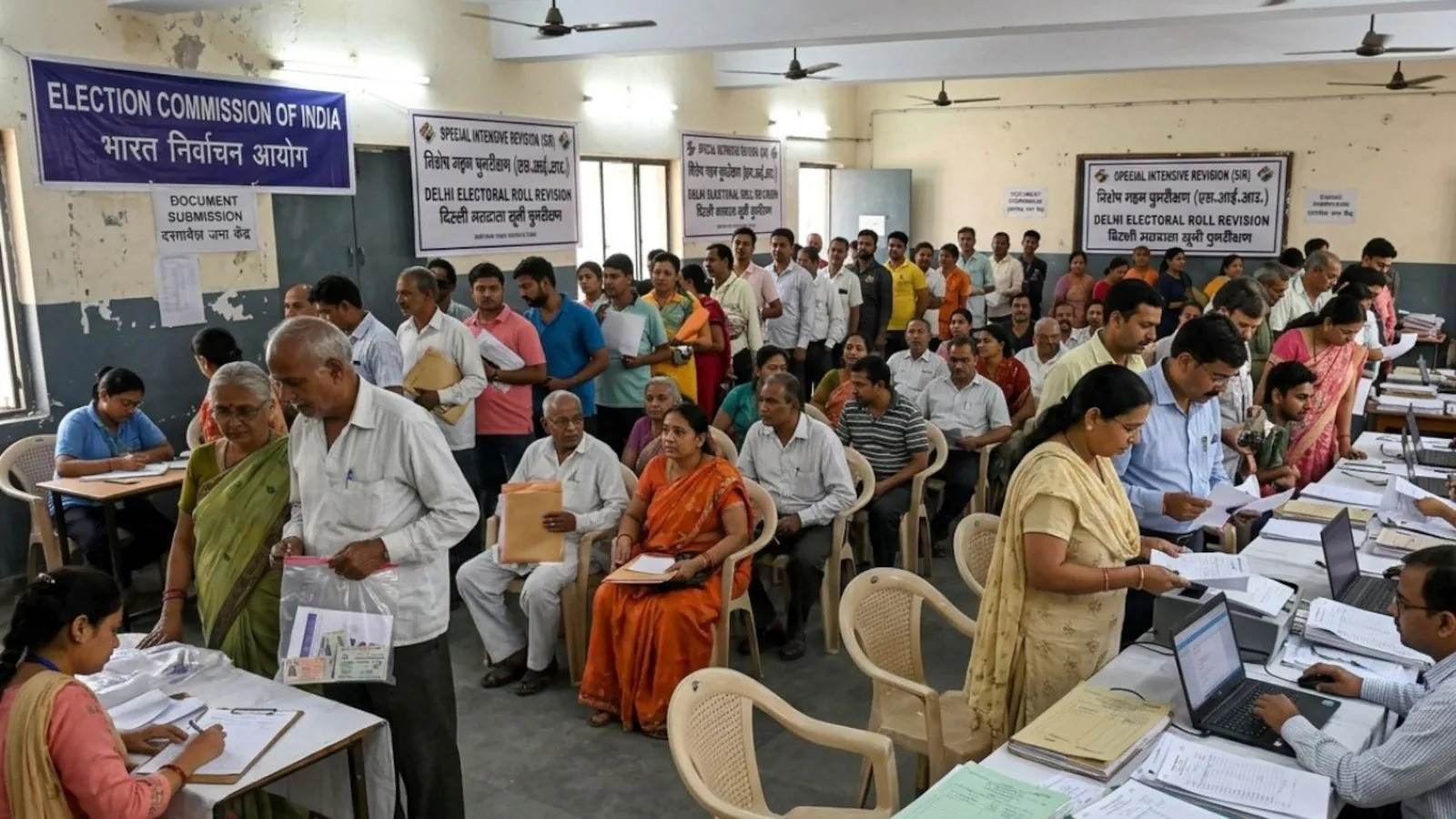
In a note sent on Thursday by the Chief Electoral Officer's office to the officials overseeing the work in Mumbai city and Mumbai suburban areas, it was stated,
Before making a decision to remove the name of the concerned voter from the voter list, they should be given sufficient opportunity to present necessary documents, a hearing should be held, and necessary orders should be passed. It stated that no eligible voter should remain outside the voter list, and there should be no hindrance to the voter's right to vote. Officials have been instructed not to make adverse decisions in haste and to ensure “complete investigation” at the ERO level.
This notice implements the decision made by the Commission on September 26, under which voters who receive notices due to being 'unmapped' or 'logical discrepancies' will not need to appear in person for the hearing. The first link of communication between citizens and the Commission, the Booth Level Officer (BLO), will visit the homes of voters receiving notices to collect documents and upload them for the ERO's decision. Those who have already been sent hearing notices will be informed via phone or WhatsApp that they do not need to come.
In Maharashtra's draft electoral roll, 1.22 crore records have been marked for verification. Among these, 62.48 lakh records had discrepancies in the details of relatives, while 59.75 lakh records could not be matched with any relative in the previous electoral roll. According to the notice, "necessary changes" are currently being made at the Commission level in the ECINet and BLO apps.