
Supreme Court warns UP police against misconduct

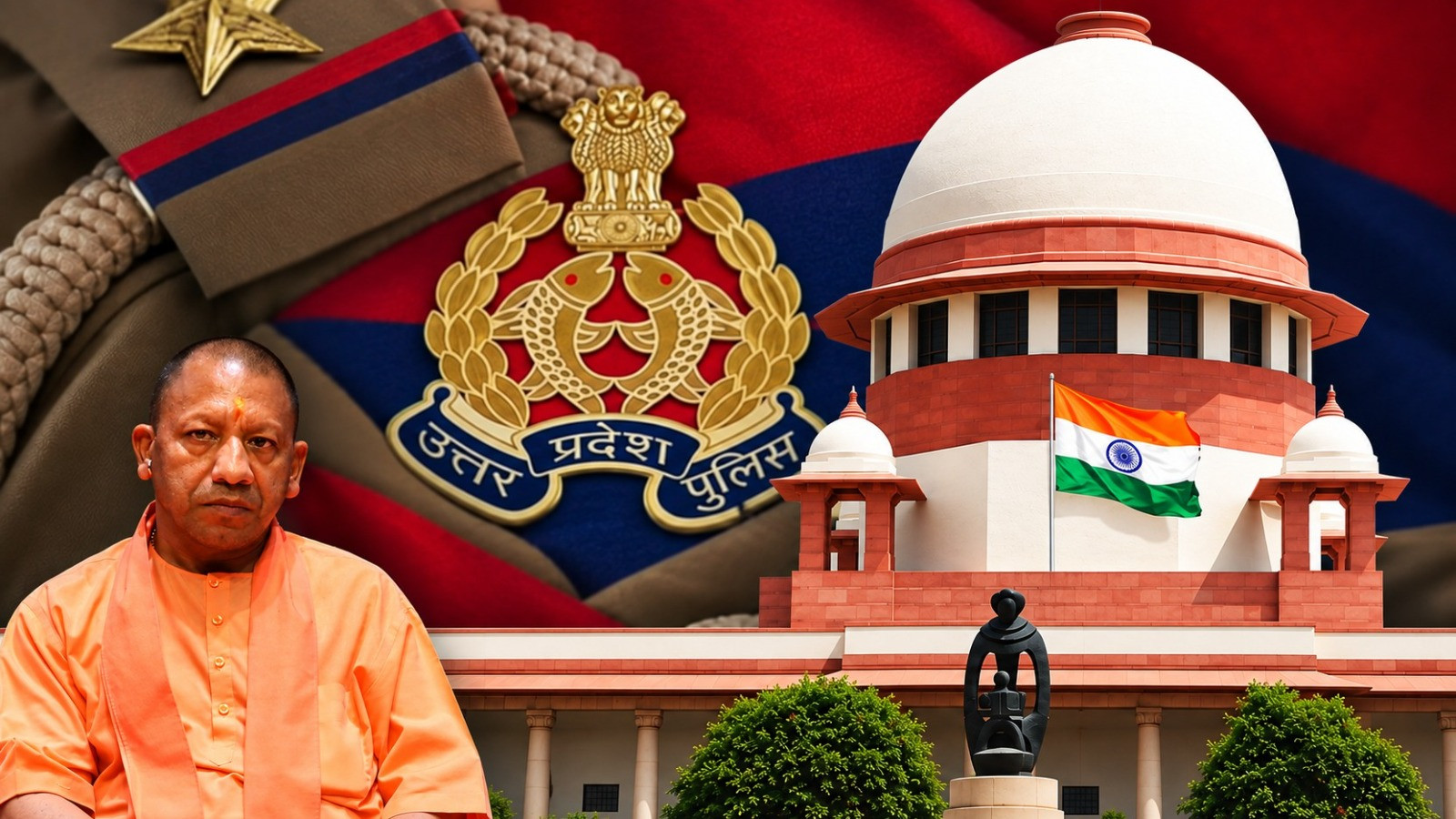
The court questioned the UP police on whose agenda they operate, urging them to maintain public trust.
The Supreme Court expressed strong displeasure over the attitude of the Uttar Pradesh police in a criminal case investigation on Wednesday. The court, in oral remarks, suggested that why not all investigations in the state be handed over to the Central Bureau of Investigation (CBI).
According to a report by Bar and Bench, a bench comprising Justice Sanjay Kumar and Justice Sanjeev Sachdeva remarked that,
why not disband the Uttar Pradesh police and hand over all investigations in the state to the CBI.
The court stated,
In every case, you have some agenda. If you proceed in this manner, how will people trust you? It would be better if we ask for the CBI to intervene in all investigations of the UP police. Why not just disband the UP police? This absurd attitude should come to an end at some point.
The court made these stern remarks after taking cognizance of serious irregularities in an investigation. In this case, the complainant had caught a motorcyclist at the scene and handed him over to the local police. Despite this, the police registered an FIR against an “unknown” motorcyclist. Expressing dissatisfaction over how the investigation was conducted, the bench said,
To act on someone's instructions is one thing, but to go to any lengths for it is another. And this attempt to cover up the case? The less said, the better.
This case is related to a petition filed by a complainant who appeared personally in court. She informed the Supreme Court that the police's initial report was biased from the start. The complainant stated that,
after an incident involving a motorcycle, she had herself caught the rider and handed him over to the police. However, the police deliberately registered an FIR against “unknown” persons and left the column for the accused's name blank.
The petitioner further explained that when the High Court intervened and sought a status report, the police included the name of the motorcyclist in the charge sheet but later gave him a clean chit. She also mentioned that when the motorcycle was seized, it did not have a number plate. Nevertheless, during the investigation, a registration number mysteriously emerged.
Expressing strong objection to this attitude, the bench asked the lawyer representing the Uttar Pradesh police,
Was the FIR registered against unknown persons? When the person was caught at the scene, why did you write unknown? When the motorcyclist was caught at the scene, why did you register an FIR against an unknown motorcyclist? How will people trust the police?
The court stated that leaving the name of the apprehended suspect blank in the initial FIR and later manipulating the details of the case completely undermines institutional credibility and public trust in law enforcement agencies.
The bench questioned,
You catch the accused at the scene, but do not want to write his name in the FIR. Perhaps if equations change, you can change the name and add someone else's name from your side. Do you keep a list of accused in different FIRs, so that the one with fewer FIRs can be included? Is that how things work there?
The court further stated that the counter affidavit filed by the Uttar Pradesh police was completely unsatisfactory. The bench then directed the concerned police officer to appear in court at the next hearing to clarify why the name of the accused was not included in the FIR.
The bench ordered,
We found the affidavit filed by the UP police completely unsatisfactory. The officer should appear in court at the next hearing with a better affidavit and explain why the FIR was registered against an unknown motorcyclist, while it is an accepted fact that the said motorcyclist was caught at the scene. In paragraph 6 of the affidavit, the rider's name is mentioned as Tushar. The reason for leaving the name blank in the initial FIR and why it was added later should be clarified.