
Legal shield for election commissioners doesn't bar action

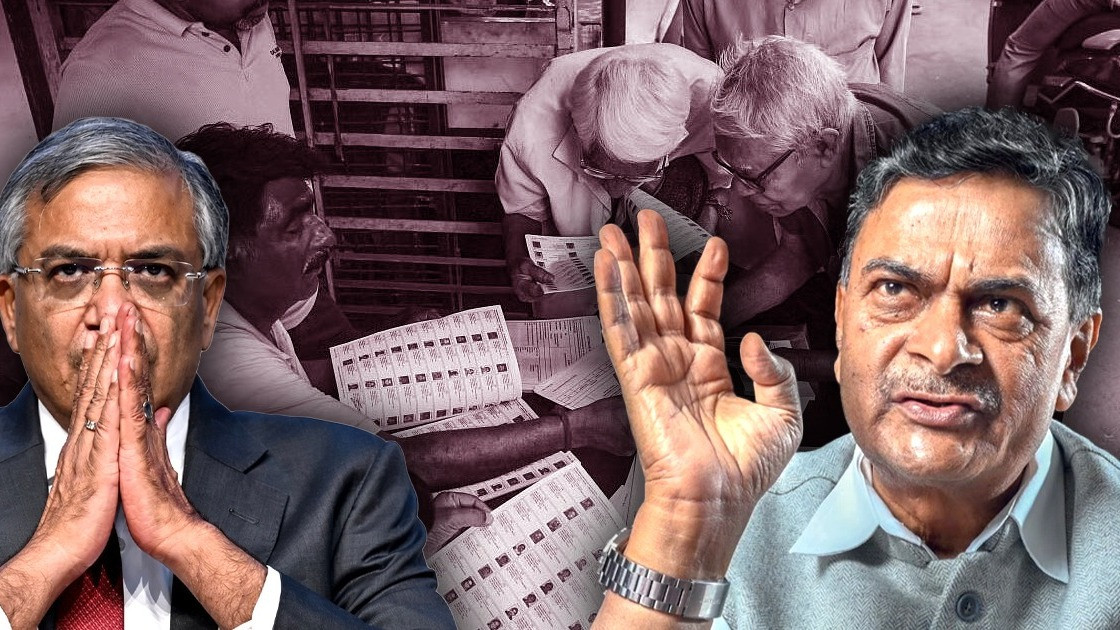
The legal protection granted to election commissioners doesn't mean they can't be prosecuted for violations.
One day after surrounding the Election Commission over SIR, former Union Home Secretary R.K. Singh has further clarified his stance against Chief Election Commissioner (CEC) Gyanesh Kumar. He stated that the immunity granted to the three election commissioners under the law does not apply to actions taken in violation of “laws and regulations.” The implication is clear that the path to jail for CEC Gyanesh Kumar is still not closed.
Former Union Home Secretary and former Union Minister R.K. Singh said,
The legal protection granted to the Chief Election Commissioner and other election commissioners does not apply to actions that violate laws and regulations.
Singh had previously criticized the voter lists' SIR in a open letter. He alleged that this process was conducted in violation of the provisions of the Representation of the People Act, 1950.
In responses to the letter, some people said that the Chief Election Commissioner is protected from criminal proceedings under Section 16 of the 2023 Act. Singh dismissed this interpretation as incorrect.
On the social media platform X, Singh wrote in an open letter that,
The Chief Election Commissioner and other election commissioners receive this protection only for actions taken in the discharge of official duties. According to him, violations of laws and regulations cannot be part of official duty. Therefore, they can be prosecuted for such actions. Singh's statement is his legal interpretation of the scope of protection granted to the election commissioners.
In his open letter, Singh alleged that for the first time in the country's history, the government is working on a campaign to disenfranchise people. He stated that until now, the efforts of the government and the Election Commission had focused on including all eligible citizens in the voter list. The aim was to strengthen democracy and empower citizens, but the current process is moving in the opposite direction.
Singh also questioned the legality of SIR and the decision-making process within the Election Commission. He asked,
Did the commission decide to conduct SIR across the country, or was it only Chief Election Commissioner Gyanesh Kumar who made this decision? He argues that it should be clear whether all election commissioners participated in such a wide-ranging decision.
Citing Section 21 of the Representation of the People Act, 1950, Singh said,
Special revision is allowed only under special circumstances. According to him, reasons must be recorded in writing, and it should be for a specific constituency or part of it. He argued that exceptions granted for special cases cannot be made a general rule.
On this basis, Singh declared the order for a comprehensive revision across the country as illegal. He also termed the Supreme Court's order, which upheld the general SIR, as incorrect. He questioned in his post at what level and through what process the decision for a nationwide SIR was made.
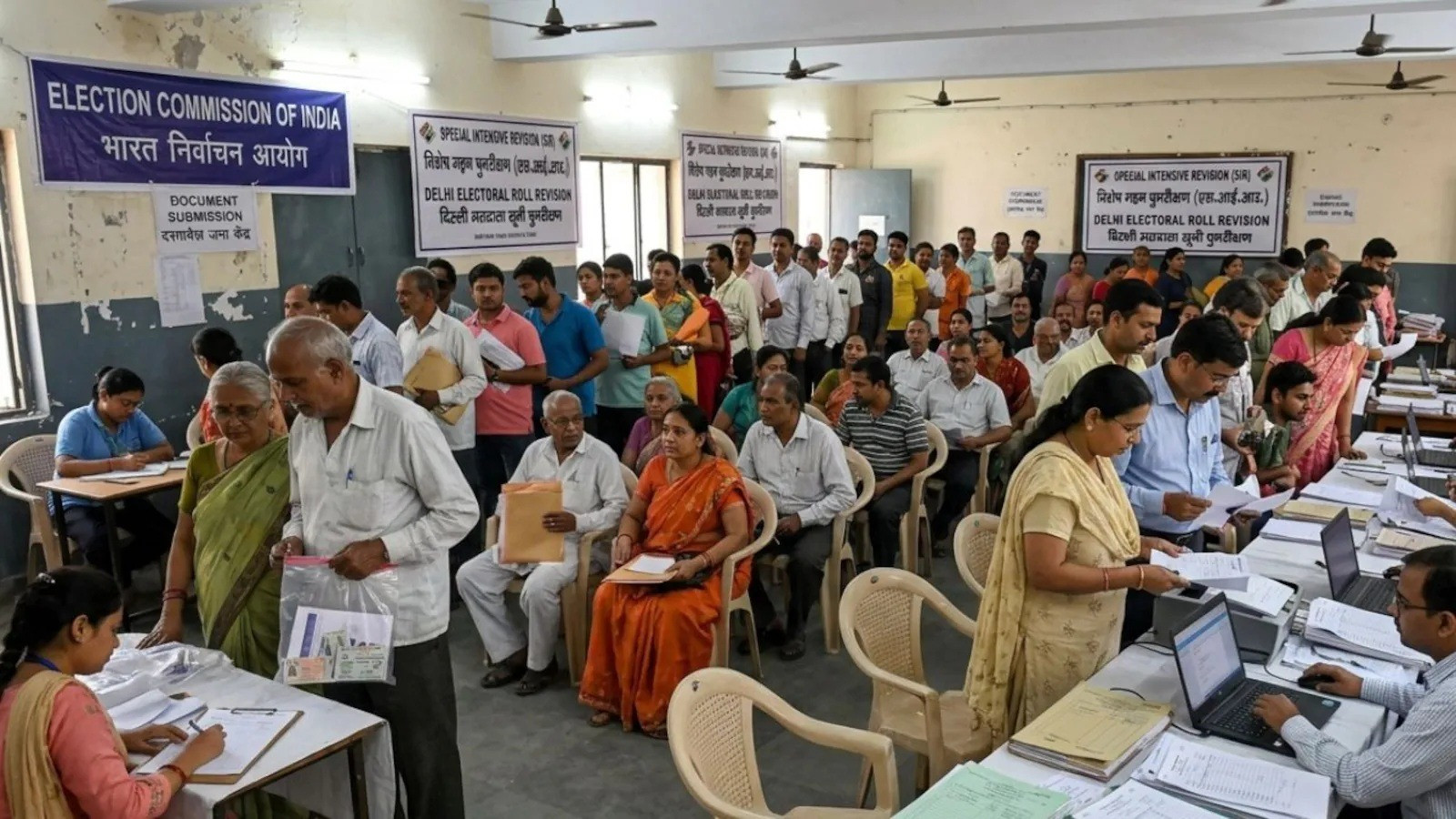
The former Home Secretary also raised the issue of pending appeals against the removal of names from the voter list. He alleged that the Election Commission conducted elections based on those revised lists, which still had appeals pending against the removal of names. According to Singh, Section 21 mandates that the original voter list should remain effective until all appeals are resolved. Singh stated that the revised voter list can only be considered complete when all appeals related to inclusion or removal of names have been settled. His argument was that where appeals were pending, the effective original list should have been used as of the notification date. In contrast, he deemed the use of the new list with names removed as illegal.
Regarding the process of removing voters' names, Singh referenced Section 22 of the Act. According to him,
The authority to remove a voter's name lies with the Electoral Registration Officer (ERO). This action can only be taken on specified grounds, after a specific inquiry and providing the concerned individual a fair opportunity to present their case. He also linked the resolution of appeals to this process.
Singh alleged that Gyanesh Kumar removed the names of all voters who were included in the list after 2003 without any basis. According to him, no inquiry was conducted, and no show-cause notice was given to the registered voters. He clearly termed this an illegal action and stated that the prescribed procedure for name removal must be followed.
In this context, Singh cited the Supreme Court's 1995 judgment, 'Lal Babu Hussain & Others vs. Electoral Registration Officer & Others'. He stated that the responsibility to present evidence to prove a previously registered voter as ineligible lies with the authorities. According to him, this responsibility cannot be placed on the voter to prove their eligibility again.
Singh also questioned the changes made to the Form 6 used for registering new voters. He alleged that despite opposition from two election commissioners, Gyanesh Kumar included it. According to Singh, it requires applicants to provide the serial number of their parents' names from the 2003 voter list, making registration difficult for young applicants.
Singh demanded answers regarding the large number of objections filed through Form 6. He questioned who filed these objections, how they were accepted, and how actions were taken based on them. He also asked why the people who signed the relevant forms were not present.
Regarding West Bengal, Singh claimed that 16 lakh voters found eligible by the ERO were not included in the list because the Election Commission had filed appeals against their inclusion. He also cited Goa as an example. According to him, 97 voters remained outside the voter list despite being found eligible by the ERO.
Singh alleged that,
The difference of less than 15 years in the recorded ages of a father and child was used as a basis for name removal. According to him, it is inappropriate to act on such discrepancies arising from estimated birth years without investigation. He claimed that names with 'logical discrepancies' were removed without inquiry and termed it contrary to Section 21 of the Act.
Singh also objected to the 'Logical Discrepancy' criterion used in the voter list.
He argues that many poor and marginalized families in the country do not have documents like birth certificates and state their age as an estimated year.
Overall,
R.K. Singh's latest statement primarily focuses on the claim that the legal protection granted to election commissioners does not mean that they cannot be held accountable for violations of the law. The Election Commission's stance on Singh's allegations regarding SIR is different, and the allegations and their legal implications must be viewed in the context of the relevant laws, official records, and court judgments.