
US Vice President JD Vance supports ending H-1B visa, raises concerns for Indians

Notably, a significant portion of H-1B beneficiaries are Indian citizens.
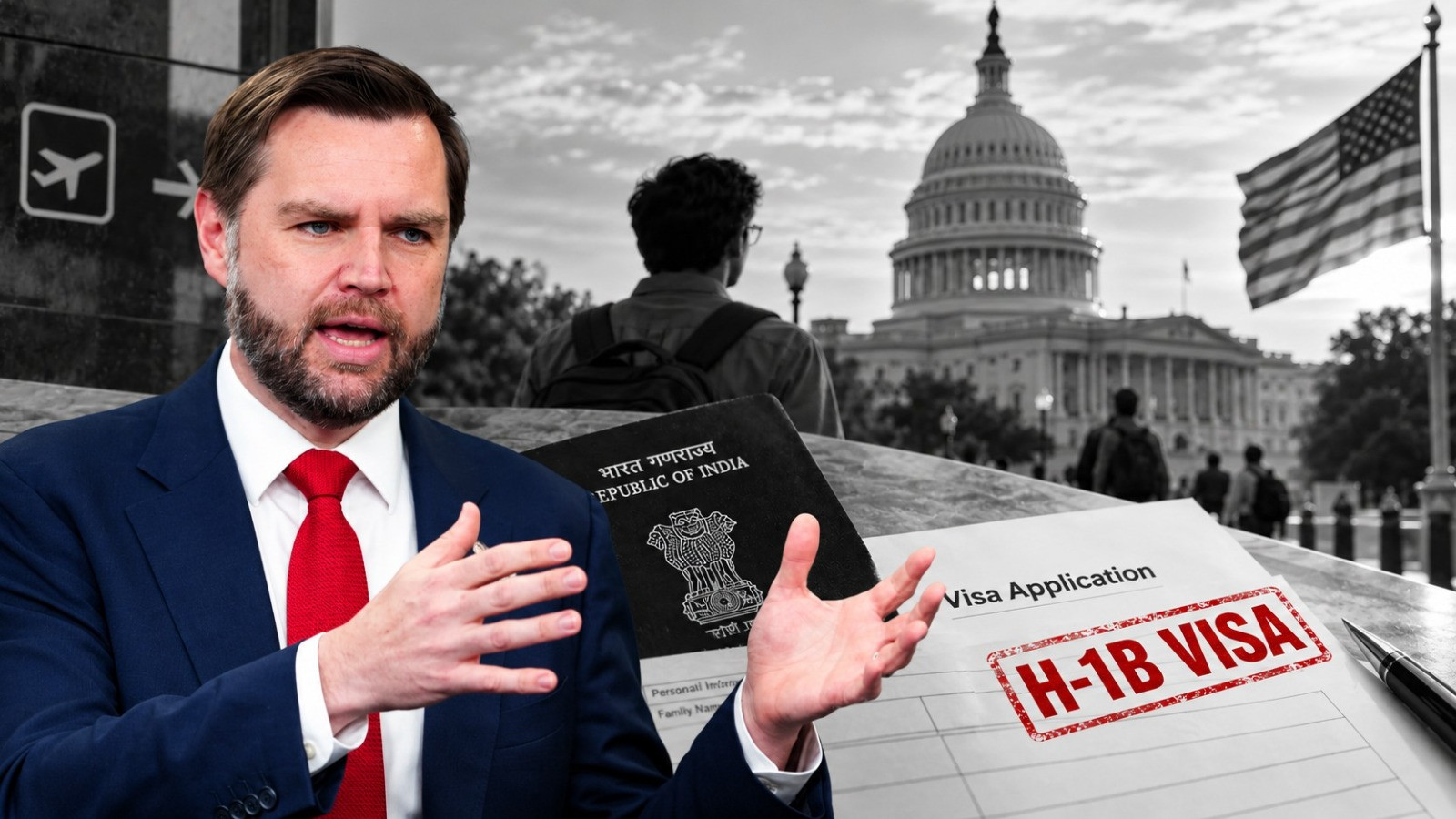
U.S. Vice President JD Vance has described the H-1B visa program as “completely broken” and has expressed support for its termination. He alleged that American companies are using this system to hire low-paid foreign workers instead of American employees. His statement comes at a time when the Trump administration's attempt to impose a fee of $100,000 on new H-1B applications is facing legal challenges in the courts.
Vance stated during a live interview aired on Real America Voice on Thursday that,
“In my opinion, the H-1B visa program is completely broken, and I will fully support its termination. But as long as it is in place, we must protect American workers.”
It is noteworthy that Indian nationals constitute a significant portion of the beneficiaries of the H-1B visa. Therefore, the termination of the H-1B visa or tightening of recruitment conditions could impact the employment opportunities of Indian IT workers, engineers, and other professionals in the U.S.
Currently, Vance's statement will not affect Indians already working in the U.S., in which he reiterated the call for the termination of the H-1B visa program. The $100,000 fee structure also did not apply to the renewal of existing visas and those changing status from student visas in the U.S. Therefore, it would not be accurate to conclude that all Indian employees will face this additional cost immediately.
“Still, as a potential impact, employers may exercise more caution in hiring foreign workers. Additional scrutiny of applications from companies laying off employees could increase uncertainty in hiring and job-switching plans. The actual impact of any broad changes to the program will depend on final rules and court decisions.”
U.S. Vice President JD Vance alleged that,
“The abuse of this program is not limited to technology companies. According to him, accounting firms and other employers are also taking advantage of it to deceive American workers.”
Vance differentiated between hiring highly skilled foreign professionals and employing foreign workers to reduce costs. He stated that,
“If you are bringing in a foreign accountant who works for $45,000 instead of an American accountant earning $60,000, you are not using this program to bring in a talented individual. You are eliminating American jobs and deceiving the American public.”
He also defended President Donald Trump's policies regarding the H-1B issue. According to Vance, the idea of imposing a $100,000 fee emerged from discussions between him, President Trump, and White House senior advisor Stephen Miller. He stated that this step was considered when they felt that Congress would not take action to reform the program.
Vance said that,
“If a company's goal is to hire a cheaper foreign accountant instead of an American accountant, they will not pay $100,000. According to him, the purpose of this fee was to ensure that companies use the program for its intended purpose.”
President Trump's son Donald Trump Jr. shared Vance's interview on X, expressing his support.
He wrote that,
“He completely agrees with this idea, and those opposing it are the ones who support open borders and cheap labor.”
However, the administration has faced a new legal setback regarding the $100,000 fee. U.S. District Judge Haywood Gilliam in Oakland, California, issued an order on Wednesday preventing the relevant agencies from enforcing the fee. He found that the United States Citizenship and Immigration Services and the State Department did not follow the necessary rule-making process. An interim stay has been imposed until the lawsuit is resolved.
This relief was granted on the petition of a coalition of labor organizations, employers, and non-profit entities. A court had previously issued a stay on the fee. Business advocates argue that the H-1B visa program helps recruit highly skilled professionals and addresses the shortage of qualified American workers in certain industries.
Meanwhile, the order dated September 18 directs the Departments of State, Labor, and Homeland Security to consider an employer's recent or proposed layoffs when reviewing H-1B visa applications. The Labor Department is also required to review previously submitted labor condition applications.