
Supreme Court declines discussion on 'One Nation, One Election'

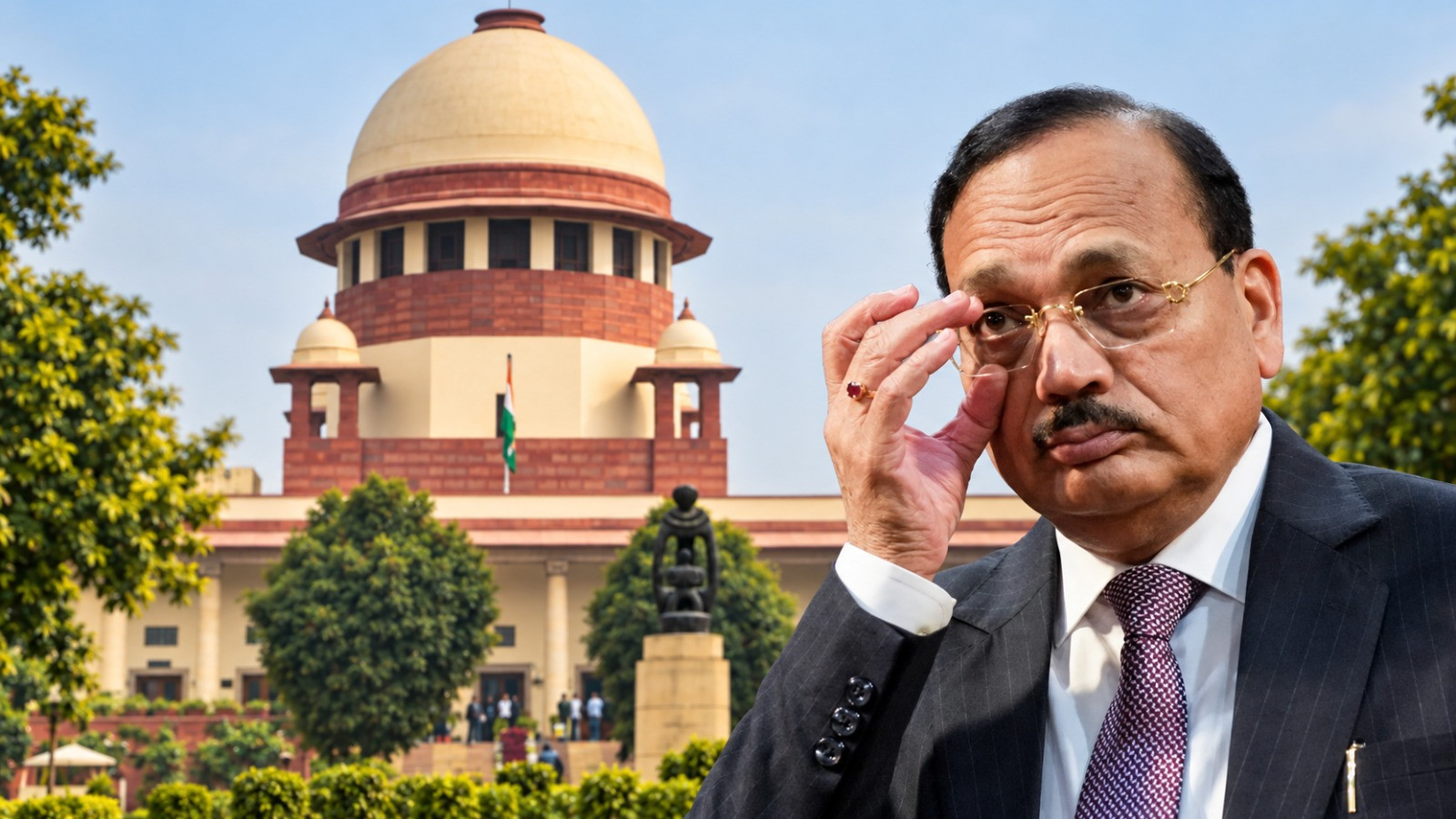
The proposed meeting raised questions about the separation of powers between the judiciary and the legislature.
The Supreme Court has cancelled the proposed meeting between the Chief Justice and other judges with the parliamentary committee investigating the Constitution (129th Amendment) Bill, 2024 related to ‘One Nation, One Election’. This meeting was scheduled for October 6.
The apex court has stated that the proposed constitutional amendment could become a subject of judicial review in the future. Therefore, it would not be appropriate or desirable to discuss it at the administrative level.
In a message sent to the parliamentary committee, the Supreme Court clarified its position, stating that,
It is not appropriate to discuss a proposal whose constitutional validity may come before the court in the future from an administrative perspective. Following this decision by the court, there will be no proposed dialogue between the parliamentary committee and the sitting judges.
According to a report by Bar and Bench, the committee had requested ‘informal discussions’ for this meeting. The proposed agenda was described as a ‘local study tour’. The request for the meeting was made on September 28 and was conveyed to the Supreme Court through the legislative affairs department. The Supreme Court informed the department on October 1 that senior judges had discussed the proposal and decided to cancel the meeting.
According to news agency PTI, after objections were raised by the opposition, the Joint Parliamentary Committee (JPC) also abandoned its plan to meet with the Supreme Court judges. The proposed meeting had raised questions about the separation of powers between the judiciary and the legislature.
Earlier, senior advocate Kapil Sibal had stated in a press conference that,
The JPC is scheduled to discuss with the Chief Justice of India and other Supreme Court judges on October 6. Sibal had opposed this proposed discussion, calling it unprecedented and unconstitutional.
He stated that,
It has never happened in India's history that a parliamentary committee provides information to sitting judges about a bill before finalizing its report or discusses it in such a manner. He said this goes against the principle of separation of powers between the executive, legislature, and judiciary.
Sibal argued that the role of Parliament is to make laws, while the role of the judiciary is to examine the validity of those laws. If the proposed constitutional amendments are passed by Parliament and later challenged in court, the same judges may have to decide on their constitutional validity. On this basis, he questioned the proposed discussions between the committee and the sitting judges. Sibal said,
This is a mockery of the Constitution.” His objection was particularly regarding discussions with those judges who may be part of the bench hearing the constitutionality of this law in the future.
The Joint Parliamentary Committee, chaired by BJP MP P.P. Chaudhary, is investigating the Constitution (129th Amendment) Bill, 2024 and the Union Territory Laws (Amendment) Bill, 2024. The aim of both bills is to create a legal framework for holding simultaneous elections for the Lok Sabha and State Assemblies. The committee has so far consulted political parties, legislators, constitutional experts, and other stakeholders. The committee has also reported that it has sought opinions from former Chief Justices of India and retired judges of the Supreme Court on the constitutional implications of holding simultaneous elections.
However, Sibal's objection was not regarding consulting former Chief Justices or retired judges. He had raised concerns about discussions between sitting judges and the parliamentary committee. His argument was that discussing the bill in advance with judges who may have to decide on the validity of the law in the future would violate the principle of separation of powers.
Amendments to the Constitution are necessary for these bills related to ‘One Nation, One Election’. The proposals have sparked debates on issues related to federalism, the tenure of the Lok Sabha and Assemblies, premature dissolution of houses, and questions related to the basic structure of the Constitution.
The Supreme Court has also cited the possibility of future judicial review as a key basis for its message cancelling the meeting. The court has clarified that it would not be appropriate to discuss the proposed amendments at the administrative level. Meanwhile, the JPC continues to examine these bills and their constitutional implications.