
Who owns Shiv Sena and its bow-and-arrow symbol? Supreme Court hears major dispute

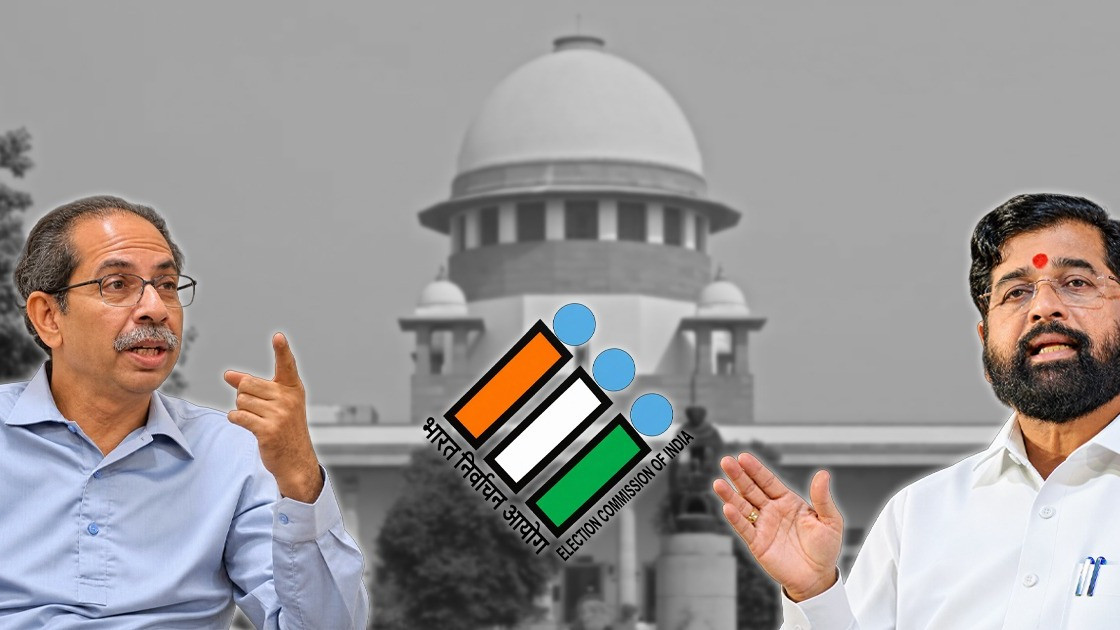
On 17 February 2023, the Election Commission allotted the Shiv Sena name and the bow-and-arrow symbol to the Eknath Shinde faction.
The legal battle over the Shiv Sena name and the ‘bow and arrow’ election symbol has grown beyond Maharashtra politics into a debate over the rights of political parties. The question is: if most of a party’s MLAs break away, can they claim the entire party? This is at the heart of the dispute between the Uddhav Thackeray and Eknath Shinde factions in the Supreme Court. The hearing was expected to continue on Thursday, November 26, but, according to a report by TV9 Marathi, the case could not be heard in court today. The hearing is now expected to take place next week.
The dispute began in June 2022. After Eknath Shinde and the MLAs supporting him rebelled, the Maha Vikas Aghadi (MVA) government led by Uddhav Thackeray fell. Eknath Shinde later formed a government with the BJP. Both factions then claimed to be the real Shiv Sena and laid claim to the party name and election symbol. On February 17, 2023, the Election Commission decided to allot the Shiv Sena name and the ‘bow and arrow’ symbol to the Eknath Shinde faction. The Uddhav Thackeray faction has challenged this decision.
There are two distinct legal questions in the case. First, which faction should get the party name and election symbol? Second, should the Eknath Shinde faction’s MLAs have been disqualified under the anti-defection law? The Maharashtra Assembly Speaker had refused to disqualify these MLAs. The Uddhav Thackeray faction has challenged that decision too in the Supreme Court. It told the court that when a handful of MLAs can be poached from a party to topple a government elected by the people, the issue is not one of freedom of expression, but of political malice and deceit.
On Wednesday, November 25, senior advocate Kapil Sibal, appearing for the Uddhav Thackeray faction, told the court that the Assembly Speaker had made a constitutional error by treating a majority of MLAs as the identity of the original political party. His argument was that the number of MLAs and the support of the entire political organisation are not the same thing. He warned that allowing political allegiance to change in the name of dissent could lead to the systematic toppling of elected governments.
In simple terms, a political party includes its workers, members, office-bearers and organisation. The legislature party is the group of elected MLAs from that party. The Uddhav Thackeray faction says that securing a majority within the legislature party does not confer control over the entire organisation. In its May 2023 judgment, the Supreme Court had also made it clear that the political party has the authority to appoint the whip and the legislature party leader.
The Eknath Shinde faction rejects the view that this case is merely about MLAs rebelling. Senior advocate Neeraj Kishan Kaul, appearing for the faction, told the court that the case does not fall under the anti-defection law in the Tenth Schedule of the Constitution because a large number of MLAs had agreed to form a separate party. Defending the Election Commission’s powers, he argued that it can examine a party’s constitution, organisation and democratic functioning. The Eknath Shinde faction had also questioned appointments within the organisation and changes to the party constitution made under Uddhav Thackeray’s leadership.
The Eknath Shinde faction argues that the number of office-bearers in some organisational committees cannot be treated as conclusive proof of the workers’ actual wishes. It says the Commission must consider the available records and different measures of support. The Uddhav Thackeray faction, on the other hand, wants the recognition granted to the Eknath Shinde faction and the validity of its use of the symbol to be judicially examined. It has also sought a stay on the Shinde faction’s use of the symbol, at least until the dispute is decided.
During the hearing, the Supreme Court has also raised questions about the distinction between dissent and defection. The Eknath Shinde faction has said it objected to the alliance with the Congress and the Nationalist Congress Party. The question before the court is when opposition to a party alliance remains internal dissent and under what circumstances it becomes defection. The answer will also be important for disputes in other political parties. The court has earlier also asked why the Election Commission did not consider allowing the two factions to contest elections using separate symbols.
The significance of this dispute goes beyond the election symbol. The symbol is tied to the identity of party workers, voters’ aspirations and the party’s political legacy. The court will now have to clarify the rights of political parties, the role of MLAs and the validity of the Election Commission’s decision. The verdict will be politically significant for Maharashtra, while its importance for the country will lie in how it helps protect elections and policymakers from potential threats to democracy.