
Government begins to reverse course on SIR amid opposition pressure

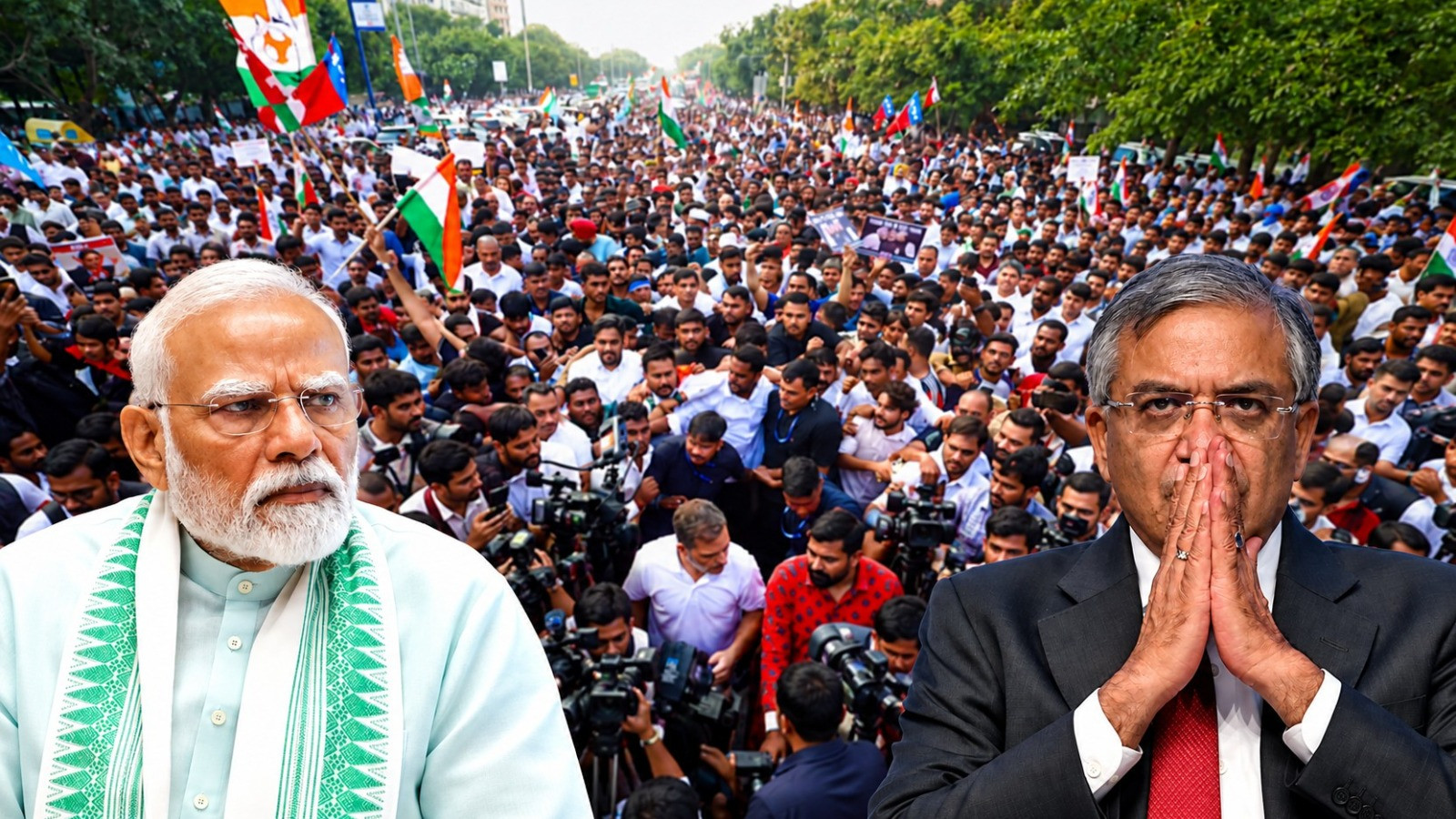
Following widespread protests from the opposition, the Election Commission has revised some decisions to ease voter concerns.
Due to protests across the country and the aggressive stance of the opposition, the Election Commission is now seen reversing its own decisions from West Bengal to Delhi during the Special Intensive Revision (SIR). Following widespread demonstrations and pressure from the India alliance, CJP, and civil society against the unilateral decisions of Chief Election Commissioner Gyanesh Kumar, the Election Commission has made changes to some of its decisions and has started providing relief to voters.
In the last 30 days, some voters who were missed have been given another chance, while in other cases, relief has been provided in the process of filing claims and objections. These changes are being viewed as a softening of the Commission's strategy.
To provide relief to the people of West Bengal, the State Election Commission has issued a circular to add the names of those who were missed from the voter list during the SIR.
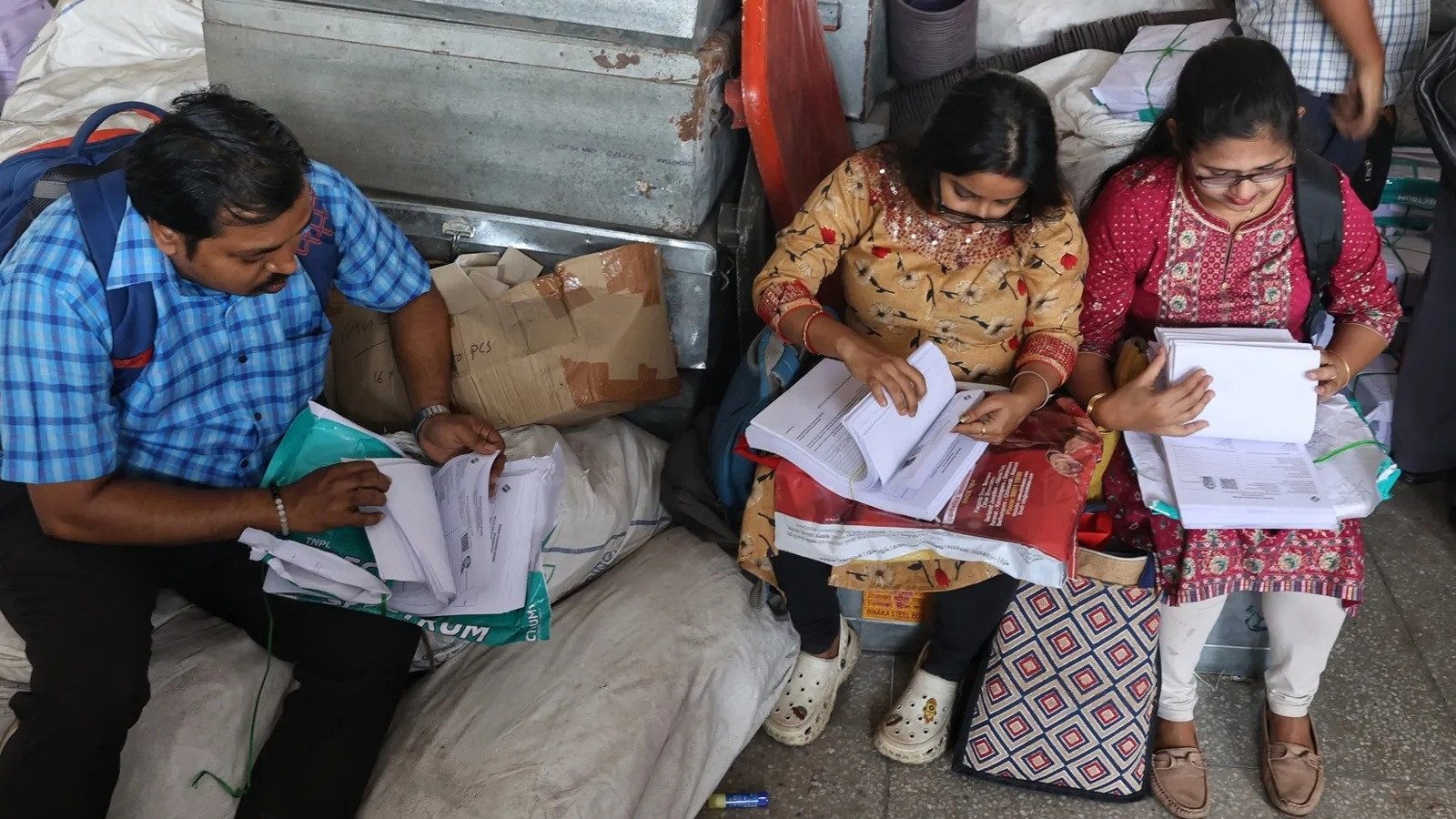
This will give those who were missed for some reason during the process an opportunity to add their names based on their eligibility. Under the Commission's directives, all 24 District Election Officers (DEO) in West Bengal have launched a special campaign to ensure that no eligible voter remains outside the voter list.
Meanwhile, in Delhi, around 20 lakh cases out of the 33 lakh discrepancies identified during the voter list SIR have been resolved. According to the CEO, these cases involved discrepancies in voter records or issues such as names not matching the 2002 voter list. Special camps will be set up on October 18 and 25 to assist voters.
When two commissioners within the Election Commission raised objections regarding Form-6, and a nationwide uproar ensued, the Commission has now removed the additional affidavit requiring applicants to provide extra information related to the old voter list and their family members' names from the online portal in those states where the SIR process has been completed. Two election commissioners had termed this additional affidavit in Form-6 as illegal. The Supreme Court, in a somewhat reprimanding tone, stated that the changes made in Form-6 were neither presented before us nor approved or rejected by us.
In a new development, a major revelation has emerged regarding the UP SIR. The Reporters Collective has reported that the Chief Electoral Officer (CEO) of Uttar Pradesh has admitted that over 85,000 voters were removed without reason by automated software, and the deletion forms for these voters were filled out through the software. The CEO of UP has confirmed attempts to remove the names of Muslim voters.
The Reporters Collective had raised questions about the process of removing names from the voter list during the Special Intensive Revision (SIR) in Uttar Pradesh. In its investigation published on October 9, The Reporters Collective claimed that the Election Commission's software compelled election officials to sign 85,854 forms that did not record any reason for the removal of voters' names.
Minutes after the report was published, Uttar Pradesh's Chief Electoral Officer Navdeep Rinhwa called it 'filled with lies and inaccuracies' on the social media platform X. He mentioned that he would issue a detailed rebuttal the same day. In the evening, he released a recorded video calling the report 'misleading.'
However, The Reporters Collective stated that Rinhwa confirmed in his video the main finding of their investigation that the Election Commission's software had compelled officials to sign 85,854 forms for the removal of voters' names, which did not record any reason. Rinhwa did not clarify why most of the auto-generated forms did not include a reason for the removal of names. He also did not respond to the conclusion that some forms only recorded single letters in English—'A', 'N', 'H', or 'E'—in place of a reason.
The report stated that it is mandatory under the law to record clear and valid reasons for removing someone's name from the voter list. This is also required under the Election Commission's revised rules for SIR.
The Collective also mentioned that Rinhwa acknowledged over 200 attempts to collectively remove the names of Muslim voters in Uttar Pradesh. However, he downplayed their number, claiming it was a testament to the success of the SIR process in the state. Rinhwa stated that complaints of collective name removals were made against about 4,700 names through these Form-7s. He cited the total of 13.39 crore voters in the state, stating that only about 4,700 names were found with multiple Form-7s.
It is noteworthy that during the Special Intensive Revision (SIR) of the voter list in Delhi, over 20 lakh cases have been resolved out of approximately 33 lakh voters who received notices to prove their eligibility. This accounts for more than 60 percent of the total cases. The office of the Chief Electoral Officer (CEO) of Delhi provided this information on Monday. However, the resolved cases include those found eligible as well as those that were rejected. The final voter list in Delhi is set to be published on December 4. The CEO's office still has more than 50 days to finalize it. The deadline for releasing the final list was changed for the fourth time on September 26. The process of resolving notices and objections may continue until November 30.
In the capital, following widespread protests by the India alliance against Chief Election Commissioner Gyanesh Kumar and the deluge of the Supreme Court in March, a softening of the Election Commission's stance has been observed. This is the reason why 400,000 notices have been resolved in Delhi.
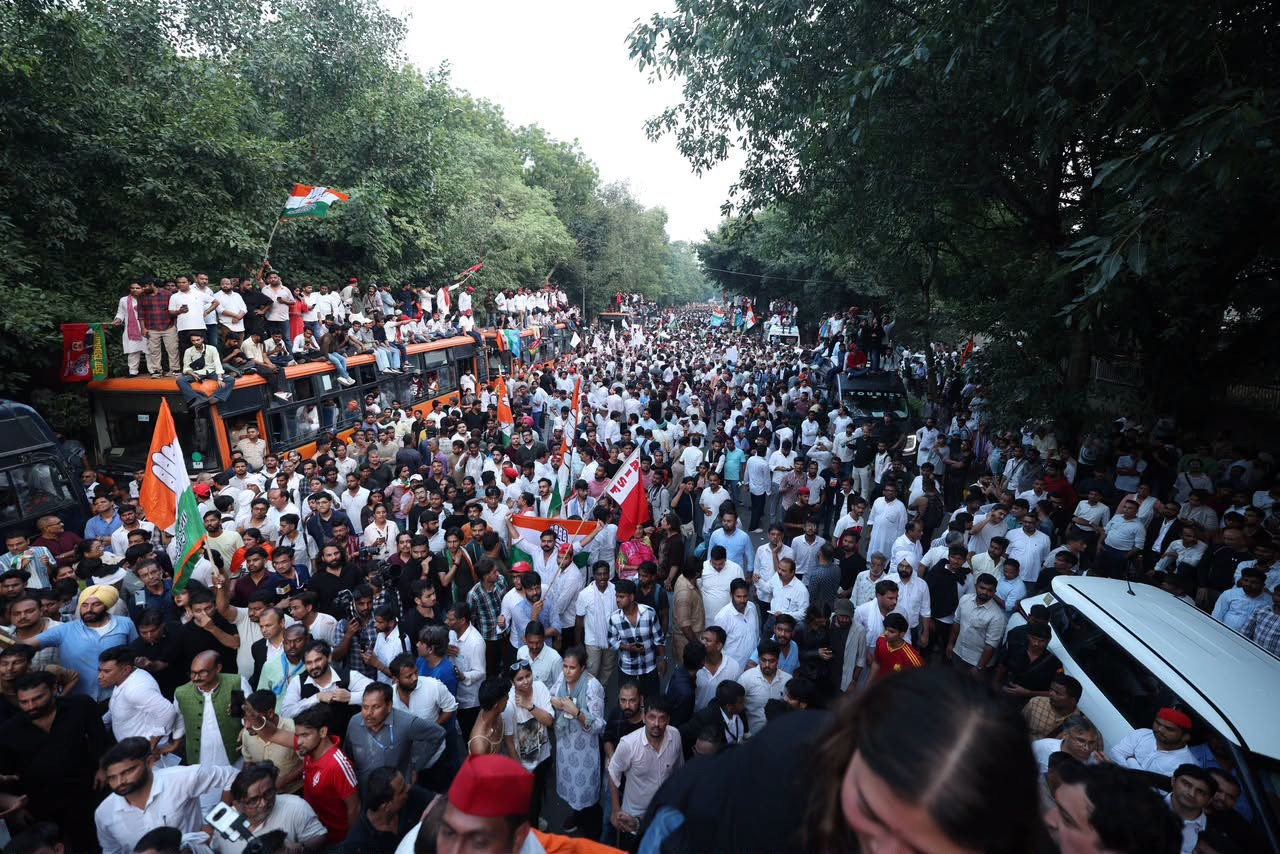
According to the data, the pace of resolving cases was initially quite slow. After the draft voter list was released on August 31, only four lakh notices were resolved in the first 30 days, i.e., until September 29. However, in the subsequent 12 days, nearly 16 lakh cases were resolved. Thus, an average of about 1.33 lakh notices were resolved daily. Special camps have been organized every weekend in the capital since September 20. Camps have also been held to reach vulnerable groups such as the homeless, families displaced due to demolition, the transgender community, and sex workers.
While the Election Commission is changing old decisions and rules amid controversy, reports have emerged that during the Special Intensive Revision (SIR) in Delhi, a pattern has emerged where Muslim voters are disproportionately flagged based on 'logical discrepancies.'
The Hindu reported that Muslims constitute 13.6% of the draft list, but they account for 20.3% of those flagged for such discrepancies. Among those flagged under five criteria related to family size and children, this share rises to 30%.
According to the report, the decision on which voters would be flagged was not made by the Electoral Registration Officers (ERO), but rather by the Election Commission's centralized ERONET software. EROs are the legal authorities responsible for voter lists. This process raises questions about the relevance of the software's criteria and their electoral eligibility.
The Hindu studied the draft SIR list of Delhi prepared in digital form. The list contained 97.54 lakh voters, of which 33.12 lakh were flagged for notice. Among these, 11.79 lakh voters could not establish their connection with the previous SIR list, while 19.33 lakh were categorized under 'logical discrepancies' for eight different reasons.
According to the analysis, there were approximately 13.3 lakh Muslims among the total voters. Their share of 13.6% is slightly higher than the 12.9% recorded in the 2011 census of Delhi's population. Among the voters who could not establish their connection with the previous SIR list, only 7.6% were Muslims. This indicates that a higher proportion of Muslim voters were able to establish their connection with the previous list compared to non-Muslim voters. Nevertheless, their share among those flagged for 'logical discrepancies' remained at 20.3%. In a similar analysis of the draft list in Bihar, the share of Muslims among the removed voters was 18.4%. This was close to their 17.7% share in the adult population according to the 2011 census. The 'logical discrepancies' check was not used in the Bihar SIR.
Assembly elections in Uttar Pradesh are expected to be held in February-March. Therefore, the wrongful addition or removal of any name from the voter list just before the elections could be politically significant.