
Violent protests against hydro project in Arunachal amid China tensions

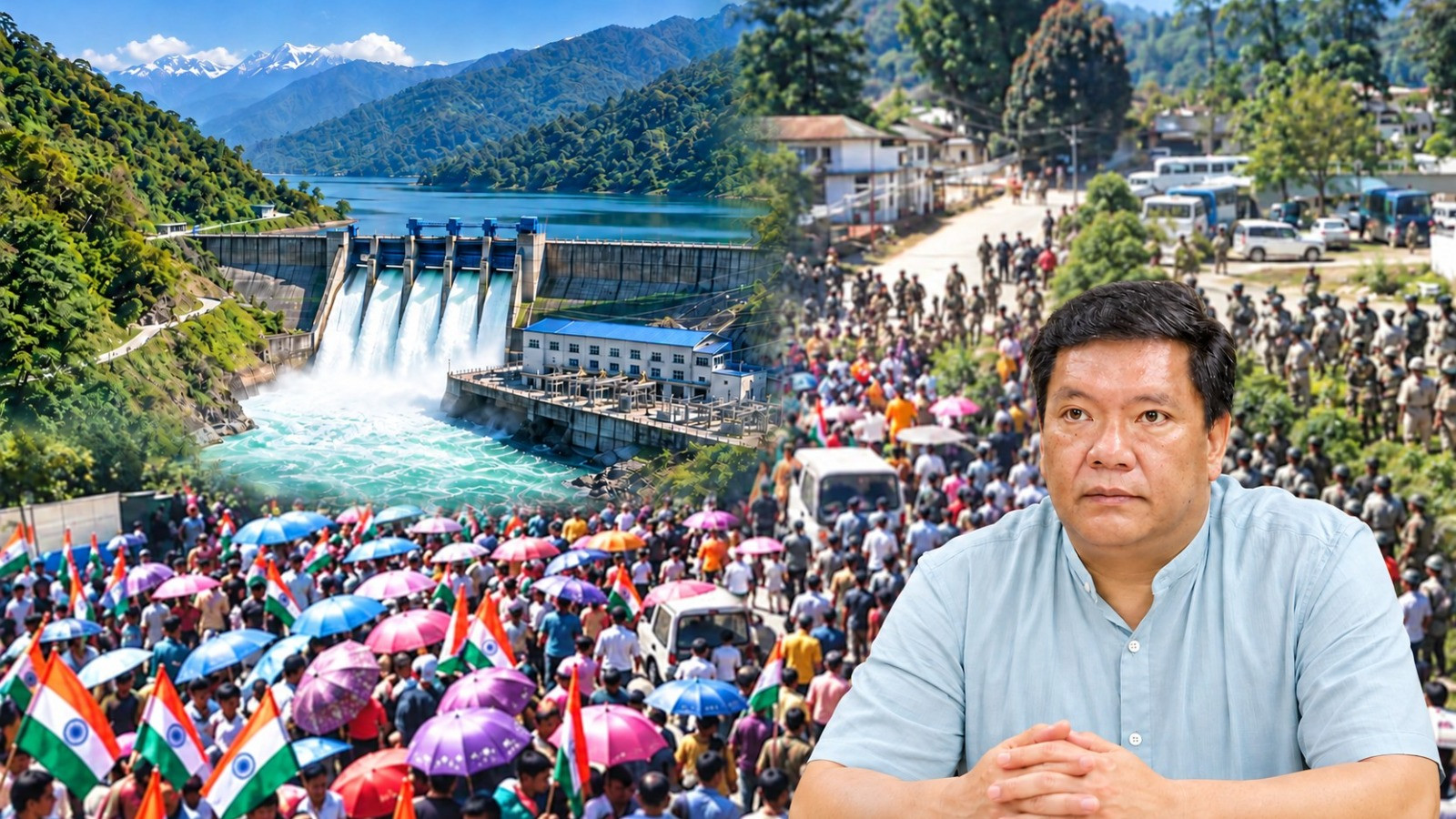
Residents along the river claim it could submerge their villages, farmland, forests, and ancestral land.
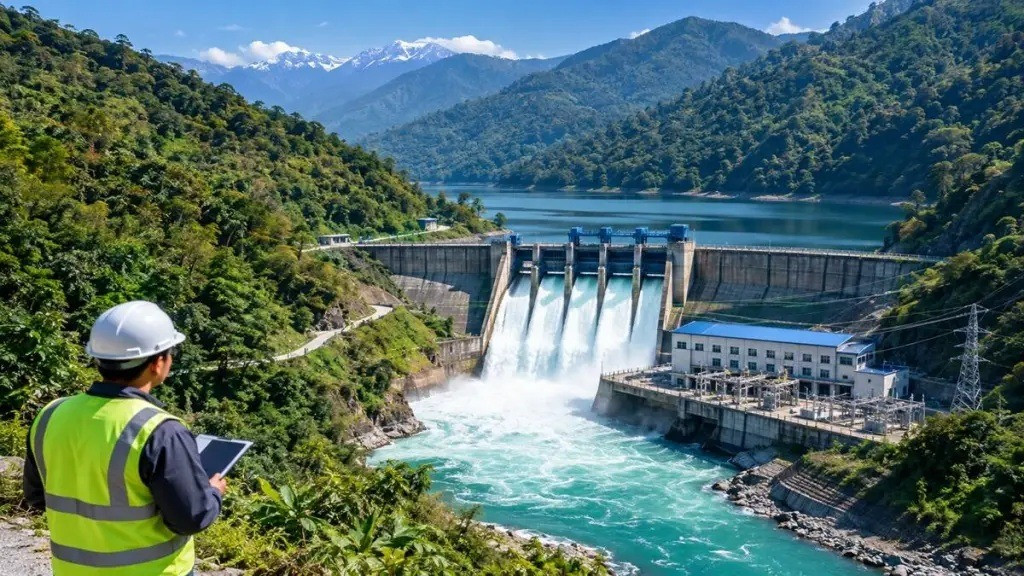
The Siang River, which has been the lifeline for tribal communities in Arunachal Pradesh for generations, has now become the center of opposition due to a massive hydropower project. The state government is describing the proposed Siang Upper Multipurpose Project, or SUMP, with a capacity of 11,200 megawatts, as crucial for water and national security. Meanwhile, the people living along the river are concerned that it could submerge their villages, agriculture, forests, and ancestral lands.

The government claims that this project is necessary to protect against the potential impacts of the massive dam being constructed by China in the upper reaches of the river. However, local communities are opposing even the preliminary surveys. They believe that granting permission for the surveys could pave the way for constructions that would permanently alter the Siang Valley.
According to a report by Hindustan Times, the protests have escalated to violent clashes between villagers and security forces. Conflicting claims about the number of injured, arrests, and restrictions on journalists' reporting have further intensified the controversy. Meanwhile, Chief Minister Pema Khandu has stated that no final decision has been made regarding the dam construction. Currently, the government only wants to assess whether the project is technically and geographically feasible.
A massive hydropower project on the lower reaches of the Yarlung Tsangpo River in Tibet has linked this controversy to national security. This river is known as the Siang in Arunachal Pradesh and merges with other rivers in Assam to form the Brahmaputra before entering Bangladesh. China's Medog project is estimated to have a production capacity of around 60,000 megawatts. In July 2025, China announced the start of its construction with an investment of approximately ₹1.2 lakh crore.
Indian officials fear that controlling water in the upper reaches could lead to changes in the river's flow, situations of water diversion, or sudden large releases. The Arunachal government argues that the vast reservoir of SUMP will mitigate such fluctuations.
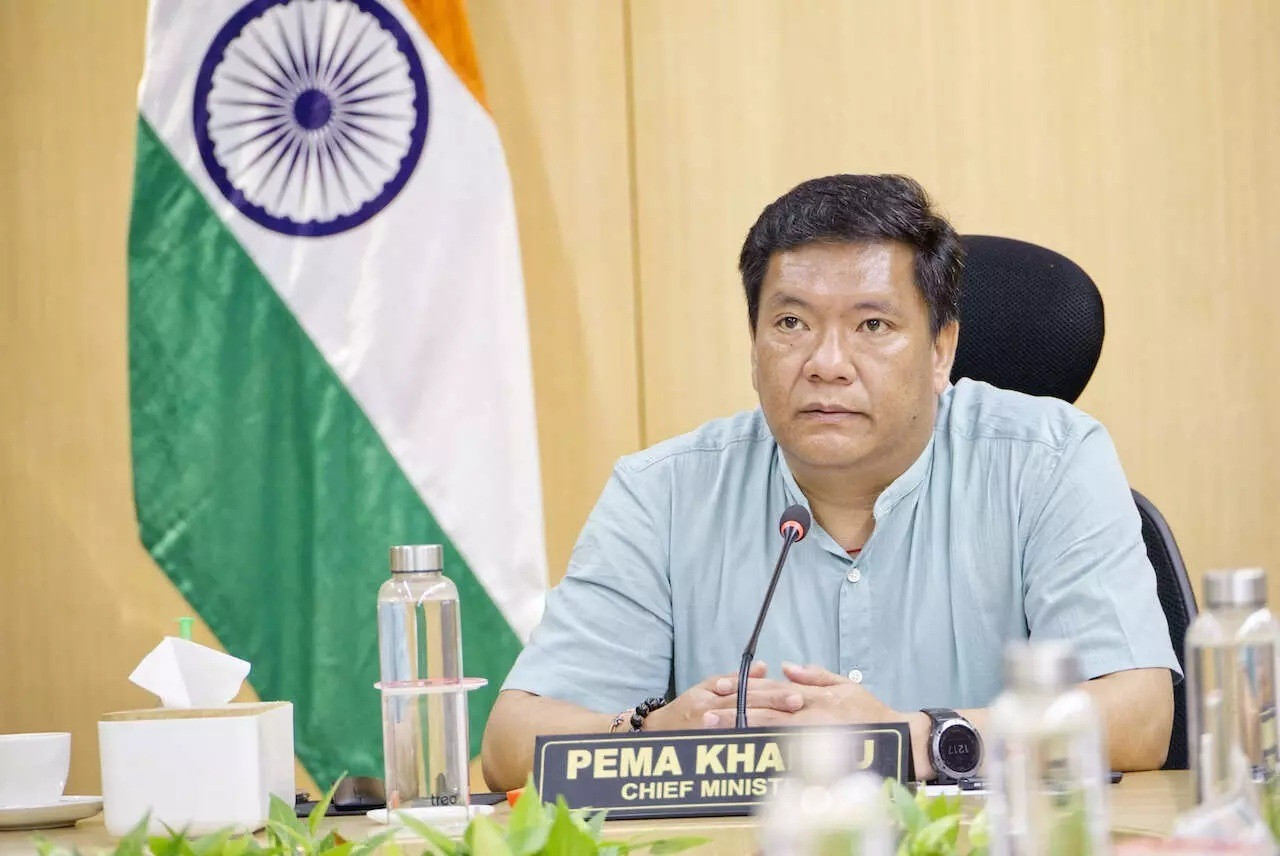
According to CM Khandu,
the estimated water storage capacity of the Chinese project is 5.5 billion cubic meters, while the Siang project could potentially have around 9.2 billion cubic meters of usable storage. However, its actual utility will depend on detailed studies, final design, and operational arrangements.
The proposed pre-feasibility report, or PFR, is at the center of the controversy. It aims to study potential construction sites, the condition of land and rocks, and the technical feasibility of the project. The government is describing it as an initial scientific investigation separate from construction approval. However, the Siang Indigenous Farmers Forum (SIFF), leading the protests, considers it the first step towards dam construction. The organization has demanded a halt to the surveys, withdrawal of security forces from affected areas, and meaningful dialogue with local communities.
Human rights lawyer and anti-dam activist Abo Mili has questioned the government's argument about the threat from China. He has emphasized the need for a water-sharing treaty between India and China. According to him, a significant portion of the Siang's water also comes from glacial lakes in Indian territory. Mili alleges that villagers are being misled by the fear of the river being completely dried up by China. For them, the proposed massive dam poses a more immediate threat.
On September 30, during Khandu's visit to Upper Siang, protesters blocked roads. When the protests turned violent, some vehicles were damaged or set on fire. There was also vandalism at the residence of local MLA Alo Libang.
On October 4, clashes occurred again between protesters and security forces in Siang district. SIFF General Secretary Likeng Libang claimed in a report on October 6 that 67 members of families affected by the project were injured. The police reported injuries to more than eight security personnel and the arrest of five individuals, including two women.
According to Siang's Superintendent of Police Kamdam Sikom,
security personnel were attacked while trying to maintain law and order. According to Circle Officer Kalong Tasing's complaint, despite a prohibitory order, about 100 to 150 protesters advanced towards the security personnel. The police also mentioned that CRPF Assistant Commandant Gajendra Singh Sonigra sustained serious injuries to his hand.
The police stated that batons and tear gas were used to disperse the crowd. The farmers' organization has accused the authorities of excessive use of force. Independent verification of claims from both sides has not occurred. Khandu stated on October 11 that violence would not be tolerated, but the government is willing to listen to the concerns of the villagers.
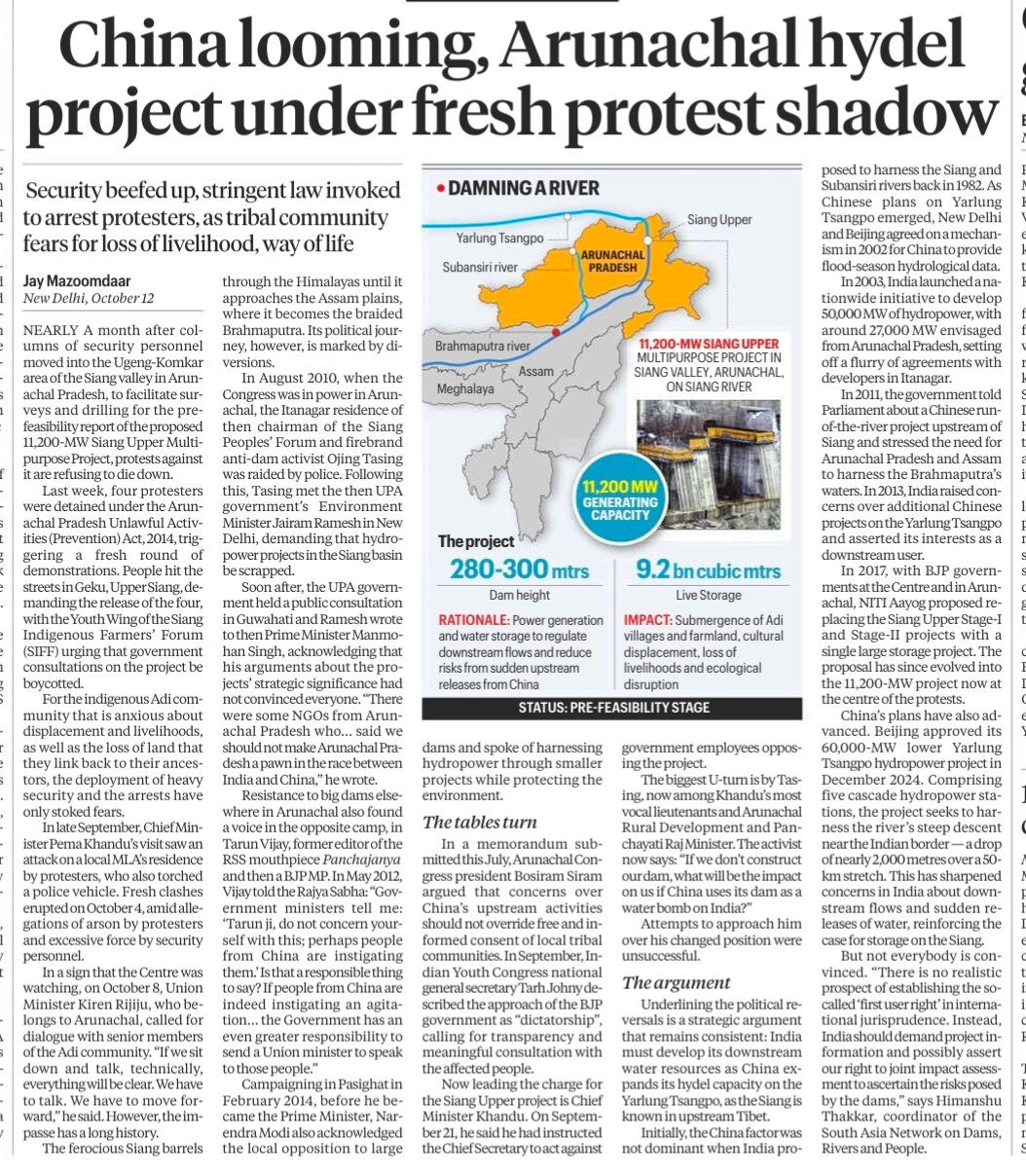
The idea of the Siang project is not new. In 2008, its development proposal was granted national importance. Initial plans included the Siang Upper Stage-One project of 6,000 megawatts and Stage-Two project of 3,750 megawatts. Later, a proposal for a large multipurpose project focusing on power generation, water storage, and flood control emerged. The plan could not progress due to technical challenges, environmental concerns, and local opposition. Discussions are now ongoing regarding potential sites like Parong, Dite Dime, and Uggeng, but a final location has not been decided. If approved, the project will be implemented by NHPC.
For the tribal community, the Siang is not just a source of water but also a part of agriculture, culture, and collective identity. Opponents fear the submergence of villages, fertile land, forests, fisheries, and cultural sites. Activists have raised concerns about the potential inundation of 27 villages, although actual displacement will only be clear after a detailed assessment.
The safety of such a large dam in the earthquake-prone, landslide-prone, and heavy rainfall-sensitive eastern Himalayas is also a concern. Local organizations argue that individual signatures cannot replace broad community consent. The All Adi Youth Association has demanded dialogue through traditional 'Kebang' institutions. The project's location, feasibility, and rehabilitation remain uncertain. In this context, the government's challenge is to protect the rights, livelihoods, and trust of those communities whose lives have been intertwined with the Siang for generations, alongside national interests.