
Record of voting after 5 PM missing for 200 seats in 3 states: Report

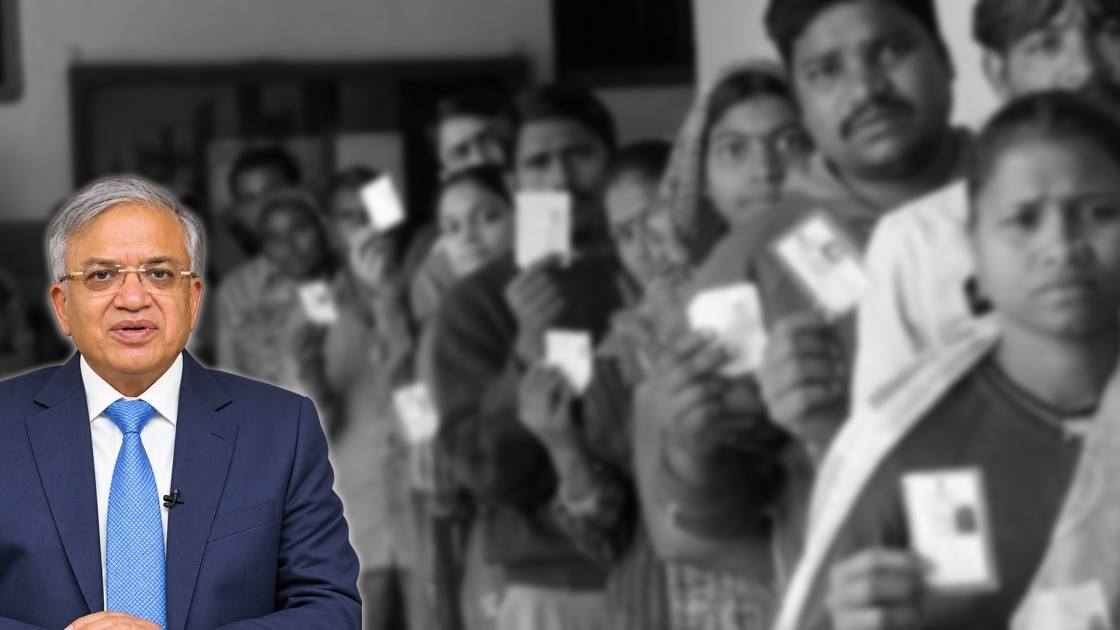
Voting numbers for 51 assembly and Lok Sabha seats in Maharashtra, Haryana, and Jammu & Kashmir are either missing or inconsistent.
A crucial piece of news has emerged amid the confusion and discontent regarding the Election Commission's functioning and impartiality among voters. An investigation by The Reporters Collective has raised several important questions about the Election Commission's internal records related to the 2024 elections. According to the report, records for 51 assembly and Lok Sabha seats in Maharashtra, Haryana, and Jammu and Kashmir either did not record the number of votes or the numbers in different documents did not match. However, the Chief Electoral Officer of Maharashtra has challenged the report's findings, raising objections to the interpretation of the data.
The organization stated that it studied 4,212 documents related to 467 assembly and 63 Lok Sabha constituencies. Its analysis found that the number of voters recorded in the entries for 19 constituencies was zero or nil. In another 32 constituencies, discrepancies were found between the recorded votes and the counted EVM votes. In 12 instances, the counted votes were less than the recorded votes, while in 20 instances, they were more.
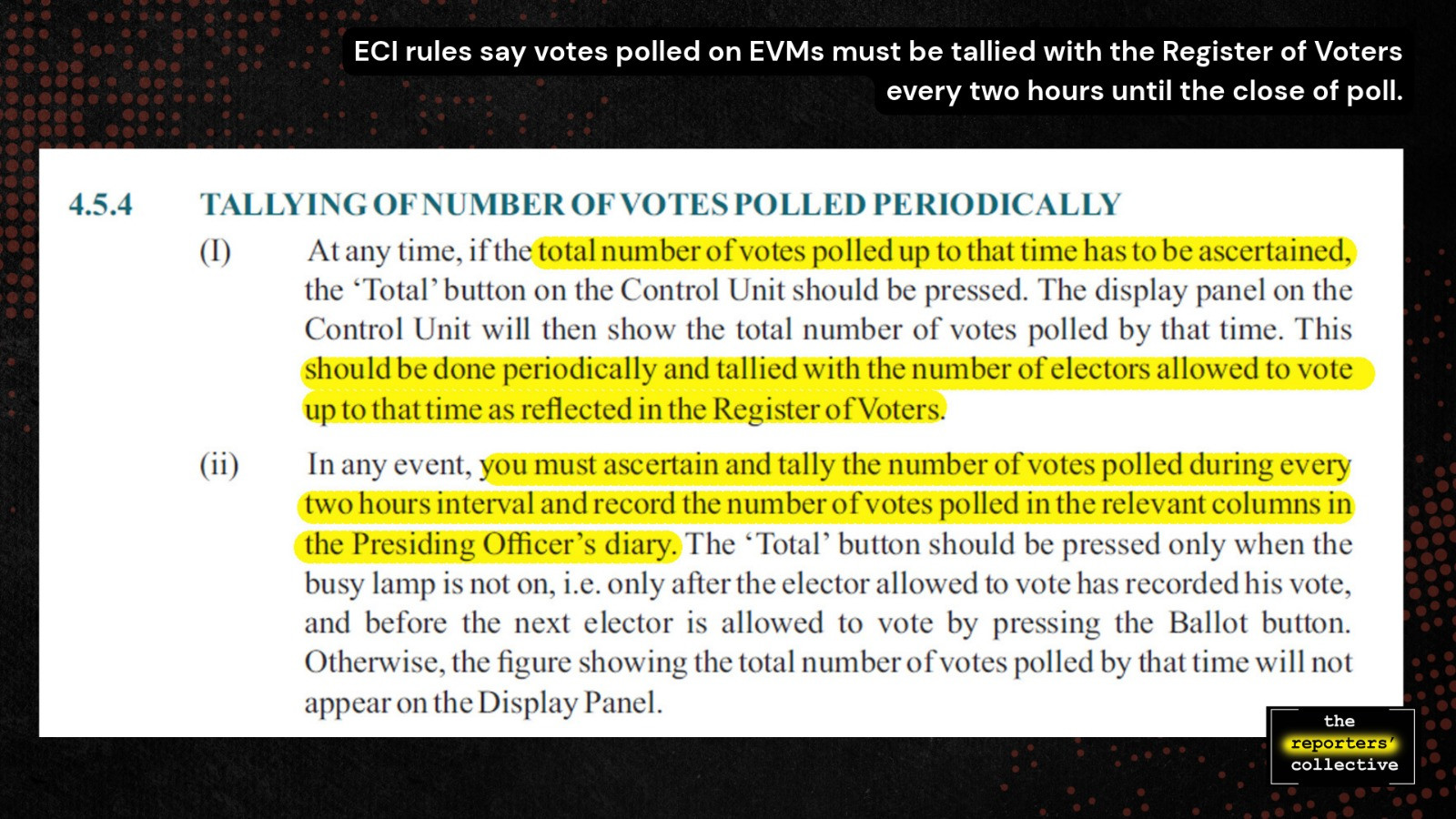
To understand this controversy, it is essential to clarify the role of electoral documents. Form-17A records the voters who come to the polling station and sign or thumbprint in the register. The first part of Form-17C records the account of voting. It includes separate entries for those who decided not to vote, those who were prevented from voting, and the total votes recorded in the machine. According to the Election Commission's official information, there may be valid circumstances under which there is a difference between the number of people recorded in Form-17A and the votes cast in the machine. This should be detailed in Form-17C.
After voting ends, the presiding officer presses the close button on the EVM's control unit. According to the Commission, after this, the machine does not accept new votes. The voting account is recorded in Form-17C, and a copy is given to the polling agents present. During counting, the total votes recorded in the machine are matched against this, and candidates' counting agents can raise objections to any discrepancies. Therefore, it is necessary to examine which documents and entries were compared in any investigation of discrepancies.
An example from the Mumbai North Lok Sabha constituency is cited in the investigation. According to the report, the entry for voting in the internal records showed approximately 18.11 lakh, while the counted EVM votes were approximately 10.33 lakh. The report itself states that the first number was equal to the total registered voters in the constituency. A similar example was presented for the registered voters' number recorded in the voting entry for the Badkhal seat in Haryana. This raises the fundamental question of record preparation and verification. Based solely on these entries, it cannot be determined how much change occurred in actual voting or declared results.
The Chief Electoral Officer of Maharashtra argues that the report has combined the total registered voters with the actual votes cast. According to his response published in Nation Press, the total voters in Beed were 3,84,885, the votes cast through EVM were 2,38,845, and the total votes including postal ballots were 2,42,084. In Dahanu, these numbers were 3,01,257, 2,20,919, and 2,21,818, respectively. The office states that the difference between registered voters and voters is normal. It has also cited the process of providing the voting account to the candidates' agents and matching it during counting.
The electoral office claims the accuracy of the original accounts of voting and counting, while the investigation raises serious questions about incorrect or empty entries in the internal tables. If a wrong column was filled in a table, the situation could be clarified when the revised version is matched with the original booth-wise accounts made public. If the discrepancy is due to another reason, a documented explanation for that reason should be provided. From an analytical perspective, it is essential to examine both the accuracy of the results and the quality of the monitoring records.
The Reporters Collective states that its questions have been sent to the Election Commission's grievance redressal system, and it has requested the relevant records to be made available. The organization has published links to its questions and the responses received, and has called for the records to be made public. This sequence of events raises the question of transparency. If the source of an administrative error is identified, along with the date of correction and the method of verification, citizens can understand the extent of the error.
Public access to electoral records has already been a subject of controversy. In December 2024, an amendment was made to the Election Conduct Rules, 1961 under Rule 93. This limited the scope of electoral documents available for public inspection to those specified in the rules. According to Indian Express, the impact of the change affected the public availability of electronic materials such as CCTV and webcasting. This amendment came after a Punjab and Haryana High Court order to provide election-related documents and videos.
Meanwhile, the Commission's website itself acknowledges that human errors by polling staff can lead to incidents such as mock poll votes not being cleared. According to it, there are guidelines for such situations. This general clarification must be applied to a specific seat by reviewing the relevant records for that seat. Similarly, it should also be clear whether postal ballots were included in the total votes or only EVM votes were taken.
The available investigation and responses raise solid questions about the credibility of electoral records. Providing the original entries, correct numbers, reasons for discrepancies, and actions taken for each marked seat would be the next useful step. Where errors occurred, proof of their correction should be provided. Where the interpretation of the report is incorrect, it can be explained with comparable documents. To maintain public trust in the Election Commission, appropriate steps should be taken by the government and the Supreme Court to ensure that confidence in the democratic system remains intact.