Hitler's last birthday
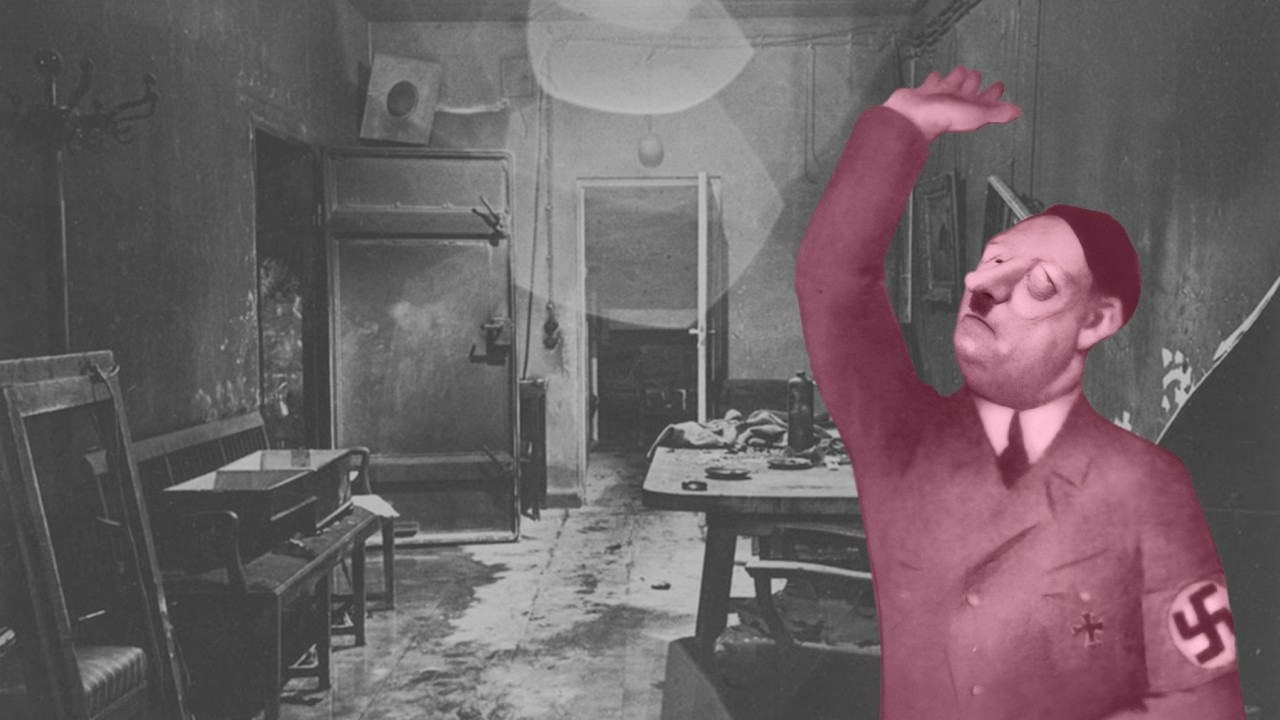
Hitler's birthday was celebrated like a national festival, but on his last birthday, a festival of destruction unfolded.
Adolf Hitler was born on April 20, 1889, as the third child of the third wife of a customs official in a small town in Austria.
His grandfather, Johann Georg Hiedler, was a wandering miller who, when he married his third wife Maria Anna Schicklgruber in 1837, brought along his five-year-old son, Alois. Since he was an illegitimate child, he took his mother's surname, and for the next 44 years, he was known as Alois Schicklgruber. After Maria's death in 1847, Johann disappeared for thirty years, and when he reappeared at the age of 84, the spelling of his name had changed to Hitler. Johann decided to give Alois his name, and on November 23, 1876, the parish priest of Dollersheim registered his name as Alois Hitler in the baptismal register so that he could inherit property from an uncle.
This is where Adolf got his surname 'Hitler'.
Before coming to power, there is no significant reference to celebrating his birthday, but after coming to power, Hitler's birthday, claimed to be celebrated with simplicity, began to be observed as a national festival in Nazi Germany. April 20 gradually became part of the personality cult political rituals of the Nazi regime. The regime had linked Hitler's image with the nation, the state, and the German future in such a way that the celebration of his birthday also became an opportunity to demonstrate political loyalty.
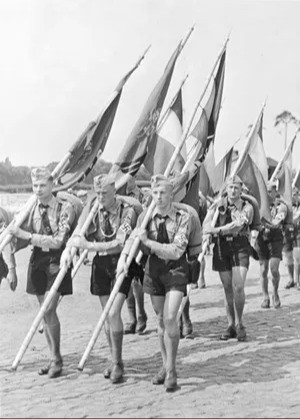
This day was made particularly significant for the youth. Members of the Hitler Youth (Hitlerjugend) and the Bund Deutscher Mädel (League of German Girls) participated in ceremonies, parades, and mass events organized on this occasion. April 20 was also used as an opportunity for the youth to express loyalty to Hitler and to recruit new members into the organization.
The most important element of the birthday celebrations was the mass demonstration. Cities and towns were decorated with Nazi flags, banners, and portraits of Hitler. Public gatherings were held, and Nazi organizations marched in their uniforms. Radio, newspapers, and propaganda media widely promoted Hitler's birthday and linked his life and alleged achievements with the pride of the German nation. The aim of the Nazi propaganda system was to present Hitler not just as the head of government but as a symbol of the nation's destiny.
Schools also placed special importance on this day. German children were taught love, obedience, and loyalty to Hitler. Dedication to the Führer was presented as a common civic virtue in textbooks and classroom activities. Hitler's portrait was usually present in classrooms. Thus, the celebration of the birthday became not just a festival for children but also a means of political education and ideological training.
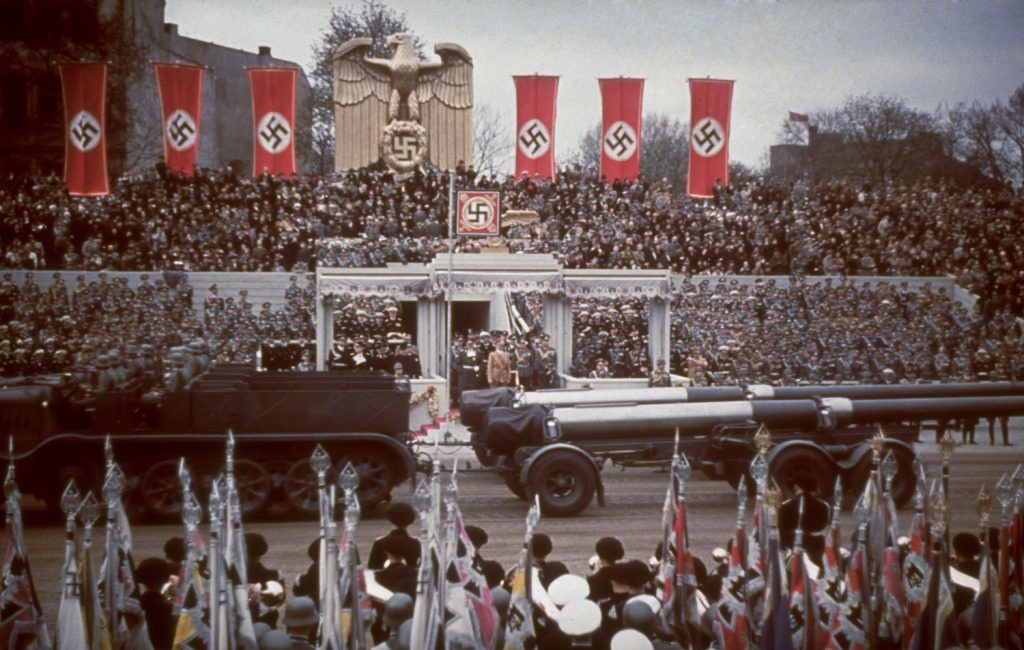
The Nazi Party's youth organization, Hitlerjugend, found this occasion particularly significant. Young members participated in mass events wearing uniforms, marching, singing nationalist songs, and taking oaths of loyalty to Hitler. For the Nazi leadership, the purpose of such ceremonies was to prepare a generation that would remain obedient to the Führer and the nation without question and would become soldiers and party workers in the future. By 1939, over 82 percent of eligible youth aged 10 to 18 were associated with the Hitlerjugend or its female organization.

In 1939, his 50th birthday was celebrated as a national festival. Members of his cabinet delivered long speeches in his praise. Extremely expensive gifts were given. Rallies were held across the country. Cakes were cut in every village/town/city. Hitler had transformed into a god-like figure in Germany. Berlin was decorated like a bride.
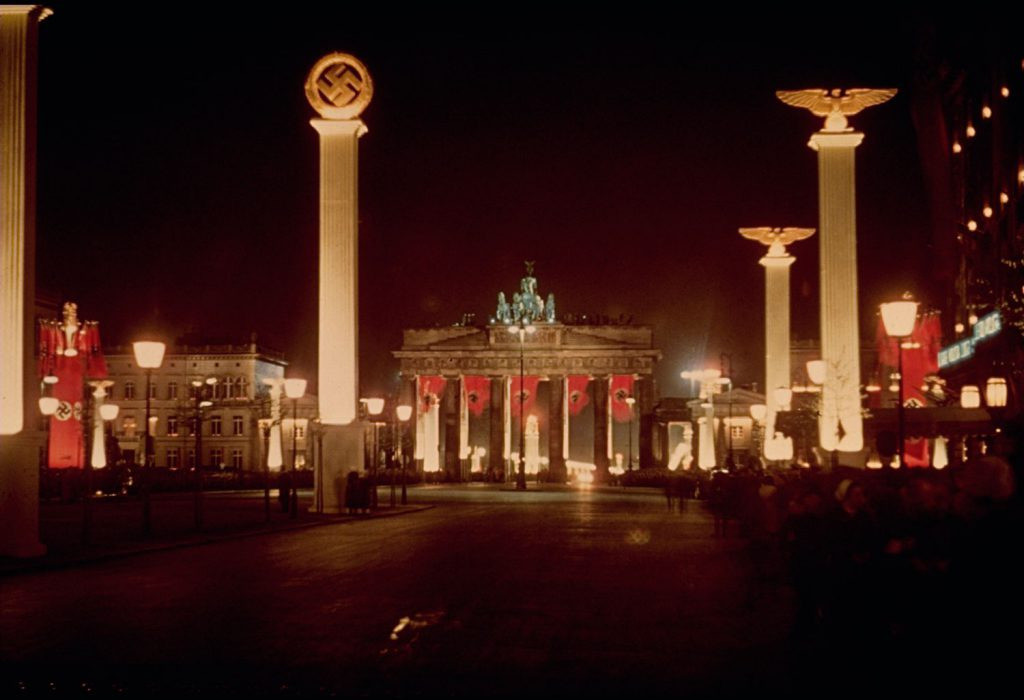
The most significant aspect of this entire event was that Hitler's birthday blurred the line between the private and the public. Under the pretext of the birthday, the state compelled citizens to demonstrate their political loyalty. Parades, flags, speeches, radio broadcasts, school ceremonies, and youth oaths collectively created a political culture in which loyalty to the Führer was equated with loyalty to the German nation. This was one of the most important features of Nazi personality cult.
Last Birthday
When Hitler's 56th birthday arrived on April 20, 1945, Germany was facing a major defeat against the Soviet Union, and on that day, Allied forces were heavily bombing Berlin while Hitler was hiding in his bunker.
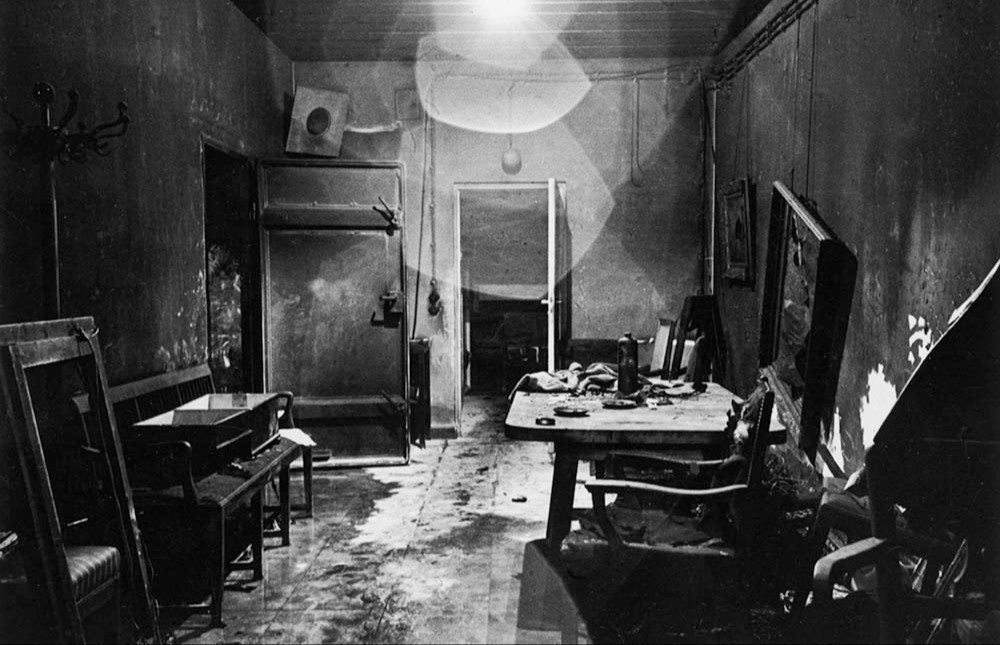
His closest cabinet members, Himmler, Ribbentrop, and Göring, had fled with their loot. Göring and Himmler were trying to contact the Allied forces to sideline Hitler and take power into their own hands. Hitler considered this treachery, and soon the SS arrested Göring.
Only Goebbels remained. Hitler asked him to bring his wife and six children from their bombed-out home to his secure bunker. Some important documents were burned. He had already received news of Himmler's contact with the Allied forces, but now he could do nothing. The Russian army was steadily closing in on him.
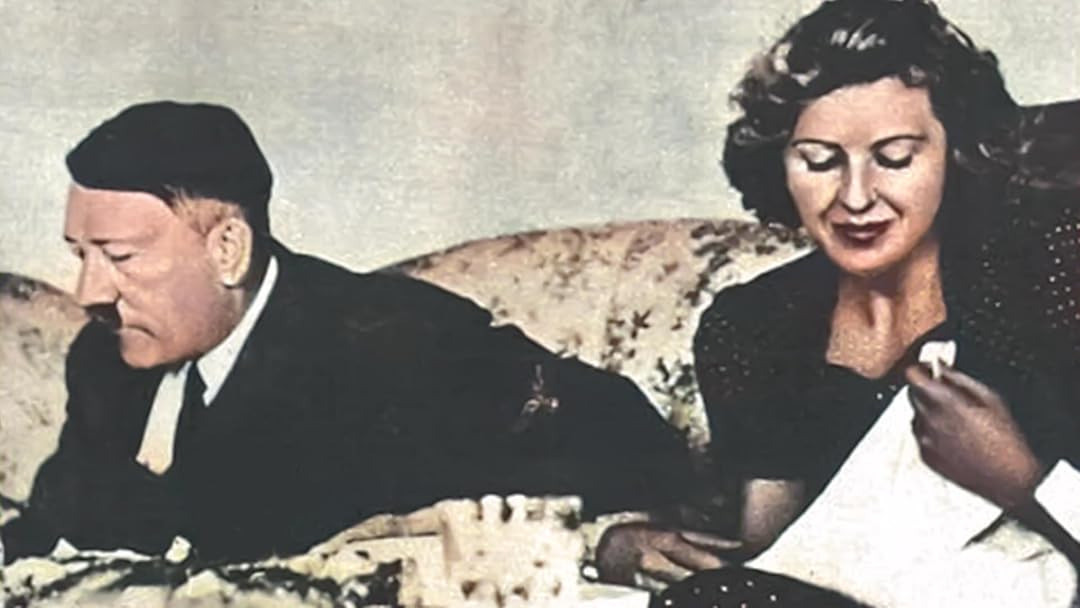
His girlfriend Eva was also in the bunker. Eva had expressed only one wish to him - to die with him as his wife. Hitler fulfilled this wish. On April 29, 1945, Goebbels called a municipal employee named Walter Wagner to the bunker. The bride and groom promised at the time of marriage that they were of 'pure Aryan stock' and had no 'hereditary' diseases. Champagne was served, vegetarian dishes were prepared, and Hitler delivered his last speech. After that, he went to his room and dictated his will. Even now, he blamed the Jews for all the destruction of World War II, not himself.
He had declared Goebbels as his successor. That same night, amidst a list of bad news, came another report that Mussolini and his girlfriend Clara Petacci had been hanged in Italy. Hitler did not want to die such a death. First, he poisoned his beloved Alsatian dog Blondi and shot the other two dogs. He gave two female secretaries capsules of poison to use in case they fell into Russian hands and at 2:30 AM on April 30, 1945, he shook hands with everyone. Death was imminent, and his staff held one last celebration.
At 3:30 PM, Hitler went to his room with Eva. Outside, Goebbels and a few other associates heard a gunshot in silence. When they entered, the Führer, who had thrown millions of Germans into the fire of hatred and war, lay dead, while Eva had chosen to take poison. The sound of Russian artillery outside seemed to celebrate Hitler's end. According to his orders, his body was doused with gasoline and burned in the park outside.
Goebbels made one last attempt to negotiate with the Russians, and when he realized that there was no hope for any agreement, this one-day Chancellor of Germany took poison and ended his life along with his wife and children. Hitler's Third Reich, which had dreamed of a thousand years, was destroyed within a week of his death. Berlin witnessed the naked dance of violence, destruction, and rape by the Red Army.
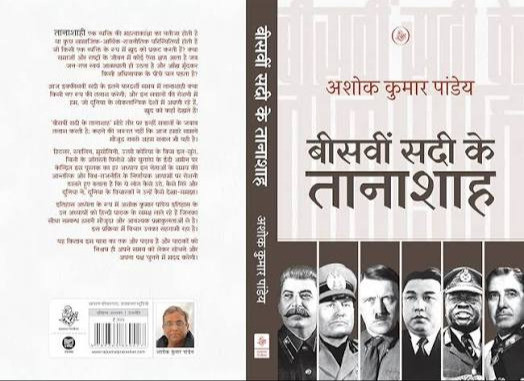
For more information about dictators, you can read my book 'Dictators of the 20th Century'.